Greetings! I'm Jalal ('Juh-LAAL'), and I Harmonize Rides. Welcome to my Suspension Haus,
home of the Ride Harmony and Race Synergy Framework™, where I discover, apply, and teach
Suspension Truth. For over 20 years, I've been driving, experimenting, racing, testing, measuring,
and sculpting suspension systems to increase grip, comfort, confidence, and durability. I've crafted
over 1,700 unique FCM Elite setups, each tailored to a particular driver's vehicle, goals, roads, and budget.
Guided by my physics training, I take a 'first principles' approach, examining each suspension as a system.
Years of testing, reflecting, and customer feedback have led me to develop a coherent philosophy which leads
to superior results for both ride and performance. Along with providing you guidance on selecting suspension components, FCM Elite damper
optimization services are available for monotubes including Bilstein, H&R, BC Racing coilovers, and MCS single-adjustables (using
my new IMF-42 'Impulse Filtering' piston).
This website is a living multimedia white paper built to share my Framework as I continue to research and refine it. Please begin by studying the 'No Damping'
Flat Ride experiment and see how that established the foundation. Many conceptual questions can be answered through studying resources and references on this page. There are customer
testimonials (video/audio/transcripts), case studies, and a few 'mad scientist' empirical tests as well. The Suspension Truth YouTube channel has more material. I'll be referring to 'Christina'
extensively - she is the trusty Fat Cat BMW E46 330i sedan test mule, named by the previous owner (my family has always named our vehicles anyway).
If you have a brief question (such as damper options, vehicle compatibility, etc.), by all means please call or text. Emails via the contact form are also welcome.
Detailed component recommendations and technical discussions begin after you become familiar with the Framework and our FCM Elite process, then submit your
FCM Elite consult form along with the 30-minute ($150) consultation payment.
I look forward to tailoring a suspension that fits you.
From street to track, four short videos showing what Fat Cat can craft for you
Invest six minutes and you'll get a solid flavor of what I mean by Ride Harmony and Race Synergy: championship-level suspension consistency and confidence to push the limit.
Our customers have found our integrated philosophy gives them superior results, with measurably faster lap times along with more supple road manners. From Katie's comments, even a non-race driver
can appreciate the difference; arriving calmer and more energized for the next part of your journey.
Championships won on tracks around the country
Three National Champions on FCM Elite suspensions
Anthony of Edge Motorworks explains how their FCM Elite-equipped race cars are repeatable, fast, and winning on tracks across the country, without needing to 'Play with Knobs.'
"We don't make changes to the setup of the car."
"We just drive to the
limit that the car allows us."
Immediate test ride experience
That's Insane! Michael feels Christina pull 1.3g
I still had traction control on - no intentional sliding - so Michael's spontaneous strong reaction says a lot: serious cornering grip that's composed and predictable.
"That's insane!"
"I've never been in a car that could corner that fast."
The essence of FCM Elite damper tuning
1.6 seconds per lap faster at Mugello
A question about compression vs. rebound damping led an expert engineer to share data that proved something I've known for years: a compression-biased damper gave faster laps vs. a rebound-biased damper.
The data he shared is worth a watch (or three!). This short-yet-powerful video goes to the heart of our FCM Elite damper tuning approach.
0.6 seconds came from switching to compression-biased damping.
Another 1.0
second came from the lower ride height made possible by using less suspension travel.
Keeping you calm and connected to the road
Katie: Jinba Ittai, confidence, and feeling more relaxed
Katie does long backroad drives using the same car that her husband Luigi races. Even with a high-performance suspension installed, she was delighted to experience Jinba Ittai - 'oneness of horse and rider' -
giving her more peace of mind, arriving at her destination relaxed and energized. This is absolutely intentional: I literally design our suspensions to uplift you.
"I get where I'm going more relaxed. That's huge for me."
"I feel better having
driven - even in traffic - because it's constantly got my back. I like it more than our Honda Fit!"
“The real purpose of scientific method is to make sure Nature hasn’t
misled you into thinking you know something you don’t actually know.”
— Robert Pirsig, Zen and the Art of Motorcycle Maintenance, p. 131
The four stories above involve different cars, drivers, roads, and goals. A common
thread runs through every result: a well-tuned suspension will settle smoothly,
improve the tires' contact with the road, and give the driver more confidence and peace.
Before I realized there really was an optimal order to designing a suspension, I took part in an 'accidental experiment' that turned out to be the foundation for the Ride Harmony and Race Synergy Framework.
The experiment focuses on a concept called 'Flat Ride', which for the automotive world is a suspension tuning idea first introduced in 1930 by Rolls Royce engineer Maurice Olley and later shared with
engineers at General Motors as a way to help improve the ride quality of early automobiles.
Classic General Motors demonstration
“Over the Waves”
Watch Flat Ride demonstrated mechanically: the front and rear suspensions respond at different times while the vehicle platform ties their motions together.
The idea was fairly simple and intuitive: your vehicle has a front suspension and a rear suspension. The front tires see bumps and dips in the road first, which begins to move the front suspension
up and down. After the vehicle drives the distance of the wheelbase (the space between the center of the front and rear tires), the rear tires encounter that same bump or dip, causing the rear suspension to begin responding.
I like to use this analogy: say you and I are taking a walk together when you point out I've got a shoelace that's untied. I stop to tie the lace and say, "just keep walking, I'll catch up."
You keep going and after a few moments I'm ready to walk again - except now there's a distance between us. If I want to catch up with you, do I walk:
At the same speed as you?
Slower than you?
Faster than you?
It's logical that I would have to walk a bit faster to catch up with you. This is the same general idea with a car using a front and rear suspension, except while the front and rear suspensions
are separate from each other, they are each connected through a 'board' or platform, as demonstrated in the GM "Over the Waves" video above. The front and rear are always separated by the same physical distance,
but they can and do affect each other. This can lead to some rather wild behaviors depending on whether the front or rear bounces faster or slower. A very undesirable case is if the front and rear bounce at nearly
the same frequency - that can lead to a 'pogo stick' behavior!
The only way we can alter the 'bounce' relationship between the front and rear suspension is to change one frequency relative to the other. Hence, Flat Ride suspension tuning is a natural result if you want a
vehicle platform to self-stabilize as quickly and smoothly as possible.
The optimal amount that the rear suspension should oscillate faster than the front depends on a few parameters but, in general, you'd aim for between 5-15% for most vehicles. Use of Flat Ride creates a 'Fast Settling' over
bumps and dips in straight-line driving while also creating 'Eager Turn-in' during cornering.
The added cornering / turn-in benefit of Flat Ride makes it a multi-dimensional enhancement to your vehicle's suspension behavior. You can think of Flat Ride as causing the rear suspension to help rotate the
car, pushing the front through the turn. Contrast this with a setup using a higher front frequency than rear (i.e. 'pitch') so the front suspension is dragging the rear through the turn. Such a car feels
nervous, unsettled, continually oscillating and lacking confidence. Many manufacturers use some degree of Flat Ride in their suspensions; however, often it's only noticeable on the smoothest roads while pitch
begins to dominate as the road quality degrades or you're pushing the car near its limit.
With some background ideas and videos related to the concept of Flat Ride, you can now learn about this 'accidental experiment' I took part in that brought me some powerful realizations.
2015 • Why Flat Ride Matters
Flat Ride goes beyond comfort: it's the key to faster chassis settling response, optimized grip, and intuitive handling
Looking back, I'm amazed at all the synchronicities around Greg reaching out to me, how his Project unfolded, the impromptu face-to-face meet, having the idea for this very unusual experiment,
and how deeply the results have affected me over a decade later.
Everything else followed after that. I realize now, over 10 years later, it's the most important physics experiment I've been part of,
Greg lives in SoCal and has an Audi S4 Avant wagon which he uses for fully-loaded family trips to snow country on weekends, and as a fun commuter during the week. When he has time, he tools around
the backroads California is famous for and enjoys responsive handling with a civil ride. He knew a regular suspension would struggle to manage the full range of weights he'd need while preserving enough road
clearance to navigate snowy conditions, so he
decided to switch to air bags. He initially went with Ohlins and they worked for about a year and a half. Then, a couple started to leak. He had them fixed and within less than a year another started to leak.
Deciding to see if another more reliable option was out there, he was searching online and came across my 'What is Flat Ride and Why Should You Care?' video. He started to look into the subject,
which related to spring rates and
ride frequencies (how the car actually responds to the road in terms of bouncing, measured in Hz (Hertz) or cycles per second). He got curious - 'does my Audi currently have Flat Ride??'
On his own, he went on a drive and was paying more attention to the front and rear suspension behavior. It became clear to him that the front was bouncing faster than the rear, so the wagon was 'pitching'
over bumps and dips instead of having a Smooth Settling response. Since the air bags were cockpit-adjustable for air pressure, he reasoned that the front bag was too stiff and the rear bags too soft.
So, he reduced the front bag pressure and added to the rear.
Once he made this change, he could now feel that 'Fast Settling' effect working! The car responded well, settled with less disturbance after bumps, and was less busy overall. But there was a problem - it
looked like a stinkbug! Head down to the ground and hind-quarters up in the air. Aside from the unpleasant aesthetics, loading the car comfortably while preserving this Flat Ride behavior created road-clearance issues.
So he knew he needed different bags from his supplier.
He also figured 'Let's give this crazy guy talking about Flat Ride a call' so he did. And that is where my story with Greg officially begins!
I totally understood his reason for needing to keep airbags although it introduced a problem for me - how to design the dampers around unknown spring rates? I could guess, but we could do science instead.
I needed a reliable way to determine the effective spring rates of the new airbags which would allow him a more appropriate ride height and driving stance. We had an estimate from the manufacturer of the actual spring rate but
I wanted to be precise.
"Greg, how about this - let's work backwards. You can buy the Bilstein monotubes we'll need for your Avant. I'll drain them, assemble them effectively totally empty, just ambient air and no shock oil,
then send those shocks to your shop doing the suspension installation. They can mount the new airbags and bracket on the Bilsteins, then you can have them do a bounce test at the front, then at the rear!
From those directly measured results, especially since the shocks will effectively be 'dead' (the piston just moving ambient air inside the damper body), 'natural frequency' test like the engineering textbooks talk about!
As luck would have it, I was coming back from a visit with my first E46 M3 customer in San Diego (EricSMG) and stopped in LA the same weekend Greg was getting the new air bags and 'dead' shocks installed for the bounce test.
I
went by the shop he was working at, Antidote Performance, and we chatted about their discoveries. "About 1.7 Hz front and 2.0 Hz rear!" he proclaimed. Those are excellent for a true 'GT', Grand Touring suspension with a solo driver.
Once
more fully loaded with passengers and cargo, the ride frequencies would soften probably 10-15% more.
As we're talking, my inner 5 year old tricycle crash test dummy whispered in my ear: "Let's go for a ride!"
"Hey Greg, how about we go for a ride!"
It's hard to describe the look on his face, but surprised shock would be close. "Wait, there's no ... the shocks are empty, right??"
"Mmm hmm," I replied with a growing smile.
"Is that .... SAFE?!"
"Ummm ... probably...??"
I got more serious and pointed out that all the bolts were secured, the suspension was technically fully assembled, except the dampers were just empty. Greg decided to trust me, retaining his skepticism
which I absolutely appreciated.
"Hey, let's just take it easy, okay? Aren't you curious how this will feel?" He nodded and I could see he was intrigued at the wild idea. So we backed out, with him driving, of course, and me just smiling
inside like the Cheshire cat.
The 'Flat Ride with Dead Shocks' test provided me four key observations
First observation: when driving about 25-30 mph, we encountered a set of deep railroad tracks. Both Greg and I cringed in anticipation of the hit.
DAA-DUMM!
The car remained level as you heard the tires respond to the impact. That was it! You heard it, but didn't feel it. We immediately looked at each other and said a variant of 'Wow!'
In that moment, a thought came that I said out loud:
"Greg, this is the MOST COMFORTABLE your car will ever be over railroad tracks!"
Even with rather firm spring rates, higher than stock by a good 30% or so, the sharp edge harshness you typically expect from such features was caused more by the dampers than the springs. It was
extremely revealing, and it confirmed a few truths I knew:
The springs, being position-sensitive devices, create an oscillating force response; a 'bounce' that takes time to develop.
The dampers, being velocity-sensitive devices, create the possibility for immediate reactions to sharp features if the velocity suddenly ramps.
Those sharp features would include anything square-edged like railroad tracks, highway expansion joints, manhole covers, etc.
Second observation: the road had natural undulations and small to medium wavy bumps. The chassis managed these well, without drama. The chassis would reset back to neutral after each disturbance and you
could feel what Katie described - 'the car has got my back.' It was quite relaxing, actually. I was also noticing very little road roughness - like someone had sanded the road. Another indication of
how the damper needs to manage high-frequency noise more than simply add lots of control 'because sports car.'
Third observation: completely on his own, now considerably more convinced that this experiment actually made sense, Greg began to turn the wheel back and forth - slower at first, then faster and faster.
He was doing a slalom in this deserted industrial zone in his Audi that had dead shocks - and his car responded as fast as he turned the steering wheel! I couldn't help but laugh, because only a couple minutes earlier he was
thinking "Jalal is nuts" and now his own inner 5 year old comes out to play!
Fourth observation: on the way back, he was comfortable driving faster so some medium bumps became larger bumps. Then, you could feel the car do a "BOING-boing-boi.." movement,
about two and a half cycles before it would stabilize back to neutral. This made sense - there was no control of that spring energy from the dampers themselves. However, due to the higher rear ride frequency,
the 'counter-pitch' being created helped control the front's movement. On all but the largest bumps, the natural 'Fast Settling', negative feedback loop from Flat Ride helps bring the chassis back to a neutral
position. This was the core, the concept was proven in the real world, right under me.
I could see that the rear damping definitely needed to be sufficient to handle medium and larger bumps taken at speed, so you'd have a sensible return to zero. But the kind of overdamped, ultra-stiff 'pull down' that
many factory and aftermarket suspensions use? That was too much if you wanted optimal grip and comfort. I could tell, from both empirical observations of this experiment and from the Flat Ride theory, that the key to an
optimized suspension was having a useful travel envelope, springs that created reasonable Flat Ride separation front-to-rear, and to have dampers that were a bit more firmly damped in the rear than the front to help
manage the extra rear spring wind-up and release energy on larger bumps.
Flat Ride = Fast Settling + Eager Turn-In. The foundation of comfort and performance
I was taking these lessons back home and really started looking more at race cars I was tuning, people who wanted the fastest setup, no holds barred. I was already convinced that knobs were only one small tool, and
now from this happy accidental experiment, the power of Flat Ride dominated my thinking. Make the car 'Fast Settle' instead of continuing teeter-totter or porpoising. Use a compression-biased damper platform which is
demonstrably faster. Watch out for unnecessary sources of harshness in the dampers (excess gas force, low speed compression or rebound, seal drag, continuously building mid- and high-speed damping). The dampers had a job to do,
but the question was 'when were they doing too much?' The answer was understanding the suspension deflection (see the related Flat Ride / Fast Settling graphics), how much room the dampers and springs needed to work, and how much mass
you were trying to control. This needs to be done on a car-to-car basis, with the setup developed around the actual vehicle instead of a kit sitting on a shelf waiting for a credit card number and shipping address.
As I describe in detail throughout the
Crucial Ride Harmony and Qualify Your Suspension Vendor video series
,
Flat Ride goes far beyond ideas of comfort. This first principle keeps the
tires happy, working at their best. Everything else needs to be designed
around it. Only if you have a vehicle with enough aerodynamic downforce to
drive upside down in a tunnel would you potentially have to bump Flat Ride
from its place as the most important suspension design choice. Greg's Audi,
rolling along that Riverside industrial road during a real-world physics
experiment, showed me what no book or online forum discussion ever could:
Flat Ride is the foundation.
Dear reader, you need to ask every potential suspension vendor this core question:
“Does your setup create Flat Ride in my vehicle?”
Greg and James - two paths to the same embodied experience
Greg had a rare advantage: he could quickly change front and rear ride frequencies and immediately note the effect on ride and handling. He could feel how much more naturally his Audi settled once he created Flat Ride.
James approached Flat Ride from the position of a self-admitted “skeptic by nature”. Owner of a daily-driven Porsche 911 996 Turbo his reaction to my 'Why Flat Ride Matters video' was
“you’ve got snake oil, right?” Yet, instead of dismissing it he “went down the rabbit hole,” ultimately concluding the principle was “extremely valid.”
“Night and Day doesn't describe it.” - James after feeling his FCM Elite Stage 3 Ultimate suspension
Travis and I use a timed bounce test to measure the damped rear
frequency of a 2016 ND Miata - a practical measurement that
helps characterize the complete suspension.
Why Flat Ride Matters
Watch or listen to the 2015 road-test explanation, or open the transcript and
read it at your own pace.
Eleven more years of testing, tuning, driving, measurement, and customer
experience have made the conclusion even clearer: Flat Ride is fundamental,
foundational, essential - and vital to the health of the tires, the vehicle,
and the people inside it. Stay tuned!
Flat Ride becomes the First Principle. Where does the rest of the suspension fit in?
My experience with Greg's Audi focused my attention on what has to come first when designing a suspension. The other steps become amazingly simple, actually. Less is more, do only as much as is required to
provide enough control without increasing chaos. Flat Ride / Fast Settling as the first design choice establishes a vehicle that naturally wants to settle after road disturbances, plus give you eager turn-in response.
With sufficient travel envelope for your chosen springs and the static deflection, we can choose sway bars that keep the whole chassis stable and predictable in spirited or race driving.
It's almost crazy that a car can largely be driveable with very little damping but this is the result when a core Suspension Truth is revealed.
However, if instead of using Flat Ride, a suspension is designed to pitch - having a more reactive front response and a lazier rear response - then you have no choice but to use lots of rebound damping
to 'tame the overshoot' and extra oscillations created by pitch. It's a vicious double-edged sword. Once pitch is present, everything you're doing in some way or another is designed to reduce those unnecessary extra oscillations that
disturb the tires' contact patch - and you.
Studies beginning in the 1960s, referencing the seminal 1966 research of Pradko and Lee on 'Vibration Comfort Criteria' and applied by others, found that whole-body vibration can impair reading
and visual performance. For anyone who has already dealt with a pitch-based setup that is constantly oscillating and literally shaking your body and head back-and-forth, the science only confirms what we
intuitively feel. What might 'feel sporty' is actually abusing your body, brain, and tires.
So now you know enough to avoid designing a suspension with pitch. Touching on the damping again, remember the lessons from the Mugello video? Recall how DaveW proved the rebound-biased setup was slower?
Makes more sense now, right?
With Flat Ride, the dampers are no longer tasked with fighting a cacophony of internal suspension movements: seesaw, pitching, jostling, porpoising. By preventing the suspension chaos that pitch causes,
you're eliminating the source of most people's complaint with any suspension, even if they struggle to verbalize it.
As a side note, along with reaping the rewards of a more supple ride and enhanced grip, you'll find your dampers stay cooler and tend to last longer. Why? Because less overall damping force means
less heat and less wear. The dampers are doing what they need to while avoiding artificial 'motion control' for the sake of a 'sport ride' or 'locking the chassis down.' This is another benefit of a Ride Harmonized suspension.
The damper is unique in the sense that it is a multi-dimensional device, giving different outputs based on the kind of input. When optimizing the Damper Matrix, I keep in mind this quote by
Antoine de Saint-Exupéry: "Perfection is achieved, not when there is nothing more to add, but when there is nothing left to take away."
These core insights are the common thread behind the four results you just saw and every FCM Elite build I create: first principles ordering and only adding useful technology
where it serves the tire, the vehicle, and the person(s) inside.
My working order for creating Sublime Speed
Each term builds upon the ones before it, beginning with the operating envelope, then the spring and frequency relationship, and the vehicle's handling balance.
Sublime Speed is a function of the envelope of suspension travel + Flat Ride-producing spring rates + swaybars to stabilize handling at the limit + a Damper Matrix that works for your budget
and goals + bump stops to control bottoming + fine-tuning bump travel with 'packers' + other end-user refinements.
E0
Establish the operating envelope
Understanding your intended use and target ride heights informs bump and droop travel considerations, suspension geometry effects, tire-to-fender and body-to-ground clearance - to name a few.
Why the travel envelope comes first - my first lesson
According to 'forum experts,' the 1993 Limited Edition Miata I had
just bought had too much compression damping in its Bilstein shocks:
“You can feel a quarter on the ground,” many would say, and I agreed. Coming from a tame 1997 Miata with standard suspension, my '93LE, Graham felt like a go-kart - in the best and worst ways.
I wanted to use those Bilsteins on my '91 BRG turbo, Roy (Commander Fokker
in Robotech/Macross). To make sure the shocks and springs were
“matched,” I sent the Bilsteins to the Southern California
service center to be revalved for the stiffer springs I planned to use.
My specification sheet asked them to reduce the compression damping and
tune the rebound for my 450 / 350 lb/in spring rates. That was what the
forum advised, and my butt dyno agreed.
A couple of weeks later, I received a call from Mr. Jack French in Poway,
California. He stated a problem with my request plainly:
“Those shocks have barely any compression—you folks are running
around on your bump stops.”
Jack French, Bilstein service center, Poway, California
I was shocked. I hadn't seen anyone online mention anything about 'riding around on bump stops.'
Honestly, my first thought was “what do YOU know?!” but wisely, I held my tongue. I told him, “Okay, do what you think is best.” He said he'd only increase the rebound for the stiffer
springs and leave the compression alone.
When my revalved dampers returned, I tested them at Aftershocks Suspension with Peter Pyce and Phil Douglas, my two most influential early mentors, and we compared to data we had on standard Miata factory shocks.
Sure enough, Mr. French was correct! Even a standard Miata shock had more compression force than the '93LE / 1994-97
R-package Bilsteins!
Shock dyno graph of 1997 rear Miata R-package Bilstein.
Compression force is positive; rebound forces are negative. Literally, this kind of damper is used in NASCAR circle track tuning to pull the chassis down into the bump stops.
This technique is narrowly applicable; it can work for a very smooth circle track racing (road circuits with curbing plus in-field transitions add substantial surface disruptions!).
The striking rebound bias confirms what Mr. French recognized: little compression support paired with very strong rebound pulling the car down harder and harder into the bump stops. This is the
opposite experience that Katie and many others have reported, this kind of force bias results in a suspension that is (pardon the metaphor) trying to pull you down into Hades. FCM Elite suspensions
are designed to support and uplift.
I had proof about the damper behavior being counter to what was assumed on the online forums. But what about the comment 'you're riding around on your bump stops?'
I then found Jyri Virkki's site and the photographs shown here, used with his kind permission. His work showed that a Miata at standard ride height already had very little travel before the
bump stops became active. We collaborated on more measurements which he added to his site. It was certainly
possible that a '93LE or 1994-97 R-package Miata, with an even lower ride height, could actually be 'riding around on their bump stops.' I had to find out for sure.
Jyri Virkki's Miata bump travel measurements at different ride heights.
Reduced ride height decreases the travel envelope and causes the bump stop
to engage sooner, with a rapidly building nonlinear effect.
I made suspension travel measurements in December of 2005 and posted the results (with now-absent photos) on Miataforum. I proved that, indeed the front bump stop was already compressed by nearly 1/4 inch with the car sitting at rest! The rear bump stop had 3/4 inch of clearance before it engaged, at a similar high spring rate to the front bump stop. The '93LE and the 94-97 R-packages Miatas, therefore, had a pitch-bias
due to the constant bump stop contact, and a varying frequency response as the front and rear suspension went deeper into the compression travel. A recipe for poor ride quality and inconsistent handling
(as we owners could attest to!).
Why did Mazda do this? The '93LE preceded the R-package offered from 1994
through 1997. Mazda was one of several manufacturers involved in Showroom
Stock racing, where eligible cars had to be available on the showroom
floor. These R-package cars were exceptionally stiff on imperfect roads,
as owners quickly discovered. On a fairly smooth track, with a tolerant
driver, the combination of very early bump stop engagement and strong
rebound force could still be effective within the rules.
Even though I'd never seen Mr. French post on Miataforum, he was absolutely correct. In fact, he may even have helped design those dampers for
Mazda's Showroom Stock Racing effort. Turns out the 'internet experts' were wrong. Once-bitten, twice shy as the song goes! That discovery led me to
explore Speedthane's softer micro-cellular (MCU) polyurethane bump stops compared to the stiff factory rubber bump stops. Eventually, I was connected with Mr. Mickey Love, the designer of the bump stops and an extremely
accomplished engineer, crew chief, and suspension advisor. I have been blessed in so many ways by my connection with Mickey, who remains the longest-standing and most transformative relationship in my suspension education.
It was an innocent assumption, based upon online presumptions, that led me to a moment of embarrassment and discovery of a core scientific truth:
I had to measure it myself. One assumes facts potentially at great cost.
You might think a modern sports car or sports sedan has 'fixed this problem' and the bump stops are only active on a bump. I have two examples that show the reality: most
still engage bump stops earlier and more often than you realize. The use of a modern 'foam cell' micro-cellular polyurethane bump stop makes the engagement initially subtle, but the non-linear behavior is still present
which affects both ride and handling. The Porsche 911 996 example below shows how bump stop engagement can change the effective suspension behavior throughout compression.
Thirty years later: the same design question
BMW M2 Competition: 3/4" / 18mm front and 1.3" / 33mm rear before bump stop contact
Meeting and working with Andrew has been a pleasure since the start. I began with informing him about Flat Ride and then giving him a ride in Christina
which sealed his interest. He first did an FCM Elite Stage 2 setup on his F31 wagon and loved it. This was a multi-purpose vehicle to the nth degree! Family hauler, camping / overland, daily-driver, and occasional track duty!
It was fun picking optimal spring rates to achieve all these results and fortunately KW made a nice selection of springs that worked with an OEM-style camber plate to keep NVH low compared to a pure spherical bearing camber plate.
He then bought a 'proper' performance car, his BMW M2 Competition. It was a perfect opportunity to do a more extensive 'deep dive' on the suspension. I tested the factory bump stops, springs, and dampers.
We examined the suspension travel limit to determine the envelope he was working with. We measured the motion ratios directly instead of making geometric assumptions (which were close but still about 10% off
as he indicated in the video).
As I've seen on other modern performance cars, at static ride height, his BMW M2 Competition had very limited front free travel - only about 3/4 inch (18mm) before front bump stop contact. The rears had more space,
about 1.3 inch (33mm) of wheel travel before rear bump stop contact. This was certainly better than my old '93LE, yet it still showed an intended early engagement with the front bump stop, and then later with the rear.
Thankfully, modern MCU bump stops are more progressive than the unforgiving rubber stops pieces used decades ago. However, as the progressive bump stops entered the picture and started to ramp spring rate, the
estimated ride frequencies changed from roughly 1.4 Hz front / 1.6 Hz rear to 2.3 Hz front / 1.9 Hz rear. This means the suspension has a non-linear frequency response to the road, going from Flat Ride to pitch and back
again, depending upon how hard you're loading the suspension, or how rough the road is. That isn't the makings of confidence-inspiring handling, or a recipe for excellent consistent tire contact patch.
Examining and understanding the travel envelope and avoiding ASSumptions still comes first in Harmonizing your Ride - before picking springs, sways, dampers, or fuzzy dice.
Direct measurements on the BMW M2 Competition: 3/4" / 18mm front and 1.3" / 33mm
rear wheel travel before bump stop contact: less than you'd think especially up front!
Thirty years later: nothing new under the sun.
The factory BMW M2 Competition front and rear dampers show substantially greater rebound than compression. Especially combined with limited front bump stop clearance, once the M2C's suspension is
exercised, the front suspension loads the bump stop heavily and the car shifts into a nose-heavy, pitch-biased attitude. The dyno graph alone is only part of the story; you need to understand the suspension travel envelope
and how the bump stops are part of the equation.
S1
Select spring rates and lengths to produce optimal ride frequencies for your usage
When we understand the amount of suspension travel we have to work with, we'll take information about
your total weight, weight distribution, tires, intended use and so on in order to select proper spring rates and lengths to manage your load and the demands you'll be making of your new FCM Elite suspension.
I always design for Flat Ride, creating Fast Settling and Eager Turn-in. It's what tires crave!
B2
Establish handling balance and cornering stability via intelligent sway bar / sta-bar choice
Engineers call them 'stabilizer bars' or 'sta-bars.' The majority of enthusiasts, vendors, and racers call them 'sway bars' or 'anti-sway bars.' I'll probably bounce back and forth but I'll usually just
say 'sway bars' and presume you know what I'm talking about. Sway bars provide a few useful functions and, as many things in life, you can have too much of a good thing. The use of a 'sta-bar' to stabilize
the car in terms of body roll or handling is valid. The question is 'how to maximize the benefits without increasing the cost?' I made a video about 'The Hidden Cost of Sway Bars' which could use an update but has useful info and a lively comment section.
On a rear-drive vehicle, a bigger front bar helps reduce overall camber loss during roll and keep the outside tire in better vertical contact with the ground. If you have a Miata, Corvette, S2000, or other vehicle with
multi-link or double-wishbone / SLA (short-long arm) suspension then you can actually gain camber during cornering as opposed to losing camber as with a strut-based suspension. This is why a Miata can often chase
down a much more expensive or powerful car in a turn, because the suspension is inherently keeping the tires better-loaded and avoiding roll over.
For RWD, a bigger front sway bar also adds a means to shift more weight across the front suspension allowing you to get on the power earlier as you're hitting the apex of a corner. A trade-off with a
bigger bar (on either front or rear axle) is that the bar's resistance to twist causes weight to be pulled from the inside wheel and added to the outside wheel. Increasing front roll stiffness on a RWD car
means you have less weight transfer across the rear axle, so there's more tire grip available to accept load earlier in the turn as you begin accelerating; you gain overall speed and reduce lap time.
Insufficient front roll stiffness means you can't get on the throttle until the car is nearly pointed straight, by which point you've lost time and speed compared to someone who utilized a sway bar,
despite the decrease in grip. It's all about trade-offs.
This trade-off is known by many, however the coupling of the sway bar to damping behavior may be less well-understood. As one commenter in the 'Hidden Cost of Sway Bars' video pointed out,
a stiff sway bar can turn an independent suspension into a solid axle. What's happening is that the bar is coupled to the damper and as the bar moves, the damper is being excited in compression and rebound.
This is called 'one-wheel' bump and honestly, most road features you'll encounter are one-wheel bumps. In textbooks, engineers will say 'sta-bars have no effect on two-wheel bumps' and that's true; the
bar is twisted uniformly on both left and side and there's no extra penalty in stiffness, other than a bit of bushing friction perhaps.
But if you examine the video later on 'No Such Thing as a Smooth Road', and pay attention to your lived experience,
you'll realize that there are very few situations when you're predominantly dealing with two-wheel bumps. Heck, if you're using the curbing on a track that's a one-wheel bump! You're getting more twist
induced from the outside wheel as the suspension compresses. What happens is that if there's a rigid coupling between the sway bar and damper, the damper's low-speed forces will magnify road surface
imperfections that the sway bar is inducing.
This 'ratcheting' effect was introduced to me by Peter, one of my key mentors who preferred to run no bars at all on his cars(!). For performance driving, no sways are possible though really not ideal. Since most of us
decide sway bars are worth the cost, it's useful to look at ways to mitigate their negative effects. Some companies have come up with clever ways to de-couple sways when needed (Citroen, Renault, McLaren, Ferrari from a quick search)
though for the rest of us we would need to use the available tools to reduce the coupling between sway bars and dampers.
The significant contribution the front bar makes to total roll stiffness suggests that one needs to pay attention to how the front sway bar and front damper are interacting.
Ironically, this is one place where the 'high compression force / high gas force' of many large shaft monotube dampers can give some advantage: the bias toward more compression force at lower damper velocity
is forcing the suspension to stay open and literally pushing the inside tire into the ground harder. However, excessive gas force and low-speed compression force also induce more high-frequency chatter due to
the gas spring effect. So we'd like to keep the tires following the ground while also avoid adding unnecessary JERK into the system.
JERK: the rate at which acceleration changes. In suspension behavior, higher JERK means a sudden, abrupt change in force and motion - felt as greater sharp-impact harshness and increased
high-frequency 'jitter.' Any JERK introduced into the system decreases the tires' maximum available grip. The most primary source of JERK is a non-optimized damper. Excessive JERK will decrease the
tires' maximum available grip, accelerate tire wear, induce more NVH into the chassis itself, reduce occupant comfort and physiological perception, and diminish margin-of-error when pushing tires to
the limit of adhesion. In plain English, you want to avoid JERK in a suspension as you would avoid JERKs in your life!
Adding more nitrogen pressure to 'push the tires into the ground harder' is a poor strategy compared to looking at the amplitude and frequency content the suspension has to manage, then deciding whether to ignore,
control, or filter that road content. Not every bump needs to be immediately reacted to!
One advantage of Flat Ride is that in most cases for RWD cars you'll want to leave the rear bar stock, or even see if a smaller rear bar is available. I switched my E46 330i from the standard
18mm 'Sport' package bar to a 15mm bar from a 323i, noticing improved rear articulation over uneven surface, especially under throttle. A bit less rear bar side-to-side coupling keeps my WaveTrac TorSen limited slip diff happier.
On front-wheel drive (FWD) and all-wheel drive (AWD) vehicles, usually the rear bar would be stiffened first, leaving the factory front bar. Nuances depend upon your goals, tires, power level, etc.
though these are guiding principles I've found that work well.
The front bar does more work than most enthusiasts and even racers realize. When I calculate the complete roll-stiffness relationship from the springs and stabilizer bars,
the front bar commonly contributes roughly 45-55% of the front axle's total elastic roll stiffness. The front springs add around 20-25%, rear springs 30-35% (presuming Flat Ride), and rear bar 5-10%. Even with a shift to
pitch-based ride frequencies, the front springs will never contribute more roll stiffness than the front bar!
For RWD vehicle, use enough front bar to stabilize the car for your power level and driving style, ensure the springs produce Flat Ride, and then size rear bar as a 'trim tab.' You'll have better on-throttle feel
and less sensitivity to road disturbances on your drive axle. 'Matched sway bar sets' may seem reasonable until you realize a bigger bar on the drive axle can be a detriment rather than a design necessity.
My goal is to give you and your tires the best traction and throttle sensitivity, with room to explore the limit when it's safe to do. Recall Sat's comments about 'whatever I wanted to do, the car was doing it.' Yes, that exactly!
In 2025 and early 2026, I did some additional tests and made refinements to my damping and Ripple Reducer implementation. These led to increased front end grip and a noticeably delayed onset of traction control
activation. I was honestly surprised by the degree of improvement I found as I was already using Ripple Reducer. This improvement represented an increase in raw grip and a reduction of detected wheelspin, despite
using the largest front tubular sway bar Ground Control sells for the E46 M3.
I applied the same 'enhanced low-speed damping and Ripple Reducer' method for my FCM Elite Stage 3 Ultimate customer Brett, who has a Boxster GTS.
He was amazed, as was the professional Porsche tuner who set up Brett's car, simply stating 'I'm sold.' I'm aiming to get a testimonial from Brett in the near future to add to the site.
D3
Develop the Damper Matrix
The damper is indeed the 'black box' of the suspension - even those who work on them for years are still learning nuances of their behavior. Often you'll see pretty marketing shock dyno graphs
showing force = 0 at velocity = 0, omitting any actual gas-force offset present at v = 0. If the damper is a twin-tube, that gas force will usually be very low and effectively zero. However, if you
have a monotube damper, and especially a monotube damper with a large shaft, then the omitted gas force becomes a VERY BIG influence on suspension behavior.
A damper is usually described as a velocity-sensitive device, which is true. However, it is sensitive to more factors, responding to a range of other inputs: cycle frequency, shaft position inside the damper
body (due to a non-linear gas force increase with shaft insertion), temperature, seal friction, and changes in oil viscosity. More than any other element of the suspension, a damper has a multitude
of responsibilities. What I'd call a basic damper can offer more 'control' and 'feel' while compromising your intended goal of maximum speed and fastest lap times. A sophisticated damper offers better 'coordination'
with other elements of the suspension. An ideal damper will have zero gas force though that's only possible with special designs. It's important that you ask questions about damper behavior because what may be
left off a dyno graph can and will affect your experience and results.
So while I contend that the damper is the 'third or fourth most important element of the suspension', how a damper is designed is incredibly important. There's a property that came out of a collaborative suspension modeling
project over 20 years ago. I call it the 'launching threshold' because we asked the question “how much compression damping can be used before a vehicle will start to 'kick upward' or 'launch upward?'”
The launching threshold is based on the suspension motion ratio, corner weight, and an estimated or measured maximum compression velocity.
I've seen certain other companies, Bilstein in particular, utilize their own 'launching threshold' for most of their dampers. In essence, I begin by designing the vehicle's compression force curve
based on the actual or estimated corner weights (which is why I ask for weights and/or corner weights for all FCM Essential or FCM Elite customers), then add enough rebound to provide sufficient overshoot control.
Small damping changes can and will have big effects. From the 'No Damping' Flat Ride experiment and my observations, I know 'less is more' for most of the customers I work with, including hardcore road race
and off-road rally. You want to avoid JERK as much as possible, meaning any element of the suspension that can create a sharp rise in force, causing a rapid change in acceleration. JERK is fun for rollercoasters
(if you're into them!) but in the real world, tires absolutely HATE to be JERKED around! The same goes for our body. If you're feeling jostled around, what do you think your tires are dealing with?
The mid and high speed damper regions are where most road features are exciting the suspension. This is where a majority of adjustable dampers are no help because the adjuster changes a broad force
sweep rather than independently targeting the blow-off / mid-speed-to-early-high-speed region. One click changes low-, mid-, and high-speed behavior together when only one region needs correction.
Those that do change mid- and high-speed forces often create a very broad-based sweep that affects multiple damper regions with a single click.
A well-tuned damper as part of a well-optimized suspension needs
very little to no adjustment over a majority of surfaces and conditions. Other variables can be changed more usefully than endlessly 'playing with knobs', especially without sufficient data acquisition (e.g. shock potentiometers at
all four corners) and segment / lap timing to validate that the damper changes are productive.
It's the piston port design and main shim stack valving which creates most of the mid- and high-speed force profile. A low-speed force adjuster is only changing handling behaviors rather than ride response.
A high-speed force adjuster is adjusting the high-speed blow-off level. In some cases, the adjustments are coupled which makes predicting force behavior difficult and frustrating, as Ryan observed with his MCS 3-way setup.
What really works best is to design a damper for the particular corner weight, spring rate, and expected driving environment (relative smooth track with sharp curbing vs.
highly-variable hill-climb or backroad vs. plush boulevard cruiser).
I think of a suspension as a living creature and the dampers are its lungs: compression is the inhale and rebound is the exhale. If either direction is excessively restricted, the suspension takes
short, shallow breaths and is effectively 'stressed out.' This makes your car tense, reactive, and unable to respond to current road features; it's still dealing with what already happened instead of 'Being Here, Now.'
A Harmonized and Synergized suspension moves fluidly through its useful range of travel, filters road noise instead of amplifying it, resets back to a neutral starting point after each bump and dip.
In fact, a true rally-style suspension is adding a bit of uplift, like a dancer or tennis player being on the balls of their feet instead of 'flat-footed' or on their heels: ready for the next move!
When a suspension can breathe freely, you're feeling that calmness so you can relax and naturally stay present.
You're feeling the subtle conversation taking place between all four tires and the road, and thus are naturally in finer control of your car's behavior. You can literally drive with one hand in a lot of situations (as you'll see
me doing in a lot of my HPDE track driving videos!). Cruising across the road, or tearing around a track, is
actually encouraging you to be one with your car, as Katie noted feeling more peaceful after a drive.
Over the years, I've learned more techniques and developed my own technologies to further refine the Damper Matrix for my FCM Elite customers. Each FCM Elite Stage includes a more
thorough exploration and answering of 'how do we keep the tires (and occupants) happy?' through a range of possible road conditions. We're meant to have mastery over the road instead of feeling abused by it.
Every monotube damper will have some resistance to being compressed (i.e. 'breakthrough' force) due to the presence of a required amount of nitrogen pressure to prevent cavitation. How much
force it takes to begin compressing the damper shaft into the body is a very good indicator of how well your tires (and body) will be respected.
High 'breakthrough' force adds significant resistance to initial motion, emulating a very high spring rate over a short distance. On very smooth roads this behavior is less noticeable,
but absolutely shows up over marbled surface or transitioning between road features. Even if you notice it and excuse it 'because race car', your tires will suffer from it - and probably any passengers / cargo, too.
Before a damper can manage motion, it needs to let the suspension move.
In 2014 I made a video sharing the idea of treating a tire like a raw egg, rather than a baseball. If someone throws a
baseball at you, you stick your gloved hand out and catch it with a satisfying 'smack!' The baseball doesn't mind; it's designed to be hit by a bat traveling over 100 mph and still survive!
But a tire is much more compressible than a baseball; you need to treat it differently. If someone tosses you a raw egg, you must catch it carefully lest it smash and get all over your clothes (and you lose
the family egg toss event). While a tire isn't exactly going to spill yolk if it bounces a bit, it does have less grip and you feel less comfort when it's being jostled and JERKed around.
The ideal initial take-up behavior when handling a tire is very similar to how you'd want to catch (or throw) a raw egg: you decelerate it, scoop it, gradually building resistance to eventually bring it to a stop.
You don't have a foot or so with a
tire like you would with your hands, so the scales are reduced, but the concept still applies. It applies amazingly well, actually! I don't think I 'invented' this idea, but it's been a useful mnemonic for me
and a key reason I love to ask anyone I talk with 'Do you know how to keep your tires happy?'
When small road inputs are insufficient to overcome the total friction coming from the damper, you're jostling those 4 raw eggs around that you're riding on. In the 'No Damping' Flat Ride test with
Greg's Audi, remember how easily the railroad tracks were absorbed when the dampers were essentially dead? You need damping, yes - but when and where does the damper have to resist,
and when must the damper relax and let the tire follow the ground? This is the degree of sophistication one needs to consider to properly optimize the Damper Matrix. Very aggressive 'race-oriented'
dampers can generate excessive breakthrough force and JERK that prevent the tire from following the road as freely. This decreases maximum grip and wears tires prematurely while JERKing you around in the process.
Effectively, with a very stiff damper, you're riding on the tire sidewalls - in some cases worse than riding a bump stop because the damper can produce a very sharp force rise while a bump stop still behaves like a rising-rate
spring. I'll be adding measurements I've made on various dampers including MCS, Moton, JRZ, even standard Bilstein illustrating different degrees of high gas force. Add to that mix a stiff valve stack
'because race car' and there's a recipe for a very busy suspension that is unforgiving to tires and driver.
Your tires can't follow the road if your dampers are preventing the suspension from moving!
Remember: your suspension is constantly cycling, even on a 'smooth road', and the dampers are always moving back and forth through the velocity = 0 point. The dampers are constantly moving from a little bit of compression
velocity to a little bit of rebound and back again. Each time the suspension cycles through v = 0, it has to 'ramp up' through the 'breakthrough' force (and any friction / very low-speed hydraulic valving as well).
If you imagine taking that raw egg and shaking it in your hands, at what point of frequency and amplitude would it crack? That's the question to ask about your tires: how much are the dampers shaking my eggs? In this case, I have
to disagree with Mr. Bond - I prefer stirred, not shaken!
I capitalize JERK because nobody wants one in their life - why tolerate one in your suspension?
Intelligently integrate bump stops once travel envelope, ride frequencies, sway bars, and damper behavior are established
We've already touched on bump stops from the travel envelope section but we'll offer a deeper technical dive here. Technically called jounce bumpers by
automotive engineers - hence the J in the equation - a modern micro-cellular polyurethane (MCU) bump stop is a sophisticated, compact progressive spring with some inherent damping.
As an MCU stop compresses, the air-filled cells begin to collapse and gently build spring rate. How gently depends upon the density of material you've selected, and often a factory front bump stop
is noticeably stiffer than a rear.
A typical factory bump stop intentionally adds increasing support while absorbing energy from large amplitude road events. As with most things, heat is the enemy so the material quality
of a bump stop affects its spring rate and damping properties, along with its durability.
As you could see from the Miata and BMW examples earlier, it's common for performance cars to use their bump stops much earlier than people realize. Lower the car too far, load it heavily, run springs that are
too soft for the available travel, or cut it in half from the bottom end (removing all the progressive behavior!) and this elegant safeguard becomes intrusive. You'll experience a non-linear road
response, increased ride harshness, and less predictable handling balance. Overall, inattention to the importance of bump stops in a suspension design leads to unhappy tires, driver, and passengers (even
Clarence, your guardian angel, won't be pleased).
How early bump stop engagement can reshape the suspension
A particularly good example of how bump stop interactions with the main spring completely change the suspension behavior is based on real-world data obtained by a few Porsche enthusiasts and
engineers published in the April and May 2002 issues of Panorama magazine. I have a much more extensive discussion planned, most of it to happen on Rennlist as well as data published here. These data and
my analyses illustrate a non-linear suspension response which shows unpredictable changes in effective spring rate and road sensitivity through the range of suspension travel. The Porsche 911's bump
stops also engage very early, some option packages more than others.
My intention for an optimal approach to optimizing a Porsche (Carrera, Boxster, Cayman, etc.) or any performance-oriented vehicle suspension is to select primary springs that produce Flat Ride,
then at a relationship of 1/4 or 1/5, use soft and progressive bump stops to help manage the true bottoming response and add additional load support in hard cornering. If your vehicle is likely to
carry significant rear passenger or cargo load, you may want to opt for a firmer rear bump stop. We can go over specifics for your vehicle during our consultation call.
Material chemistry, density, geometry, length, engagement point, and
available compression all influence ride, grip, handling balance,
energy absorption, and bottoming resistance.
P5
Use packers or bump stop spacers to quickly adjust handling or add bottoming protection
Once you've identified and optimized your suspension travel envelope, chosen appropriate Flat Ride frequencies to get Fast Settling and Eager Turn-in for your goals, selected appropriate sway bars, found
someone to build a well-tuned Damper Matrix for your needs, and have decided to intelligently utilize bump stops, I'd say you've defined the majority of the Ride Harmony side of the Framework.
Now, we can discuss a simple yet effective tool to adjust suspension travel and handling: the packer, also called a bump stop spacer. Popularized in circle-track and NASCAR racing,
packers change when a bump stop begins engaging, changing the effective spring rate.
After being introduced to them by Peter, I've used them extensively over the past two decades. A few notable examples include
fine-tuning Jerry Jenkins' future National Championship-winning E Stock Miata (2008 and 2009, with many National Tour wins), the LT1 Camaro of Rob Luis once we established a true Ride Harmony and Race Synergy Framework
replacing his prior suspension, and during my own track-side testing with Christina at Thunderhill.
Packers are a simple, effective method for refining handling balance and suspension load, without any suspension disassembly. Some damper architectures make use of packers easier than others
(non-inverted dampers have an advantage here) though in a few situations like with rear dampers on BMWs and Porsche 911, the non-inverted rear shock becomes a perfect location to utilize packers while leaving the
front inverted strut alone.
Borrowed from NASCAR and circle-track racing, a plastic packer or bump stop spacer is a quick and effective way to change how early a bump stop joins the spring system. Always keep a few of these in your
glove box, whether for you or a friend who needs to reduce understeer or oversteer. You can make your own or buy from various vendors. I prefer using Delrin and will make you four as part of your FCM Elite build.
R6
Additional variables to refine your ride and handling
The remaining variables are also important: wheel alignment, tire pressures, modest ride-height changes, and driver technique can all tune your results.
Once the essential terms in the Sublime Speed equation are well-sorted, most adjustments occur within a small range unless other aspects of the damper change substantially.
A car that one driver finds understeery or 'pushy' may be perfect once you've learned how to trail-brake. You'll recall Anthony Zwain's comment that 'we don't make
changes to the setup of the car' when driving at different tracks around the country. Tire pressures are the most common variable to make subtle adjustments to.
On the theme of tire pressures, you'll want to beg or borrow (and preferably return!) a tool that every enthusiast and racer needs in their arsenal - the racer's stethoscope, a tire
pyrometer. I've found that tire pressure and tire temperature measurement are the useful variables to monitor at the track. The temperature patterns across the tread are invaluable in
helping identify any deficiencies in your setup; whether alignment, pressure, spring, and sway bar choices are allowing the tire to deliver their best.
Spring rubbers provide another useful fine-tuning method. Because those “bump stop donuts” sit between the spring coils, they remain active continuously, while a packer + bump stop only activates after
the suspension has compressed enough to start engaging the bump stop. They are different though complementary adjustment tools and I hope you can experiment with each on your own.
To get my aero-equipped SCCA STS class '94 R-pkg Miata 'Sophie' to rotate, I stacked three rear spring rubbers per side. It definitely helped! Together, spring rubbers
and packers can create a noticeable change in ride and handling without
reaching for a damping knob, changing a sway bar setting, or replacing
the primary springs.
Ride height changes - Steve, an instructor with Hooked on Driving and one of our Elite customers who street-drives his gutted and caged Miata Endurance racecar, loves to use subtle
ride height changes to affect handling. Now that he's aware of packers, he's adding them to his toolkit. If you make symmetric adjustments to both front or both rear, you'll keep the corner balance at 50.0% (because we always
have perfectly cross-weighted cars, right?).
When campaigning my E Stock Miata in SCCA autocross, San Francisco Region National Champion Kevin M. taught me several useful alignment tricks, especially when using a BIG front sway bar. I can share those secrets with
an autocross or stock-spring limited Elite customer.
This last Crucial Ride Harmony video is a five-minute overview of many of these Race Synergy finishing tools - give it a watch! Always remember, the best mod you'll make is tightening the nut behind the wheel.
“The correct design choices - guided by the Ride Harmony and Race Synergy Framework™ and satisfying every level of the Damper Matrix - make the (bleeping) knobs unnecessary.”
El Gato Gordo
“For 5 years, I've dealt with cording tires almost instantly.”
Ryan on the previous MCS 3-ways reservoir before moving to FCM Elite Stage 3 Ultimate
Ryan first heard about Fat Cat Motorsports at the 2019 NASA Nationals in Mid-Ohio. Anthony Zwain had hauled several FCM Elite-tuned race cars across the country to support his customers as well as to compete.
An Edge Motorworks car was running in the slower ST4 class yet turning faster laps than Ryan's car in the higher GTS3 class.
Before we describe their meeting, you need to know about Ryan's racing and tuning experience to that point.
As a methodical, analytical, and sensory-driven racer, Ryan pays attention to details; he needs to understand what every adjustment is for and what it does.
He started with a Ground Control / Koni twin-tube coilover setup and then moved to MCS 2WNR (two-way non-remote) monotube coilovers.
While he was going faster with the MCS compared to the GC / Koni, he noticed accelerated wear with the MCS. With independent compression and rebound adjustments (largely affecting overall force blow-off
threshold rather than only changing low-speed), he thought he could tune the suspension to reduce the accelerated wear and also improve some of the handling behaviors he didn't like.
When more knobs still failed to solve it
Eventually, in an effort to tune out inconsistent behaviors including rapid tire wear, Ryan sent the dampers in for a rebuild and 'upgrade' to 3-way' adjustable with remote reservoirs. Yet,
frustratingly, upon install and evaluation, he found the 3-ways still fell short of what he'd hoped for or been told to expect.
“I started with the MCS 2-ways, and at first they seemed to be okay. As I went in for a rebuild and then the upgrade to 3-ways, I just - something happened somewhere. That just wasn't right.
I don't know if it happened in the deconstruction process, where they rebuild it and note all the settings, and maybe there was a human error there - and then they just rebuilt it to this weird, over 125 pound
gas force setting.”
Ryan Upham, racing his BMW since 2013, describing the rebuild and upgrade from MCS 2-ways to 3-ways with remote
His car continued to settle inconsistently. If anything, it just felt rougher. For roughly five years his Hoosiers could begin showing destructive edge wear within one or two track sessions
and become questionable by the third.
Fast-forward to the 2019 Nationals when Ryan and Anthony meet. Ryan was curious what setup Anthony was running: “how many adjustment knobs did it have?”
Anthony's answer was none. After Ryan picked his jaw up off the floor (according to Anthony retelling the event to me), he said simply:
“Jalal's stuff just works.”
Anthony Zwain, multi-time NASA National Champion
He then introduced Ryan to the Flat Ride concept, which I also call Fast Settling. He talked about my optimization process, using specific vehicle weights, and a 'less is more' design approach.
After the event, Ryan calculated that his current setup was pitching, so he switched to Flat Ride: softening front spring rates and increasing rear, then adjusting front and rear sway bar settings
to maintain a neutral handling balance. He noticed reduced porpoising, improved stability under braking, better turn-in response - echoes of Greg's 'No Damping' test except now on an actual race car. The tires were
definitely tracking the road better.
However, the integration of E0, S1, and B2 (travel envelope defined, springs giving Flat Ride, and bars giving neutral handling) highlighted that D3, the Damper Matrix, was still far from optimal. Every
combination of settings he tried with the 3 adjustment knobs still left too much jitter, instability, and extremely rapid tire wear. His testing proved that the MCS dampers themselves were the weak link.
Ryan and I engage: I dyno one of his rear MCS 3-way remote reservoir dampers
When Ryan called me up he had a great story to tell! I laughed when he said how he met Anthony, was given the jaw-dropping answer of 'we don't have knobs,' then began exploring the potential of Flat Ride.
He was excited to work with me and I was eager to document the improvements and have him really get the most from a car he'd invested so much time, money, love, and energy into. I knew he'd have far
better results with a more harmonized suspension.
Both being the empirically based, data-driven physicist I am, and also being curious what Ryan has been dealing with for years, I suggested he send me one rear MCS 3-way damper for testing.
It was easier to remove a rear damper without disturbing the alignment. I'd go over the results with him once I'd ran my tests.
The as-received rear showed roughly 124 lbs. of gas force which is a very high JERK Force, and an essentially linear force rise. That is the rear damper used in the CW/CF comparison above.
The existence of breakthrough force is a real consequence of using a 22mm diameter shaft non-inverted monotube design. The gas force / rod force becomes high enough to interfere with tire
adhesion, however there's no way to reduce that force with a knob. Just reducing nitrogen charge pressure without dyno verification would lead to cavitating dampers.
My preferred way of keeping rod force low is to begin an FCM Elite Project with an inverted strut design, which has a smaller-diameter working shaft. The large 40mm diameter chromed strut tubes and strut bearings are
actually providing more side-loading resistance than a 22mm shaft. The smaller working shaft in an inverted strut design is perfectly able to create sufficient compression force without the penalty of
high gas force. Scroll down to read more about gas force tests, non-inverted versus inverted strut design, and the IMF-42 piston development I've applied to improving MCS single adjustables.
“I spent five years trying to sort it out. You start to doubt yourself. I always felt like if I had the tools, I could do something good. But now, man, the car’s been great. I’m just really stoked.”
I could relate everything he was feeling to the dyno tests and that was very validating for him. Fortunately, the H&R Street Performance coilover is based on a rebuildable Bilstein monotube, giving a zinc-plated threaded
body for durability, a required tuning aid of adjustable ride height, and flexibility to use a 2.25 inch, 60mm, or 2.5 inch ID spring (some modification or an adapter may be required, easily handled). I asked him for corner weights,
of course.
He wanted the same top-level FCM Elite service that Anthony and all my fastest strut-based owners get - the FCM Elite Stage 3 Ultimate 'tarmac rally approach.'
Once he had his new Elite setup, he was immediately faster. In fact, he was more excited about the vastly better tire life than the faster lap times! The knob-free setup still gave him subtle
fine-tuning options such as small changes to the rear sway bar stiffness and occasional use of a packer.
“I don’t look at the expense of the suspension as being too expensive. It’s an investment. What I’ve invested in the suspension, I’m going to get back after three sets of tires.”
He was living the Holy Grail of suspension tuning: his BMW race car was now a pleasure to drive, measurably faster, and far easier on tires as well as his wallet! Ryan's experience, how he was introduced to FCM,
his Flat Ride experiments and years of careful observations, our ability to plan and execute a significant upgrade, and his subsequent delight and success make this one of my favorite FCM success stories. It reminds me how vital
the Ride Harmony and Race Synergy Framework is for optimizing a suspension and your results.
Ryan in his own words
“One of the best things is knowing that I can beat on the car. I can slide it around, come in, and the tires look great. They’re wearing evenly across.”
“Two of the tires did all of COTA, all of Gingerman, a test day, and a handful of sessions at Autobahn—and they’re still fine. For five years, I dealt with cording tires almost instantly.”
“I think I can probably get two to three weekends. I don’t think I’m going to cord them. They’re just going to cycle out. I can see it already in the way they’re wearing evenly.”
“I pulled the front camber back from negative 4.5 to negative 4. We went to about negative 2.75 in the rear. No weird issues at all. The car drives great.”
“It’d be one thing if I said, ‘These tires last forever and I’m 17 seconds off the pace.’ But we set the fastest lap. The proof of what’s happening isn’t just seen by me.
In the livestream they were saying, ‘We can’t believe this is happening.’ The livestream said, ‘Ryan Upham just went fastest ever.’”
Supporting my FCM Elite Stage 3 Ultimate clients
Ryan appreciates the extra time and attention I like to spend with my top-level clients, having access to the person who designed his system. A trackside question can often be answered quickly by
sending me a text or ringing me on the phone instead of guessing or scratching one's head. I've been in that situation when I'd love to ask someone knowledgeable for guidance. Funny that now sometimes I get to be that
person! When I understand how your suspension system is organized together, I can usually zero in quickly on what to test or adjust, and why.
“I like to deal with people I would consider friends. You build that rapport.”
“It’s a support stream—not only a financial stream for you, but support. Like, ‘Hey, I want my buddy to do good.’”
“Sometimes it’s as easy as, ‘Hey, Jalal, I’m getting inside my own head. I think I should do this.’ You say, ‘I wouldn’t do that—just do this.’ Okay, cool.”
Ryan dealt with 5 years of frustrating suspension behavior and rapid tire wear. These experiments help explain why.
From rapid tire cording, the constant need to rotate and flip tires, extreme camber demands, fighting an unsettled chassis, and struggling with adjustments that never gave a clear cause-and-effect result,
Ryan is a perfect case study for why the first principles behind the engineering really matter. The following tests, 'Spring vs. Damper' and 'Real-World measurement of Gas Force,' show
how key design choices determine whether your dampers will let the tires track the ground, or overload the tires and JERK them around.
Demonstration 1 • Spring, gas force, and breakaway
The damper and tire both have to track the road.
A coil spring accepts load and immediately begins compressing; its response is continuous with applied load. A hydraulic damper with internal nitrogen charge only begins to compress after the applied load
exceeds the damper's total breakaway force. Below that force threshold, the damper is 'hydrolocked'. The breakaway force is comprised of gas force (also called rod force),
Coulomb friction from shaft seals and guides, and the damper's very low-speed hydraulic force as fluid just starts to flow through the piston bleed shims or bleed adjusters.
Larger diameter damper shafts have more area and higher gas force due to Force = Pressure * Area, or F = P × A. The gas force / rod force threshold behaves like a 'cracking pressure' which
must be overcome before the damper ever starts to move, as the previous notes from Steve Lyman and these accompanying videos illustrate.
I'll share two new metrics I'm using to help characterize how a damper will affect a suspension. A lot of emphasis is placed on how much force a damper develops at low-speed, mid-speed, or high-speed,
is there enough control for this behavior or that bump. However, I've found most discussions seem to omit a very crucial observation: what is the threshold force a damper must receive before it starts to move
in compression?
It won't matter how beautiful or sophisticated your dampers are, how many knobs they have, what forces they create at 1, 2, 5, 10, 15, or 40 in/sec if they are causing the tires to chatter and skip and
jitter across the ground, as Ryan found out. More knobs didn't help him. A better Damper Matrix integrated via the Ride Harmony and Race Synergy Framework did. So let's spend some time talking about
these important yet subtle behaviors, and offer some methods for you to evaluate your current dampers or any damper you might be considering buying.
Reduced compliance to small motions produces JERK, high-frequency jitter, or 'skeetering' as many drivers have observed. This breakthrough force threshold adds a background level of nervousness to the suspension
that can be mildly annoying if gas force is low, or seriously debilitating to occupants and tires if gas force is high, as Ryan was dealing with for years.
Also see comments by Maks farther down on his problems attempting to tune his MCS 2-way non-remote dampers.
“The spring is instantly ready to accept weight. Any load put on it produces immediate displacement.”
“This damper does nothing until I apply more than about 45 pounds. Then it begins to move.”
“Same molecules, less volume, higher pressure.”
“Every time the tire tries to compress the damper—even a little—it has to overcome that force threshold.”
“That force keeps the tire from tracking the ground properly. It affects comfort, grip and confidence, and it makes the car feel unnerving.”
“You can optimize spring rates for Flat Ride and tune compression and rebound, but excessive gas force will still prevent you from having that sublime connection between the tire and the road.”
An MCS non-inverted strut with a 22mm shaft charged to a typical 200 psi requires more than 100 lbs. of total applied force before visible motion would occur. A stock H&R Bilstein using a 14mm inverted shaft began
opening around 45 lbs. For many Bilstein inverted strut applications, I see 11mm shafts, meaning the resulting gas force, for the same 200 psi nitrogen pressure, would be 1/4 or 25% as much as an MCS with the same pressure!
On an effectively 1:1 motion-ratio strut, any gas force in the damper is delivered directly to the wheel. Steve Lyman, FSAE Design Judge and engineer for Daimler Chrysler, recommends at least a 40:1 ratio
of corner weight to frictional contribution, and notes that at low damper speeds, the total force can be influenced more by friction and gas spring than by the intended hydraulic damper forces.
We extend this reasoning to the total 'compression cracking force' burden: gas force, plus friction in the moving assembly, plus the very low-speed hydraulic force needed to just get the damper moving.
Once you understand that the gas force is the major cause of JERK in your suspension, you'll see why I and Penske
recommend inverted damper designs for strut applications, and low gas force in general whenever possible.
A useful friction reference from Steve Lyman: a minimum 40:1 ratio of corner weight to frictional contribution for a good SLA suspension.
In the same presentation he notes that at low speeds the total damper force can be influenced more by friction and gas spring than damping. We can certainly see
that being the case for Ryan's example! The 40:1 number is Lyman’s friction heuristic; the CW/CF value below is FCM’s broader, explicitly-defined small-motion metric.
View Steve Lyman's presentation →
Real-world comparison: a 22mm shaft non-inverted MCS BMW strut versus a stock inverted H&R Bilstein using a 14mm working shaft. Inverted struts like Bilstein / H&R
also reduce unsprung weight, another benefit besides the significant reductions in gas force and JERK Factor for struts in particular.
Demonstration 2 • Non-inverted MCS 2WNR vs. inverted H&R Bilstein
Why an inverted monotube strut can produce more grip and comfort than a non-inverted strut.
The MCS non-inverted strut came from an F87 BMW M2 and has a 22mm shaft. The H&R (Bilstein-based) inverted strut came from a Porsche 997 Turbo, has a 14mm
working shaft and was not yet FCM Elite-optimized. This is a direct comparison between inverted and non-inverted strut architectures and answers the question: how do inverted vs. non-inverted struts behave when
simply asked to follow the road?
“If the tire encounters a road input that does not produce enough force to open the damper, the damper simply does not move.”
“Force is entering the damper, and nothing is moving. Your tire's sidewall becomes the spring.”
“The MCS required more than 100 pounds of applied force before the shaft began moving.”
“Both adjusters are at full soft. The remaining threshold is gas force, seal drag and very-low-speed damper behavior.”
“The MCS has much higher gas force, more breakaway resistance and more JERK. The inverted Bilstein-based design has much lower gas force and begins responding sooner. This damper
will track the road far, far better.”
How do I start an FCM Elite Project and what's involved?
You've done the homework and are familiar with the Ride Harmony and Race Synergy Framework™, perhaps reviewed some of the evidence and testimonials. Now, we can connect live and determine
how deeply you want me involved in tailoring your suspension: from FCM Essential Plus through FCM Elite Stage 2 Ripple Reducer and FCM Elite Stage 3 Ultimate.
Every FCM Essential Plus and FCM Elite Project begins with a 30-minute, $150 consultation. Before that, you're welcome to call, text, or email with a brief fitment or logistics
question. If you're local or willing to make the trip we can arrange a test ride so you can experience Sublime Speed for yourself.
FCM Elite pricing covers optimization, development, testing, and assembly of your dampers plus Project support. Vehicle-specific damper or coilover cores, supporting
hardware, shipping, and installation are sourced separately; we'll identify what your vehicle needs during the consultation. New or highly-customized applications may require additional consulting fees.
1
Make a connection and begin the Project
Call, text, or email with a brief fitment or logistics question. If you'd like to experience an FCM Elite Stage 3 Ultimate suspension first-hand and you're nearby or willing to visit, we can set up a test ride.
When you're ready to proceed, submit the appropriate Project form: FCM Essential Plus or
FCM Elite, along with the $150 consult payment. For highly-modified applications, additional consulting will be required.
Remember that general weight estimates are required for FCM Essential and corner weights are required for FCM Elite.
2
Express your goals and together we'll decide what you'll need
FCM Elite clients receive a custom vehicle spreadsheet to make the needed ride frequency, handling balance (FRC), and related
calcs for your Project. We'll apply the Framework together to define the travel envelope, sway bars, optimal spring rates, bump stops, etc. The potential components include:
Serviceable dampers or coilovers
Sway bars and adjustable sway bar end links
Main springs, helper springs, and spring adapters
Camber plates or upper mounts
Bump stops and packers
Alignment and ride height targets
I'll recommend sources for each component. Typically, I'll only need your dampers sent here.
3
I will optimize your dampers
I'll design your Damper Matrix and build your dampers myself using the technology for your FCM service tier. For FCM Elite Stage 2 and FCM Elite Stage 3 Ultimate clients,
I use your actual corner weight data to tailor damping and spring rates for each specific corner. For example, with my 200 lb. weight, Christina's LF and LR carry more
load than RF and RR, so she uses 325 / 300 front and 700 / 650 rear springs. This gives both Flat Ride and better matching of side-to-side ride
frequencies for her total loaded weight, preventing unwanted oscillations.
4
Ship, install, drive, and refine
Return shipping is invoiced at completion, or I may ask you to send me a shipping label. I only use FedEx or UPS and recommend you do the same when shipping components to or from here.
You or your installer will complete any final damper or coilover assembly. Your included Project support time can be used for installer coordination, remaining questions, or fine-tuning road behavior
and handling based on what your new FCM suspension is telling you.
Will I receive shock dyno graphs?
We share our understanding publicly while keeping certain details private.
I use our Roehrig 2VS shock dyno extensively for R&D and throughout each Elite customer build process: it's vital for producing the consistent results I've delivered over the past 20 years.
I've shared dyno data when it helped illustrate various concepts. However, I keep customer-specific graphs and the details of each Damper Matrix as proprietary. As my understanding of
suspension design has deepened, it's become clear that a single graph can't give the full picture of suspension behavior. More importantly, the crucial
questions you ask a potential suspension vendor (including us) - along with their ability or willingness to answer them! - help reveal whether can actually provide you with a coherent result
I call Ride Harmony and Race Synergy.
I'll give an example from working with our FCM Elite Stage 3 Ultimate customer Rob Luis. He received one front and one rear shock dyno graph for his previous setup, including some
recommended “clicker settings.” The previous vendor did not:
request corner weights to tailor the spring rates and dampers to the actual load at each corner;
indicate whether the supplied spring rates would give symmetric left-to-right bounce frequencies;
address whether the supplied spring rates would produce Flat Ride or pitch - the result was pitch / porpoising;
recommend a front sway bar change needed to complement Flat Ride and balance his powerful RWD car - he now has an appropriately larger front sway bar;
discuss bump stop length, density, or bottoming behavior - the supplied stops were like hard "hockey pucks" producing very harsh bottoming;
disclose the amount of gas force - it was fairly high, as is common with non-inverted monotube struts; or
indicate whether high-frequency filtering was present - none was detected during driving or dyno testing.
The two dyno graphs gave him the belief he had a "good product." However, after I drove Rob's car in its previous configuration and examined the suspension as a complete system,
those graphs gave evidence of a larger chain of non-optimal suspension design choices.
Data is important, but understanding how the suspension's components work together is crucial. I have high standards and take ample time to shape your Damper Matrix around your specific goals and your vehicle.
I've taken great care to educate past, current, and future enthusiasts and racers on the essential concepts and design choices needed to create a Harmonized and Synergized suspension.
The process is public while some particulars remain private. You'll feel the Truth in the results.
Choose the depth of technology and hands-on FCM Elite development that fits your Project.
Both FCM Elite Stages apply the complete Framework to D3, the Damper Matrix. There are multiple variables to consider and some choices affect several behaviors. I minimize
gas pressure, JERK Factor, and Compression Cracking Force. I apply my Rebound-to-Bump-with-Gas Force metric at a wide range of shock velocities, up to 15 in/sec for FCM Elite Stage 2 and
22 in/sec for FCM Elite Stage 3 Ultimate.
Rebuildable Bilstein-based monotubes - including H&R - remain my favorite canvas. I am now also working with new BC Racing monotubes and have developed the
IMF-42 'Impulse Filtering' piston to improve MCS single-adjustables. Give me a brief call or send a text if you want to confirm hardware eligibility.
FCM Elite Stage 2 Ripple Reducer
$3,200
Ripple Reducer is the foundation of the FCM Elite Stage 2. In 2014, while researching how to improve the ride of solid rear-axle Sprinter Vans, I came across a post on
an off-road forum that discussed drilling small holes in the piston to allow some shock oil to 'bypass' the main piston ports and shim stack. These small holes were a frequency-based
enhancement: they'd allow the tires to track small road features at higher frequencies without the damper generating much resistance. Once the suspension moves farther, then the holes 'choke'
and oil is forced through the main piston valving.
I was intrigued! After the very successful Sprinter Van test, I had to try Ripple Reducer on Christina. Her rear dampers were easiest to service quickly. After the modification I did
some frequency-based tests that revealed a real reduction in JERK and easier damp cycle behavior. On the road, I immediately felt the rear as both calmer in a straight line, and with
more cornering grip. Transmitted road vibration was lower. 'Great, now I have to do the fronts!' so after I rebuilt the front with RR, it truly felt like someone had sanded the road!
It's really a secret weapon that improved both grip and comfort!
Some vendors use bypass holes in their pistons. However, from my testing, these 'default' bypass
holes tend to be fairly small and appear more flow-limited than the custom sizes I'm able to use. With an FCM Elite Stage 2 Ripple Reducer optimization, your tires experience less
contact patch load variation, maintaining better adhesion with the road and increasing occupant comfort. Win-win!
I've known since 2005 that rally-style damper tuning was the Way: design compression and rebound forces to prevent either
"launching up or jacking down", and set nitrogen pressure as low as my dyno tests show is safe.
In 2025 and 2026, I did more testing to increase hydraulic efficiency and reduce sway bar ratcheting on the front axle. These changes were validated on Christina and a Porsche 718. For vehicles with
strut-mounted sway bars like Porsche, BMW, Subaru, Camaro, and Mustang applications, my upgraded Ripple Reducer method is even more beneficial.
The result is a rally-oriented Damper Matrix with true off-road-inspired origins, optimized for your vehicle and your specific needs.
Complete review of the Framework as it applies to your vehicle's suspension design
Optimized gas pressure, reduced JERK Factor and Compression Cracking Force, compression and rebound force balancing
Front and rear Ripple Reducer strategy tailored to maximize grip and minimize sway bar coupling.
Each damper receives sufficient test iterations to meet my criteria and is then assembled and final dyno tested through 15 in/sec
Installer coordination or post-install review within the included support time
30 minute paid consult plus another 30 minutes of Project support
FCM Elite Stage 3 Ultimate is my fullest expression of Sublime Speed. The Stage 3 'Ultimate' grew from my earlier Stage 3 “Kerb Blow-Off” which
was itself inspired by the Penske Regressive valve. That beastie got my head spinning for a while, until I figured it out then designed my own regressive valve for
the Bilstein - a story for another day! The FCM Elite Stage 3 'KBO' would “chop the top off bumps” as some customers said and definitely gave
better absorption of larger-amplitude road features. Where Ripple Reducer affects the smaller, high-frequency motion, KBO was reducing the initial impact of
larger-amplitude disturbances.
Then, in early 2020, I got some feedback from the experienced racer and car builder Anthony Zwain who I've already introduced. He commented that a certain
section of Buttonwillow, the 'Bus Stop,' could induce a sharp bottoming event on the rear suspension of their race cars. This wasn't an issue at Sonoma, Thunderhill, or Laguna Seca.
I trusted his input and set out to investigate what could be going on.
I realized that the road speed and feature amplitude both played a role in what he was feeling so there were multiple behaviors I'd need to adjust. First, the flat blow-off on
compression did succeed in reducing the initial upward 'kick' going up the crest of a bump. However, there was insufficient force at very-high damper speeds to help decelerate
the damper and prevent bottoming out. Also, the very-high-speed rebound force was continually building without the kind of blow-off I had on compression. This could create, on sharp features
or at high road speeds, a tendency for the suspension to jack down, rapidly losing suspension travel.
I had noticed some of these behaviors on rougher sections of road with my own FCM Elite Stage 3 dampers, but I wasn't driving at the speeds he was and Anthony admitted that it was
a very rough section of track, but the fastest way to get around that corner. I engaged in an intensive R&D period through most of 2020 seeking to come up with a damping solution
that would address each level of the problem.
As with earlier FCM Elite damper services, due to racing series point limitations, I'd need to make my improvements without external knobs or an external reservoir. Challenge accepted!
While I've long been fascinated with rally cars, my mentor Peter grew up with them racing past his home in Eastern Europe. He got to see Group B Rally up close and personal! When learning from him
and Phil Douglas in 2005-2006, they were tuning Proflex dampers for a Rally of America VW Jetta. Peter generously showed me some nuances they had introduced for the rally application. Years
later I'd apply these notes and integrate them with my newer observations and experiments. We always see farther standing on the shoulders of the giants who came before us.
Pulling from my experience interpolating data and refining a damper's fluid dynamics, I could see the improvements on the Roehrig display and then verify them by changes in
Christina's manners. One of my RallySprint customers from 2022 gave me another useful real-world reference after he attended a DirtFish Rally School and drove their cars using an
entry-level Reiger rally suspension.
He knew some of the behaviors he wanted, and after I upgraded his earlier FCM setup to Stage 3 Ultimate he reported that the latest revision was
“significantly better.” Another driver was very impressed, and someone watching from outside the car asked whether he had changed the suspension
because it looked “much more stable, planted, and smooth.” That's exactly what I wanted: rally-influenced compliance and control you can feel
from the driver's seat, and notice from outside the car.
With an order for the FCM Elite Stage 3 Ultimate you also get more of my time because, as I see it, you're wanting my top-level service and your feedback can
help add to my knowledge base to continually refine my capabilities. I never assume I know everything; I tell people “I know enough to be useful” and am always learning.
When you give a demo ride to someone you help demonstrate the best that FCM is capable of creating. I value all my FCM customers, and have a special place for those who want my very best,
no-holds-barred upgrade.
I develop your Stage 3 Ultimate damper tune by testing a range of velocities from 0.5 in/sec through 22 in/sec — my dyno's full range — then extrapolate the
forces to 40 in/sec which represent very-high-speed damper events that can and do occur on street, track, and rough roads.
Everything included in FCM Elite Stage 2 Ripple Reducer
Broader compression flexibility through the mid- and high-speed range, with smoother bottoming through greater compression support at very-high damper speeds
Greater attention and shaping of the rebound force curve, reducing potential jacking down over a wide range of road and cornering events
A more integrated transition between Ripple Reducer and main-piston flow, with front and rear damping strategies shaped into a true tarmac rally-inspired Damper Matrix
Shock dyno testing through 22 in/sec, with behavior extrapolated to 40 in/sec
30 minutes paid consultation plus 60 minutes of included Project support for design questions, coordinating special instructions with your installer, and your post-install tuning questions
Nine FCM Elite testimonials for street, track, and autocross - in video, podcast, or written form
From brief interviews to in-depth conversations, we offer you more ways to learn about the FCM Elite experience.
Pro racers @ Thunderhill 25Hr • FCM Elite Stage 2
"You guys nailed it on suspension setup."
"That race car has a ton of mechanical grip... There's five of us and you've heard from two... everyone was of the same opinion that this car right out the gate handled absolutely phenomenally.
It was a breath of fresh air, to be honest with you."
Sat - "Whatever I wanted to do, the car was doing it."
Sat enjoys a more composed, responsive E46 M3 race car that lets him play with the line instead of fighting the car or waiting for it to settle.
Porsche 911 997 • FCM Elite Stage 3
Carol - "From the factory, this is how it should feel."
"It's been a lot more relaxing even getting to the event. Now it just hooks and turns. About 1.0 - 1.5 seconds faster on a 50-second autocross course, even on two-season-old tires.
I'm a pretty happy customer here."
James, from skeptic to believer: "Night and day doesn't describe it."
"I still feel the road, but it's no longer this jackhammer front-end mess. The car is more relaxed, planted, and composed. Just being a customer, working with you, and getting hands-on ...
being able to reap the reward afterwards. It's just been absolutely fantastic."
An integration of BC Racing with Bilstein pistons and FCM Elite technology
Rob's Camaro in action at Thunderhill after FCM Elite Stage 3 Ultimate suspension upgrade.Riding with Rob at Sonoma Raceway, getting my own impressions and hearing his feedback to fine-tune his FCM Elite Stage 3 Ultimate suspension.
In the Fall of 2025, I reconnected with Rob Luis, a top Hooked on Driving instructor and manager of SCCA NorCal Track Night in America, and multi-time SCCA Solo2 National Champion. We first met in 1996
at a San Francisco Region SCCA autocross, and Rob was already having success. I remember him being fast and friendly - a rare combination.
He was now campaigning a street-driven 2019 Chevy Camaro LT1 1LE turbo, mostly used for instructing at HPDE and also SCCA Time Attack / Time Trials. I asked about the custom suspension he had and he felt it
was good overall with some negatives. I offered to come up and have him experience Christina's latest FCM Elite Stage 3 Ultimate iteration.
His leisurely drive of Christina on some Norcal backroads near his house confirmed the answer was yes, better was possible. And it began with explaining to him the Ride Harmony and Race Synergy
Framework as I've laid out above.
Interestingly, when Rob told his suspension builder (a SoCal tuner who shall remain unnamed), 'I want to keep my stock sways,' the tuner just said, 'Okay.'
In my experience, especially for a powerful rear-wheel drive (RWD) car that's driven aggressively, you absolutely must increase the front bar while leaving the rear bar stock or as small as possible. This promotes better
on-throttle feel and keeps the car planted before you get on the gas, helping to add rotation.
As soon as Rob told me he had coilovers with stiffer springs but stock sways, I knew two things: the springs were creating pitch, and the dampers were rebound-biased. Strike 1, strike 2. Oh, and no frequency
filtering and a fairly stiff / short bump stop that Rob had certainly bottomed out on HARD several times. Strikes 3 and 4? After his ride and our long chats in Christina, he let me drive his Camaro and my hunches were confirmed.
I could immediately feel the shortcomings of the pitch-oriented, rebound-biased setup (yep, my posterior can pick this up quickly and to be honest, I bet yours could too with some 'sensitivity training'!).
We started planning his FCM Elite Stage 3 Ultimate build, because he wanted the best. Full disclosure: I did give him a sponsored discount (he bought hardware, I provided the damper optimization
and consulting services). I knew from Rob's extensive experience in racing and instructing, his connections, and the clear improvements I could make over his current setup would make him a great, honest
spokesperson for FCM's current capabilities. I also loved that after 30 years of us being in the same sport, taking separate but parallel paths, we'd reunited and were collaborating to
both educate him and craft a faster, more enjoyable suspension.
I couldn't source a rebuildable inverted monotube Bilstein front strut, so I had to dig into my memory banks to see if there were other options. Recalling that some BC Racing monotubes can accept a
Bilstein piston, I recommended this route to Rob. He purchased the BC kit, got it in my hands and I had the necessary fixturing made for dyno testing and damper disassembly. It turns out that yes, on the front damper
I could use a Bilstein piston as the base and further enhance from there.
However, the BC rear piston wasn't compatible with anything Bilstein made so no joy there. Fortunately, there was a rear rebuildable Bilstein monotube available for the Camaro so that's what we used which was perfect for
my FCM Elite Stage 3 Ultimate intentions.
I built Rob a hybrid setup, the first I've done like this:
BC Racing front non-inverted strut upgraded with FCM Elite Stage 3 Ultimate technology
Front strut retains the adjuster function (double-acting, but I tuned to focus more on rebound changes)
Bilstein HD rear with FCM Elite Stage 3 Ultimate Technology. No knob needed!
Bigger front bar to help balance the car under throttle with the new Flat Ride-producing spring rates
Adjustable front end links to zero out preload especially with a heavier driver present
Available packers for front and rear (I made custom 22mm front packers for Rob) for quick balance changes
After a recent Ripple Reducer upgrade on Christina's front suspension (already using a beefy front bar), I noted a clear improvement in overall grip and comfort. I attribute this to a decrease in front
sway bar 'ratcheting:' the tendency of a damper to cause a stiff sway bar to momentarily 'bind' during small cyclical movements from surface variations. This increases the contact patch load variation.
Christina's front end feels far more fluid: I had a delayed onset of traction control (i.e. less wheelspin detected by the computer) and a gain of 2 mph cornering speed (from 50 to 52 mph on my private test circuit).
With this experimental validation of a more efficiency Ripple Reducer, I wanted to apply the same technology to Rob's RWD Camaro. This was even more relevant since he had recently added a larger front bar per the
Framework's recommendation.
I wanted to keep the front BC damping adjuster functional, though I believed Rob would only need a narrow adjustment range. His FCM-tuned front BC struts start with an 'optimal' setting of about 5 clicks from full stiff.
In practice, Rob has used "5 to 7 clicks at the track, then 11 clicks for the drive home."
Since he's driven numerous track at various ambient temperatures, the fact that he's only used a few clicks around my
suggested 'optimal' is a satisfying result for both of us! The bulk of low-speed bypass is coming from the more efficient Ripple Reducer and intentionally-softer front low-speed damping, so the front adjuster a noticeable
though small fine-tuning aid. I think the main reason it's useful is due to design compromises created by the large front strut shaft.
Temperature and pressure: why an adjuster can matter with a larger diameter shaft
From Rob's observations through many events this year through cooler fall and spring, into hot summer track days, I've noticed some trends. Here are my thoughts around the behaviors he's reported and potential underlying mechanisms:
As ambient temperature increases, the gas pressure increases leading to higher gas force as well.
With a large 22mm shaft, there's more 'pop-up' effect from the gas force, causing more understeer on corner exit.
Oil viscosity changes are more noticeable on the front strut than the rear shock.
Adding 1 or 2 clicks on the front non-inverted monotube strut's low-speed adjuster helps compensate for temperature dependency caused by increasing gas pressure or decreasing oil viscosity.
Rob's never had a complaint about the rear damping, regardless of ambient temperature or track.
He loves that he can add a little 'piece of plastic' under the rear bump stop and get a bit more mid-corner and exit rotation.
I think the main reason that I and the racers I've worked with don't notice this temperature dependency - or not nearly as much - is because the smaller 11mm or 14mm working shaft has a much smaller temperature-induced pressure
increase. There's a larger ratio of nitrogen chamber volume to shaft volume with a smaller shaft vs. a larger shaft. Makes sense, right?
Comparing a 22mm shaft vs. an 11mm shaft, the 22mm displaces 4 times as much volume as the 11mm.
This is because volume of a cylinder is proportional to the square of the diameter.
Ironically, the larger non-inverted bodies can have about 50-75% more oil volume, but the higher JERK Potential Force seems to be a more dominant factor in this temperature-related behavior.
The shock oil also loses viscosity as temperature increases, so when you do have a damper with a useful low-speed rebound adjuster (as with Rob or our new IMF-42 for MCS singles), adding a click or two of
damping adjustment helps compensate.
I think any damping adjustment present on a large-shaft, non-inverted front (or rear) damper is more likely needed as a temperature compensator for changes in gas force behavior, to reduce the
'pop-up' effect caused by high gas force exceeding the low-speed rebound force, causing reduced weight on the front end during mid-corner and corner exit.
I'll say that BC seems to make a good quality damper. Getting spares seems unlikely but we started with new components, and a replacement set costs far less than some 'popular' brands. We could make a
lower-cost setup work extremely well by utilizing pistons I knew were a superior design, and then empowering Rob with knowledge of how to make meaningful tuning tweaks.
While I do my best to attend most events that he's at, especially with HoD (Hooked On Driving), I sometimes roll in late or leave early, or only come for one day. I often will get a text in the middle of a Saturday or Sunday,
with him making a comment about how the car is handling. I'll offer some thoughts and he'll make a change, then report the results. Usually we'll have a nice long download after the event and I really look forward
to his calls. I also look forward to doing a little more track-prep so I can get Christina out and chase him down in the corners while watching him pull away from me in the straights!
"I can feel the Ripple Reducer working."
"I couldn't believe how much difference two little pieces of plastic made!"
"By the way, the tires are wearing perfectly."
What the little pieces of plastic do: using a rear (and sometimes front) packer slightly changes when the soft, progressive bump stop begins contributing near the limit of cornering.
On an otherwise well-balanced car, the use of a packer or two can add enough spring rate during very hard cornering to free up a bit more tire slip angle, giving you the precise handling and throttle-steer balance
you want. I'll go into more detail on a related page about 3 instances related to 'Tuning with packers.' I worked with Jerry Jenkins when setting up his FCM-tuned SCCA Nationals-winning E Stock Miata, my
tuning experiments with Christina at Thunderhill gaining more exit speed through Turn 1, and Rob's observations of fine-tuning his FCM Elite Stage 3 Ultimate suspension with packers. As a simple yet effective tuning aid,
packers are exceptionally useful and simple. You can experiment on your own and as an FCM Elite client, I'm happy to guide you on that journey.
I asked Rob for an honest summary after many track events and street use.
While revising the site I wanted to add Rob's perspective about his FCM Elite Stage 3 Ultimate suspension upgrade for dual-purpose street and track use. I think his comments are a useful bridge between the
physics of the Framework / Damper Matrix, and what a driver could expect to feel from behind the wheel.
“What I love about it is how it absorbs the ripples that exist on tracks, usually in the turns where you need the highest amount of grip.”
“I hit a dirt road on accident that had ripples all over it, and I can attest that the Ripple Reducers made that dirt road feel smoother than my 4x4 pickup truck has ever done. So the Ripple Reducers
are amazing, in my opinion.”
Ripple Reducer is specifically a
frequency-based hydraulic enhancement.
These bypass holes are drilled into the piston to reduce force build-up during small, rapid damper cycles so it seems like 'someone sanded the road roughness.' Your tires, suspension, and chassis experience less
high-frequency road input that would normally add a background 'jitter' or nervousness. As suspension motion grows larger, the fluid has to begin moving more through the main piston and its valving.
Rob noticing Ripple Reducer in the turns on track where he needs grip most is exactly the kind of behavior I noticed on the street and knew would benefit high-performance driving as well.
“The other thing that was incredible was how often my shop, Abel Chevrolet, has seen absolutely perfect tire wear with my extreme alignment.”
As most of us hardcore enthusiasts do, Rob runs an aggressive track-oriented alignment. My goal was to reduce sources of pitching oscillations, chatter, and jacking down that would accelerate tire wear. Rob noticed
a very even wear pattern which also ties into his sense of confidence at the limit. Ryan's track-only E36 M3 racecar feedback echoes the same result: keep the suspension from fighting the tire and you get more out of
those four rubber contact patches.
“The other thing that is unbelievably wonderful is when I leave the track, because of my BCs, I can adjust them back to a setting that is as soft or softer
than the car was when it had its stock suspension on it.”
Let me remind you that Rob has no rear damper adjuster, so the adjustment he's describing here is happening only at the front BC struts which are using a large 22mm
shaft as discussed above. His rear shocks are a Bilstein with much smaller, yet effective, 14mm shaft.
His experience is consistent with my observation that a large shaft front strut design would more readily show sensitivity to gas force and temperature-related changes. A knob can be useful, but it plays a smaller role
when the Damper Matrix is well-optimized.
“Fat Cat Motorsports has also introduced me to something called packers, which allow me to fine-tune the handling for each track so that I can get the car to the
steering angle and rotation I want in each corner and make it that much more confidence-inspiring to drive.”
Packers are a simple though powerful tool, especially once you've correctly established E0 - the travel envelope. These thin plastic discs which you can quickly add or remove under the bump stops,
give you subtle control over the small spring rate contribution made by the bump when in hard cornering.
This is also why I want you, the racer or enthusiast, to learn a few useful tuning methods to apply to your own vehicle. It's a wonderful feeling to understand what variable you're changing, why you're
changing it, and to feel the effect for yourself.
Remember this graphic? Rob is describing what I wanted to show in this Flat Ride / Fast Settling concept graphic: less mid-corner sawing at the wheel, more usable grip,
and a broader operating to explore the tires' friction circle.
“They have been very, very good at instilling confidence in the car, which then makes the car go faster.”
Rob's confidence goes beyond ideas of faerie dust or subjective comfort. When I applied the Framework to his build, it allowed me to decrease several sources of suspension-induced noise which were causing
greater tire disturbance and reducing available grip:
pitch
rebound bias
uncompensated high gas force
poorly-managed bump travel
no high-frequency filtering.
The improvements I made helped both dimensions of the usable grip envelope: higher peak grip and a wider band of steering angle / tire slip angle to explore that grip.
This is also why the earlier examples matter. DaveW's Mugello data showed a measurable benefit moving away from rebound-biased damping, even without lowering ride height.
Carol's Porsche 911 997 before / after results also reflect a single-variable change - going to
FCM Elite Stage 3 dampers measurably improved her lap times for the same tires / springs / sways / ride height.
A complementary lesson: even when forced to use pitch, better damping still makes you faster
Our long-time FCM Elite customer Grant races in the Southeast and has an endurance-racing NC Miata I've previously tuned. Like Anthon Zwain, using FCM Elite Stage 3 dampers Grant made similar observations related
to very high-speed curb hits. I told him about the various improvements I've made to create the FCM Elite Stage 3 Ultimate and he was very interested. His class rules force him to use spring rates that create pitch,
so I could only improve the damping behavior. He's had a number of successful events, recently stating the dampers were
“Absolute perfection.”
Each layer of the Framework enhances Jinba Ittai - the 'oneness of horse and rider.' Integrating more layers bring you even closer to Sublime Speed.
Rob's short drive of Christina was enough for him to feel that better was absolutely possible.
“I can't say enough about the customer support that I've received. And I can't recommend Fat Cat's suspensions enough.”
You might not need me to become your new best friend, but when it comes to my FCM Elite Stage 3 Ultimate clients I like to give a bit more attention, time, and care. From understanding what
you're currently experiencing, through your discovery of the Framework and the methods I use, I want to know you're getting the most from your Elite suspension.
I'm grateful that Rob has become my friend in this process. The technical details and results of what I do matters tremendously, though I see my greatest value in giving your vehicle a way
to genuinely support you: 'to suspend' you above the ground and 'have your back' as you take the ride of your life.
Truckaro gave me the opportunity to investigate and improve the MCS single-adjustable
Through connecting with Rob Luis, I was introduced to a shop owner and project manager for the ‘Truckaro,’ a highly customized 6th-gen Chevy Camaro-based project
with a custom truck body. Truckaro is a very uniquely-designed long-term project, intended to be track-capable and street-friendly. After driving Christina he was impressed enough to ask whether I could
apply FCM technology to the MCS single-adjustable dampers they'd already purchased for the project. His question definitely intrigued me!
“Give me one front and rear then let me investigate.”
My investigation brought me to my trusty friend and OG machinist, Dave B., to get the right tooling and fixturing made up. I had the 22mm soft jaws already from fixturing Dave made for me
to service the 22mm shafts on Rob's BC Racing front struts. After baseline dyno testing and characterization, I carefully took the MCS single-adjustable rear apart.
Gas force and dyno tests, plus a peek inside the MCS
These MCS single adjustable dampers use a linear piston and linear-esque valve stack, meaning compression and
rebound forces continue building as shaft velocity rises. The single adjuster on the top of the damper shaft is double-acting, affecting both compression and rebound at the same time.
MCS indicates on their website that the single-adjustable changes forces over a broad range with the adjuster.
For these direct measurements, note the MCS strut already produced 87 lbs of rod force at full droop. After 82mm / 3.2 inches of further shaft insertion, it reached 152 lb, a 74% increase.
The architecture difference, in one picture.
MCS 22mm non-inverted: 87 to 152 lb through the tested range. FCM Elite 11mm inverted: about 17 lb and essentially flat through more than 100mm.
In comparison, I repeated the same gas force vs. insertion test on an FCM Elite Stage 3 Ultimate Bilstein inverted front strut from a successfully campaigned BMW E36 M3 race car. Using an 11mm working shaft, the
damper remained essentially flat at about 17 lbs gas force over more than 100mm / 4.0 inches of insertion. While gas force varies based on shaft and damper body length, this empirical example illustrates why I treat gas force
and how it changes through suspension travel as design variables instead of a 'zero this out on the dyno and forget about it' background detail.
On the MCS singles for Truckaro, from a hydraulic standpoint, the very low-speed damper forces were rather soft though the strong gas force means it takes a good bit of effort to start them moving.
To some extent, I was surprised to see a linear piston design on this kind of race-oriented damper. Whether for a street car or race car, a double-digressive piston design offers more body control
at low and medium damper speeds with greater compliance on larger road features such as curbing, sharp pavement transitions, or rumble strips. MCS does offer a double-digressive option, though either it wasn't
selected at the time of purchase or it wasn't available for the single-adjustable.
I saw that improving the MCS dampers for the Truckaro street and track duties would require more than finding the correct knob position out of 18 clicks; I'd have to change how the damper was
moving fluid across its whole velocity range, and perhaps introduce some more effective high-frequency filtering to reduce the measured high JERK potential and Cracking Force.
The next logical step was to attempt to source a compatible digressive piston that worked with the MCS. Every piston is designed to work with the particular damper so these generally aren't readily swappable from one
brand to another. So was the 'Bilstein pistons can fit in BC' purely an accident? Perhaps. My speculation is that some investigation into Bilstein construction suggested BC could use a piston of the same diameter and
achieve their goals. Whatever the reason, if using an appropriate BC Racing damper, the user or a competent shock builder has the flexibility to use any 46mm Bilstein piston which may or may not improve
the BC Racing dampers' capabilities for their needs. Quite a happy accident, however you look at it!
Now, in the case of looking to improve the MCS singles in front of me, I wished I could just put in a Bilstein COB piston, but I couldn't - nothing from Bilstein would fit the smaller MCS 43mm damper body.
I preferred the Bilstein COB piston design for multiple reasons. I knew from my dyno tests of several MCS 2-way double-adjustables that likely came standard with a double-digressive piston, but my testing
also indicated those MCS digressive pistons lacked flow-control characteristics I deemed vital to helping reduce the effects of gas force plus adding useful high-frequency filtering.
I can imagine some of you may be thinking, "well, you should just return the MCS singles and get MCS 2-ways, or 3-way, or 4-way." Based on the MCS 2-way data I'd already collected, plus Ryan's
3-way experience documented earlier, I had no reason to expect that adding another adjustment would optimize the underlying Damper Matrix. Maks, owner of an E46 M3 with MCS dampers, makes
this distinction especially clear.
“Something just seems off.” When another knob isn't the answer
Maks had been attempting to find the right knob settings on his double-adjustable MCS 2-way non-remote (2WNR) monotube dampers but was feeling stuck. He had learned about Flat Ride and had done several revisions
to his suspension on his own.
By the time we connected, Maks was already using Flat Ride and could feel some of that Fast Settling behavior. He'd also ended up turning the compression and rebound adjusters down toward the soft end.
“When I had my compression / rebound higher, I could see it violently shake. Whereas I turn it down, and it took away a lot of the stress on the car. Like literally the stress on the car was going away.”
Some of the stress on the car present with pitch and firmer damper settings had decreased, but a lot of extra movement, noise, and road sensitivity / instability was still coming from somewhere.
“My left mirror ... I can see that it's getting looser. Just from all this shaking ... I'm like, my window is shaking. It's not normal.”
Even with two knobs to play with (one more than Truckaro would have), he just couldn't 'dial out' what he was feeling:
“You would expect that if you turn the compression, the rebound, everything down ... it would absorb the shocks and it would just flow with it, but it still is trying to be a track coil.”
Thankfully, instead of deciding it was all in his head or simply the price of having a 'race car' suspension, Maks kept digging. His public comment on my MCS dyno / gas force video became our introduction; I asked
whether he'd be willing to talk, he said yes, and we had an insightful phone conversation.
I have a tendency to really get into a phone call and with Maks it was even easier as he was eager to share his impressions (and frustrations). A light bulb clicked and I recalled him mentioning he lived fairly close to
the shop. "Hey, you're local! How about going for a ride in Christina?" He happily agreed and sometime around midnight
we met at a Park and Ride next to Highway 280.
All it took was a few minutes in Christina's passenger seat for Maks to realize what a well-integrated suspension could feel like. The annoying behaviors he'd spent so much time trying to solve were simply absent. The
car wasn't trying to be dramatic or 'sporty.' I asked if he wanted to drive her - because I knew he was trustworthy. He agreed and I got to film his 'reaction video' from the passenger seat.
“You can't describe it as this ... amazing suspension because all it really is, it's just working right. Well, it is amazing that it works right, but you don't know what to expect. And the expectation is that
all the bad things that you're used to are not there. ... I guess that's the amazing part about it, right?”
— Maks, after driving FCM's Christina
If you want to hear it all straight from the horse's mouth, you can watch our extensive conversation through these links.
Maks was particularly surprised at Christina's improved manners over his current MCS 2-ways, since he knew I was using a larger front sway bar than he had on his M3, as well as stiffer spring rates. We continued discussing
damper characteristics and factors that could help explain the harshness, instability, jitter, and JERK he was experiencing.
Take note that though this iteration of Christina already had an FCM Elite Stage 3 Ultimate setup, we met in 2022: about four years before I'd add further Ripple Reducer and low-speed damping enhancements in
Spring 2026. She's even better now!
“On mine, it feels like it's almost fighting each other. And it almost feels like the sway bar is trying to fight it. Whereas on this ... it just feels like it's moving to stay in contact with the road.”
— Maks, comparing his MCS-equipped M3 with Christina
Between our conversations and the in-person ride-and-drive, Maks was clear that the behaviors bothering him remained even after switching to Flat Ride and extensively 'playing with knobs'. That pointed to baseline damper behavior which
was independent of adjusters, rather than incorrect spring rates or thinking 'you're using the wrong knob settings.'
With his seat-of-the-pants experience in both cars and his intellectual understanding now merging, Maks decided it was time to feel Sublime Speed for himself. Replacing the MCS 2WNR
that couldn't deliver what he sought, he bought an FCM Elite Stage 3 Ultimate package. I also informed him that he could keep his existing 2.25 inch ID (57.2mm) springs since the H&R coilover lower spring perch would fit
a 60mm / 2.36 inch
spring and there was enough material that I could safely turn the perches to fit the 2.25 inch diameter. Nice!
Maks also commented about the lack of understeer with his new FCM Elite setup, which I largely attribute to the reduced gas force that was causing the front suspension to 'pop up' and unweight the tires while cornering
when you actually want to keep the front tires loaded so they can grip.
“The (FCM Elite) suspension feels amazing. Even the ugliest roads can be felt, but they don't upset the car with a massive jolt like before. I don't get headaches or feel nauseous on harsh roads anymore.
I went from hating driving the car to looking forward to driving it.”— Maks, BMW E46 M3 owner, on his new FCM Elite Stage 3 Ultimate suspension
What “something just seems off” looks like in the data
Maks could feel the problems long before we put numbers to them. CW/CF and JERK Factor turn various sensations he was dealing with into measurable physical quantities. For comfort and grip, you want
higher CW/CF and lower JERK Factor.
Keep the gas-force comparison in view. On desktop, it is hovering at the right side of this section. On mobile, I've repeated it directly below. Maks's spring
experiments covered a range from about 2.70 to 2.33 Hz at the front - roughly 34 to 46mm of static deflection. Over that same insertion region, the gas force in measured 22mm MCS example above is already in the 110
to 120 lbs range. Maks's own front MCS later measured about 100 lb. These are different MCS applications, so I'm not claiming all curves and gas forces are identical curves. However, I'm pointing out that the
independent measurements of MCS 2WNR dampers on two different vehicles occupy the same gas force neighborhood so there's a consistent effect present. Spring rate tuning and knob settings can change part
of the suspension's behavior, though a large baseline gas force burden will still remain.
This is one of the physical differences Maks was feeling.
His own MCS front gas force measured about 100 lb; his later FCM Elite front setup measured 24 lb.
Maks's E46 M3
Front CW / CF
Fr JERK Factor
Rear CW / CF
Rr JERK Factor
Maks' MCS 2WNR, as received
6.0 : 1
16.5%
7.5 : 1
13.3%
Maks' FCM Elite Stage 3 Ultimate
23.2 : 1
4.3%
14.0 : 1
7.2%
Maks's MCS had gas forces of 100 lbs. front and 45 lbs. rear. His FCM Elite Stage 3 Ultimates have gas forces of 24 lbs. front and 23 lbs. rear.
“I didn't feel it as a jerk. I didn't feel it as a bump. I felt it move, but that was it.”
— Maks, describing a mid-corner road imperfection in Christina
"Even the ugliest of (back)roads can be felt and I can tell how bad the road is, it doesn't upset the car with a massive jolt like before.""The most interesting feeling is when entering corners and exiting turns ... but now there is no understeer, at least at the limit I've pushed to."
“Now when I enter a corner, it feels like the rear is pushing and the front is just guiding the turn. When I gas it out of turns, it feels happy to go faster.”
— Maks, after moving from MCS 2WNR to FCM Elite
“For what they charge and for what they market and everything, right? And so in the end you start thinking, ‘okay, well maybe I need the three ways, maybe I need the four ways,’
but then you're just going down this rabbit hole. And if the entire problem is the gas pressure, then ... you've gone down a rabbit hole for no reason.”
— Maks, reflecting on MCS 2WNR adjustability and gas force
Want the 'Professor Shaikh' chalk talk version to learn about the hidden small motion behavior Maks was describing? Watch
Got Gremlins in Your Suspension?
from the Crucial Ride Harmony series.
From pencils and graph paper to CNC machined goodness
Addressing root causes: the FCM IMF-42 piston for MCS single-adjustable dampers
Maks had put his finger on the important distinction: some problems just aren't 'knob-fixable.' Gas force is one baseline characteristic you can't dial out. It and other variables in the Damper Matrix are
shaped by aspects of the damper's internal hydraulic flow that don't respond to knobs.
For Truckaro, my testing showed the piston supplied in the MCS singles left significant room for improvement, so I needed
a different hydraulic baseline to work from. No one was coming to save me, so I had to pull a Thanos: 'Fine, I'll do it myself.'
I was inspired by useful elements from Bilstein, Penske, and other piston designs, while making provision to drill 'Ripple Reducer' bypass holes for each specific user's needs: no default holes are present.
The actual dyno'd force comparisons, full soft vs. full stiff, of an early FCM IMF-42 piston and the standard MCS piston are shown here. I found that you can create linear behavior, if needed, from a
well-designed digressive piston, but not the other way around.
MCS baseline vs. an FCM IMF-42 force curve.
This is the hydraulic side of the story: the piston changes the force-versus-velocity behavior; the external adjuster cannot remove the gas-force architecture shown above.
I'll say that the process of creating this piston was a true adventure. I love collaboration and it was only with help from numerous machinists, a lot of solid-modeling lessons ('Damnit Jim, I'm a physicist,
not a mechanical engineer!'), a lot of swarf, a big helping of measure-twice / cut-once, and a very valuable CNC machinist connection that I have this beautiful little piston that solves the problems a knob can't.
I'm now pleased to present the IMF-42 'Impulse Filtering' piston designed by yours truly for use in the MCS single-adjustable monotube. I'm keeping the geometry under wraps for now, though the provided
dyno data tells enough of the story.
The IMF-42 is truly a 'blank slate' that allows for a wide range of damper force profiles. My observations of IMF-42 behavior and capabilities:
reduces unnecessary force growth at higher shaft velocities for better compliance over medium and larger road features;
adds useful low-speed rebound support to counter the extension bias created by high gas force;
keeps compression receptive through the road-relevant range while reshaping the stock linear force relationship;
preserves useful function of the MCS adjuster; and
provides a direct path for more effective high-frequency filtering through Ripple Reducer technology.
My first contact with the JRZ / AST / Moton / MCS family of dampers was in Fall 2015 when Anthony Zwain presented me with a set of Moton Clubsport 2-way with external reservoir dampers used on one of the Edge Motorworks
race cars. He asked if I could make any improvements to them prior to the 25 Hours of Thunderhill as they weren't getting as much grip from the Hoosiers as they were expecting. With difficulty, I loaded the front damper
onto my dyno (lots of gas force and low speed compression!). With some analysis, I determined that if they ran a lower compression setting, I could reduce canister pressure. I assessed the overall damper behavior and
offered revised settings. Anthony confirmed that the car was better. That began a relationship that continues to this day, except his fastest cars are now using FCM Elite suspension.
Truckaro finally gave me a chance to look more deeply into how one variant of an MCS damper worked, to come up with a more comprehensive enhancement via the IMF-42 piston.
If you have an MCS double-adjustable, that's another design I'd like to investigate. Do get in touch and let's see what's possible!
A thought to ponder: can more external adjustments solve a limitation introduced by the damper's underlying design?
Fundamentally, no. An adjuster may be able to alter certain behaviors in the hydraulic circuit but it can't modify behavior outside that provenance. It can't dial away a fundamental property (such as gas force) generated
independently of that hydraulic environment. Those problems require changes to the architecture itself. A purposeful design will mitigate those design limitations in the first place and reduce the systems' complexity.
My goal in presenting the data and customer anecdotes is to demonstrate that what you subjectively experience has a basis in measurable reality. Listen to that experience, learn about the phenomena at work,
then query vendors and 'forum experts' about whether they understand how to improve your results.
MCS 22mm non-inverted strut vs. FCM Elite 11mm inverted. The MCS exhibited higher gas force and non-linear increase - rising from 87 to 152 lbs through the tested range - while the
FCM Elite inverted strut stayed flat at ~17 lb over a similar range. Higher gas force increases Potential JERK Force, reducing maximum grip and decreasing at-the-limit predictability.MCS baseline forces compared with an FCM IMF-42 force curve. Roehrig shock dyno comparison illustrating improved damper characteristics with IMF-42 piston: more useful low-speed rebound
support against gas force 'pop-up' / extension bias, more supple low-speed compression curve (not shown), substantially reduced high-speed rebound as appropriate for a Road & Track vehicle, plus
ability to increase high-frequency filtering via drilled holes aka 'Ripple Reducer.'Standard MCS single-adjustable full sweep showing force change across wide range of damper velocities. The IMF-42 piston for MCS singles is designed according to the idea of
'less is more' when it comes to damping: optimizing more elements of the multi-dimensional Damper Matrix to improve tire contact patch, overall grip, and at-the-limit predictability.
Qualify your suspension vendor
Real tailoring can only happen when you understand the materials you're working with and how they interact. Asking these pointed questions of a potential suspension vendor can help
reveal how deeply they account for those interactions. Start with the 'Crucial Ride Harmony' series so you know where the questions come from and why they matter.
How does my vehicle setup, loaded weight, and intended use factor in?
What would the front and rear ride frequencies be on my particular vehicle?
Are your dampers tuned for real roads (rally style) or to provide a 'sporty feel' (NASCAR style)?
How much gas force / rod force do the front and rear dampers produce at near full droop and full bump?
Does the damper use any high-frequency filtering to decrease the impact of road roughness?
Presuming bump stops are present (!), what rates and lengths are being used?
If the suspension has struts, are they an inverted or non-inverted design?
What type of piston is being used: digressive, linear, etc.?
My journey into performance driving and creating Fat Cat Motorsports
It took an expensive ticket on Hwy 17 in early 1996 to teach me a lesson: find safer, less-costly ways to get my speed fix. Plus, watching a radar detector all the time gets old. Living at
home (reluctantly), working two jobs and saving up during college, I bought my first stick shift, a new 1995 Plymouth Neon I called 'Iris.' My Dad complained he couldn't drive her (as he'd never learned manual).
"That's the whole point!'
After more than a few high pucker-factor group drives and that expensive ticket, I decided to search for sanctioned speed events. Netscape (!) led me to the San Francisco Region SCCA webpage and
I'd soon attend my first autocross event. My girlfriend, Kasia, came along to watch or ride but preferred to be passenger which worked for me.
I arrived at this bizarre parking lot, hundreds of orange cones laid out in a maze. At registration, while getting a sense of this odd hobby, I saw the entry form had a spot to enter 'sponsors,' a new idea for me. I asked
for clarification what that meant.
My first-ever autocross in 1996, proudly sponsored by Fat Cat Motorsports 10 years before I actually founded it!
"Oh, if some company gives you a product or service to use on your car, you write their name in there." Kasia and I laughed - "oh, I'd love that! If we were 'fat cats,' we could sponsor ourselves!" I laughed because Kasia indeed
had a very portly puss named 'Speedy.' Feeling iunspired and cheeky, I wrote 'Fat Cat Motorsports' name on that first entry form. It would be a preview of coming attractions (ten years later!).
The first event cemented for me that this 'odd little parking lot cone-dodging' hobby would become a big part of my life. I really got into autocross and looked forward to competing as well as making new friends. You spend
lots of time standing around, and fortunately you know anyone you meet is into cars so there's endless things to talk about. Much as I enjoyed dodging cones in Iris, as a luxury-edition Neon she was a bit heavy and lacked the tuned
capability to be as competitive as I wanted to be.
I decided to save up for a second Neon, just for competition. That would become another 1995 Plymouth Neon, this one an ACR Coupe built and raced by Paul Brown in New Mexico. My buddy Rex and I flew out to Albuquerque,
had a great lunch with Paul, then drove this loud, Spartan autocross-focused beastie back to NorCal in a straight shot. We swapped drivers at fuel stops and a certain someone might have confirmed the non-governed top-speed!
'Hummer', as I decided to name him being the boisterous chap he was, had a catalytic converter, airbags, loud exhaust, some legal differential trickery and a problematic master cylinder that resisted my attempts at
a permanent fix. He did not have a radio, air conditioning, power steering, or power windows. Did I mention he was LOUD?! No sneaking home late at night without waking every dog in the neighborhood. But when you got him on course, oh boy was he QUICK! I loved driving him. For those few minutes on a Saturday or Sunday, it was worth the thrill of having an excellent machine that could do well if the
nut behind the wheel was tight (or loose?) enough.
While I was rising in the rankings and having fun, I was feeling less thrilled racing a front-wheel drive car. A few ride-alongs and co-drives of RWD cars including a vintage 911 owned by Jerry Mouton got me set on
upgrading to a RWD sports car.
Herein lay the rub: I'd wanted a Chevy Camaro Z28 for ages, but as a still-young man, my insurance would look like a house payment. I'd heard people were getting all kinds of power from a Miata, whether
turbo-charging, super-charging, V8-swapping, etc. Miata performance mods were incredibly hot in the mid-to-late-90s (and still are) so I could buy a stock-powered Miata and make a wee monster out of it.
The car I never wanted to love
Naturally, when I began autocrossing in 1996 there were plenty of Miatas around. I saw these little convertibles zipping around, going faster than Iris or even
Hummer which had bigger engines and more power. Miatas annoyed me. And the drivers seemed generally happy, almost smug. Grrr. But now I was wanting that rear-wheel drive experience so it was starting to feel like 'if you can't
beat them, join me.' This car might work for my budget and future power goals.
"Okay, fine! I'll go drive one." Thanks to a very cool salesman who already had a tricked-out Miata, my first experience in a Miata included parts of Hwy 17 to Bear Creek Road, a route I knew visiting several Neon buddies.
This pretty '97 PEP Miata had 8 miles on her when we left the lot and upon returning to the dealership, she had nearly 70. I'd fallen in love before getting to the top of Bear Creek from the 17 exit. The girl I didn't want to
like was exactly who I needed.
"Don't let anyone touch her, I'll be back tomorrow!" I put down a deposit but knew I couldn't have three cars! I traded Jenny in, but had to sell Hummer separately - he went to Patrick Washburn who made great use of
him (Holstein Edition!). I'd found my Answer in 'Jenny.'
Jenny, my 'tuxedo' 1997 Popular Equipment Package Miata, stole my heart during my first test drive.
Jenny led me to Roy, the car I'd always dreamed of
Oddly, I only autocrossed her a few times but I sure did drive her all over, making excuses for weekend road trips. I enjoyed Jenny for nearly 5 years, keeping the intention to get a turbo installed.
Then, through a hard but important lesson, I lost her (a story for another page) and was now Miata-less.
I knew I had to get another and searched Craigslist in the Bay Area. I test drove everything from NA, NB, and NC, noting
differences and similarities among years and packages. The earlier and lighter cars held my fascination more, the 1.6 engine seemed to rev more freely. I hadn't quite found the right fit so I broadened my search radius. As would become a
theme of '100 miles away or more', I found a lovely 1991 British Racing Green B-package in San Diego. The owner was cool, and the deal was a go on all sides.
With cashier's check in hand and flight booked, I flew down, met the owner and then met Roy. We bonded on the drive home to Norcal, and I appreciated the quiet, the return to amenities like power windows and A/C,
and now having my own rear-wheel drive sports car! We were carving up the backroads I already knew well (Hwys 33, 198, and 25).
I got ready for the turbo upgrade with the help of some local Miata buddies, then arranged to drive out to Grand Junction, CO and have Flyin' Miata do the work there. Another excuse for a road trip! It came together
in Fall of 2002: a dream that began with Jenny was fulfilled with Roy. It was a very special drive home, with new gauges to monitor and fun 'wooshing' noises coming from my boy. 240 hp in a 2200 lb car - ZOOM ZOOM!
Now with enough power to spin the tires OR spin out, I knew the suspension needed upgrading. I'd already had some gear on Jenny which I'd moved over after her 'departure,' a typical starter kit: Ground Control
coil-overs with Koni Sports twin-tube dampers, plus a 'matched set' of Racing Beat sway bars. Turns out the bigger rear bar wasn't needed (or advisable) especially with the added power so that came off.
As I mentioned in the Framework section, the realizations prompted by Jack French's comment about bump stops and suspension travel were very profound and were causing me to doubt anything presented online unless
it was experimentally validated or just made common sense. I was starting to understand behaviors from the Koni Sport twin-tube shocks that I didn't like. Once I bought a '93 Limited Edition Miata, 'Graham,' that had (very stiff)
Bilsteins, the contrast between Graham's Bilsteins and Roy's Konis was rather interesting to note. It wasn't apples to apples, but I was getting sensitive enough to feel some nuances, and thanks to Phil's shock dyno
at Aftershocks Suspension, I could also gather test data. We're doing science, baby!
I used the suspension travel measurements and before / after bump stop experiments to create and begin selling bump stop kits using Speedthane products. I combined the required metric washers and any bump stop spacers ('packers')
needed to protect the suspension at full compression. I'd already had one Koni damper bottom-out and fail, which is what got me looking more carefully at 'how much can a bump stop compress before metal hits metal?'
People were liking my 'full package' approach, specific to a Koni, Bilstein, KYB, Tokico, or a higher-rate coilover.
I saw an existing shock mount design that used an NB top hat on an NA (or NB). It was a cool idea, but used polyurethane bushings that were very stiff. Through my mentor Mickey, principal designer for Speedthane, I learned
how to apply an MCU bushing instead of rubber or polyurethane which gave a small 'region of zero stiffness' after the bushing was loaded. This reduced the noise transmitted into the chassis considerably.
The 'Fat Cat shock mount kits' were now a new product. For a fair bit of time, I was hand-pouring urethane for the 2.5 inch spring adapters until I contracted with a company to make a mold and pour them for me. If you see a
Miata shock mount kit that has 'FCM' stamped on it, that part came off my mold! You can get bump stop and shock mount kits, plus some off-the-shelf type coilover packages from 5XRacing.com and I do encourage you to go there.
At this point, I only do custom work as I've already outlined in the FCM Process and Pricing section.
Boosted by Flyin' Miata and ready to drive back to CaliforniaRoy, the first FCM development car, putting down rubber in front of my Dad's office at a Lockheed autocross.
My girlfriend's question sent me down a rabbit hole
My attention was focused on spring rate, sway bar, and bump stop tuning, though I also knew I had to get deeper into 'how shocks work.' The Ground Control / Koni Sport setup was decent at the default 375/250
rates, but I wanted more control so I went to 450/350. From there, the limitations of the Konis got even clearer: from seat-of-the-pants driving, dyno testing, plus physical teardown by Peter and Phil, the Koni Sports
I had could barely generate any useful compression damping. I began using Bilstein monotubes. That's when I had the revalve to 450/350 by Jack French, then further stiffened the front spring to get 550/350. Roy was
getting faster but also much rougher anywhere but a fairly smooth surface.
My girlfriend started mentioning she had to wear a sports bra when riding along in Roy. Ouch, sorry babe. Then she asked me a question that really opened the rabbit hole:
'Does it really have to be this rough for you to win?'
Like many guys, if it were just me I could have dealt with the rough ride indefinitely, 'because race car.' Heck, it might be a source of bragging rights. But her comment and question got me really thinking not just about speed,
but about what really made a car fast. How would you know if you'd added too much, and when it was time to take some away? I needed to look at the situation with different eyes, and Peter and Phil (who I've
mentioned in the Framework section) were the guys who had a new perspective I would soon learn about - rally-style tuning, performance with less suffering, and keeping the tires in better contact with the ground.
Roy also gave Fat Cat Motorsports its enduring green theme: a visual link to the heritage of the British sports cars that inspired the Miata's designers and to the specific car that brought many discoveries and much enjoyment.
In no small amount of irony, my long-suffering Father would comment on a Monday, after we'd been laying down rubber at the Building 157 parking lot over the weekend, "I saw tire marks
in the parking lot - was that you??" I took it both as teasing and pride.
2005 - 2007: From Lockheed autocross to SCCA and more intense competition
I had some success running at the Lockheed Martin Sports Car Club, winning my class in 2005, which included Corvettes, Porsches, and other high-powered cars. The lot was small and if we
had 40 people it was a full day. I wanted to stretch my legs and I knew that SCCA was the place to return to. Having taken a break for nearly a decade, I rejoined and started going to more SCCA events, working with FCM
customers around the country, and even being able to 'arrive and drive', co-drive cars in other parts of the country.
The first time this happened was an invitation to co-drive my customer Gary's super-charged Miata at the 2006 Dixie National Tour. I talk about the personal side of mentorship more in the section about Scott Douglas, but
the event itself taught me plenty. It was at Dixie that I actually felt how important throttle modulation really was, especially in a more powerful car. At the time, I had a tendency to charge turns hard, getting on the
throttle too early sometimes. That led to either pushing wide or spinning out!
Roy was fast, but holy cow Gary's Uber-charged Miata had TORQUE! Getting familiar with that beast in just a few runs to drive it at the limit would be a challenge. Fortunately, the 245 wide 16" Hoosier autocross compounds helped
but the power down quite well. This beast was different than Roy but it also felt familiar in the suspension behavior (well, it had an FCM shock mount and bump stop kit!). The car was fast when you let it carve through
turns, being deliberate rather than ham-fisted. Paired with my top shock mount kit Gary was using Tokico Illuminas and 430/300 spring rates. I'd dyno-tested but never driven on Illuminas before and found the curves to have
a very neutral compression-to-rebound damper profile. As twin-tubes went, they were definitely superior to a Koni Sport (which I knew well), KYB AGX, or Tein Flex. With a couple runs on the practice course, and I was feeling a
similar rally-style behavior that I now knew from Roy's first set of custom-tuned Bilstein with the help of Peter and Phil Douglas.
Dixie turned out surprisingly well - I say more a bit later on - and I realized a good suspension, even with twin-tube dampers, made it easier to flow with a car instead of fighting it.
Beating a number of Corvettes, S2000s and other 'faster' cars to become 2005 Lockheed Martin Sports Car Club B Class Champion.
2007: Rally-style damping proves itself
Having already experienced a much more integrated suspension on Roy, I wanted to see who else would like some rally-style goodness. In 2006 I started to work with a local SCCA racer, Dave Theodore, who I met when I joined
SCCA in 2005. He was campaigning his 1999 Miata Sport package in C Stock. Mods are very limited, which helps show the difference of driver, shocks, and some small setup adjustments. I applied lessons I'd had learned from Phil
and Peter, plus my own bump stop and packer investigations, to retune the factory Bilstein Hard S dampers on Dave's Miata. At the time I used an Ohlins linear piston, flipped as Phil would say, but now I have a more sophisticated
approach that has better bump compliance and other attributes. Still, for the time, the 'flip your pistons so compression is higher than rebound' worked quite well except on the bumpiest surfaces.
Dave was very happy the improvements to both grip and ride quality, especially since his car was street-driven as well. When the SCCA Atwater National Tour was coming up he offered to let me co-drive his car. Yes, please!
It turned into a very wet and wild experience...
Dave's #94 C Stock 1999 Miata at Atwater.Dave Theodore with his #94 C Stock 1999 Miata.
El Niño was in town for the start of the weekend, making Saturday's course look like a lagoon. I watched Porsches and Corvettes throw up ten-foot rooster tails. I was in the driver's seat, waiting in grid and trying to
not fog the front windshield when Dave-the-ever-industrious ran up to the window and said, "Hey, get out, we have to swap tires!" WHAT?!
He'd scored a loan of some Hoosier Wets from a friend running C Street Prepared in a later run group. Well, this was some fun last-minute shenanigans! Like something out of Ford v Ferrari
or Le Mans, we swapped the tires in record time while getting doused, accompanied by the mean-mugging of Tim Albin, the hot-shoe from SoCal who basically announced upon arrival, "Who's going to be second?" The
Wets would certainly be an advantage over a regular street tire which everyone else was using as their 'rain tires' since a pure Hoosier A6 or Kumho V710 would NOT deal well with standing water! I was excited to try them, never
having run on them before or since.
The combination of the rally-style damper tune, bump-stop finessing, and special-sauce Hoosier Wets was absolute magic. My Saturday runs through the pouring rain felt like something out of a dream, going faster each time out.
In fact, it was fellow racer and friend John Stimson who was encouraging me to 'keep pushing it, keep going for it' that helped me really kick on the afterburners. The car Just Worked - I could feel what the tires were
doing and the smoothness and poise of the rally-tuned suspension made slides easy to catch. It was like driving a Subaru WRX rally car in Gran Turismo, but for reals. I still remember it fondly as I'm writing this out.
Ecstasy on Saturday was contrasted with angst on Sunday. Once the rain passed and the course dried, everyone was on an even field re: tire compounds. Dave and I were the pace. Tim ended up with fastest Sunday time, but
our because of the hero runs and special Hoosier Wets from Saturday, the overall margin left me in first place overall and my first National Tour win. Tim felt Saturday had been a fluke because we had "cheater
rain tires" the day before. Though I did come out with a win it felt messy.
Official 2007 SCCA Atwater National Tour results: first in C Stock - thank you to Fat Cat Motorsports and Dave!My first SCCA National Tour win - messy and memorable
A week or so later, Dave called. "Guess what I just discovered - Hoosier sent me the wrong tires! I asked for the A6 autocross compound, they sent the R6 road-race compound!" Honestly, I was very relieved.
The A6 is far stickier and heats up almost immediately, while the R6 has a harder compound and builds heat more slowly for road-racing use. So despite the messiness, we did what we could with what we had.
Dave's ingenuity to beg / borrow / not-quite-steal some "cheater" legal rubber made for a wild last-minute in-grid tire swap and even wilder 'Senna at Monaca in the wet' runs (minus the walls coming up at 160 mph!). I'll
take it as a solid win, even with the drama. 'That's Racing,' as they say! The sensation of feeling in control, even while sliding through what was effectively a giant puddle, is something I'll remember for the rest of my life.
Sometimes having a car with stock springs, sticky rubber, and great dampers is all you need to go ridiculously fast.
From renting Phil's equipment after hours to creating our own shop - Fat Cat builds a nest
“Hanging Around,” circa 2008. By then my curiosity had turned into a 'garage business' shock workshop.
Jenny got me into Miatas, Roy pushed me toward suspension development, and Peter Pyce and Phil Douglas helped me see damping through a different lens. I incorporated Fat Cat Motorsports in December 2006, though had
to use equipment from other locations to do the physical work required for shock tuning or hardware modifications. I would meet both of them at Aftershocks Suspension, which was Phil's shop. After some time, I inquired
if I could use Phil's equipment after his normal workday and technicians had left. He agreed, giving me a key, and charging me a reasonable rate for access to a full shop of excellent equipment.
I did that for about two years, driving from South San Jose to Palo Alto most evenigns of the week and sometimes a weekend day (or two). He had a Roehrig capable of running up to 60 in/sec which I still envy, though
for most of my work I kept the max to about 10 in/sec (at that time). There was a mill, lathe, and DIY spring tester, but like the headliner at a concert, the shock dyno was the main attraction. During the
day I would answer calls, package and ship bump stop and shock mounts, answer forum posts and think about what to change on Roy. Come evening, I'd venture north and get hands-on for damper research and tuning. It
was a wonderful preview of what having my own shop might be like.
I wanted the freedom to set things up the way I wanted, to run tests during the day or whenever the inspiration struck, not just after normal business hours. Of course, as is the cliche, what about using a garage at
the family home? My Dad probably saw the writing on the walls even before I asked him. He allowed me to use half the
family garage with one important condition: "Don't scratch my car."
In Spring of 2008, I'd saved enough to put money down on my own Roehrig shock dyno - not the one that Phil had, but the 2VS would still be a great investment. Once that box arrived in a full wooden crate, Fat Cat
finally had its own shock dyno.
The next month I made another small but important step toward becoming a real manufacturing business. I'd been hand-mixing, pouring and curing small batches of polyurethane 2.5 inch Miata spring isolators
for the shock mount kits. The homebrew process was tenuous. 'Entire crops were lost' from time to time especially when cure temperature and oven (an old refridgerator!) were off.
In May 2008, I found a company that specializes in custom urethanes to make them professionally, with a modern mold and curing process. What a relief! Little by little, I was learning how to build a
supply chain, and reminded like my time in semi-conductor industry that specializes exists for a reason. I could focus on what I really loved - learning about and building great suspensions.
For about two years, I danced around my Dad's Acura TL and enjoyed the fledgling nest of our family garage. As Fat Cat was growing and I knew I needed room for a lathe, mill, and other shop equipment,
we'd need a larger space. In 2010 I moved into a dedicated shop Fat Cat still occupies in Redwood City.
Acquiring real suspension data for integrated tuning
By 2010, I'd long been scouring the web for any information I could find on suspension optimization. I had found Dennis Grant's Far North Racing website and studied it intensively. I'd also made contact with him and
he was very generous to offer some direct insights. This pushed me to go deeper into data acquisition and analysis, leading me to Veracity Racing Data Systems who provided the knowledge and equipment. I was
getting deep into the cycle of measure-race-analyze-adjust, refining FCM damper development with AiM data acquisition, shock-position sensors, and course mapping.
In working with George Hudetz on his STX Mazda RX-8, we installed his FCM Elite suspension before the 2011 Packwood National Tour where I first had a chance to enjoy a co-drive with him. Packwood was literally an old
lumber yard that had lower-grip asphalt, and some interesting undulations. The surface was great to drive on but though I'd later discover it had nowhere near the grip of the airport concrete where Nationals was held in
Lincoln, NE. Through a fairly wild two days that also involved a tire swap similar to the 2007 Atwater shenanigans, I managed to eke out a win in STX, beating National Champion Joe Goeke who was also driving a
borrowed RX-8. George also trophied, right behind Joe.
Pumped from Packwood and excited to see how we'd do at Nationals, we used the Nationals Test 'n Tune course for extra practice. I definitely felt the car had more overall grip but also more steady-state
understeer. A higher-grip surface does tend to skew a suspension more toward understeer. Why? There are a few reasons I can think of: less front camber gain in roll vs. rear camber gain in roll, and
more front bump stop compression and spring rate gain vs. rear bump stop compression.
Nationals delivered a lesson I'd always remember about bump stop tuning. When I built George's setup, I went with a firm-though-short (~300 lb/in) high density front bump stop and a
less-firm-also-short (~200 lb/in) medium density rear stop. My thought was to help keep the car more neutral in harder cornering. I believe that his setup was just shy of Flat Ride - it was less of a vital factor in my mind
that it would come to be a few years later - so subtle factors like bump stop engagement could play an important role in handling at the limit.
Prior to coming to Nationals, I'd been refining my bump stop approach, going away from short / firm bump stops and more toward short / soft bump stops. I'd brought some softer 36mm 'red'
(~100 lb/in) stops just in case. The difference in behavior would primarily be in heavily-loaded turns when the front end has a lot of weight on it. Softening the front bump stop would reduce weight transfer up front
and shift a bit more weight across the rear axle, adding some slip angle and rotation. This would be easy to catch with my damper design - a quick steering flick or breath of the throttle. I'd prefer this
style of tuning vs. having terminal understeer.
Examining the AiM shock potentiometer data, I was surprised to that a 'supposedly smooth autocross surface' had features that were driving the dampers beyond 30 inches per second! Especially consider some vendors (including
myself at the time) were usually showing tests out to 10 in/sec you're lucky) this data-backed observation gave me a new perspective on what 'high-shock speed' meant and that an autocross surface wasn't as smooth as you
might think!
In terms of driving behavior, the RX-8 was working well, but out on the big Nationals course, I could now definitely feel a noticeable steady-state push especially in tighter turns. After our Day 1 runs
I was in 7th place (if memory serves), putting me in contention for a trophy. I suggested to George that we swap the front bump stops after Day 1 (something I could do in a few hours in our paddock spot). George preferred to
keep his car in a known state for Day 2 and since he was the car owner and kind enough to let me co-drive, I respected his decision.
The segment times on my AiM EVO3 showed my third run was going to be my fastest - until I DNF'd the right-handed finish, pushing off-course to the left due to - you guessed it - terminal understeer. I
purposely went outside the timing light to avoid a costly 'oopsie,' swearing like a sailor in the process. Before looking at the data it felt like my fastest run. The data verified it, but I had to stand
on a decent though slower 2nd run. I would have finished higher than 10th - in fact, the AiM showed a 70.7 for my last run before the finish-turn DNF which would have been good enough for a top 5. Woulda shoulda coulda, right?
Still, I was happy with how the season turned out from a business and personal perspective: I had a second National Tour win and my first Solo Nationals trophy, in a car I'd designed and built dampers for and helped
tune so the car owner was able to go faster as well.
The whole 2011 season was amazing in multiple ways, with the data acquisition showing when a true low-speed adjuster could be useful, and where they had limitations. Certain behaviors simply needed to be built into
the damper design and weren't 'knob-tunable.' I'd yet to discover blow-off valve technology or Ripple Reducer - that came in 2013 and 2014, respectively.
Delivering the mail in George's RX-8 at
SCCA Solo Nationals.George's 3rd run on the 2011 Nationals West CourseI finished 10th of 43 drivers in STX at the 2011 SCCA Solo Nationals, for my first trophy at the Solo National Championships.
No Such Thing as a Smooth Road
After a very full end to the 2007 SCCA National autocross season, I returned to work on a customer's very special Triumph Spitfire. When I showed the data acquisition results I'd obtained with George's RX-8, my
customer was interested to see how his street-tuned FCM Elite Triumph would behave, as was I. We mounted the shock potentiometers, routed the cables, and calibrated the AiM system. Ready to measure! With an assistant
holding the laptop, I took this beauty for a drive.
It was quite eye-opening to see that an ordinary cloverleaf taken at about 25mph and 0.5g cornering would cycle the dampers around +/- 1 in/sec with variation approaching +/- 2 in/sec. A mid-corner bump
produced about +/- 15 in/sec.
Data logging with our AiM system.Penny & Giles shock potentiometers at all four corners
The lesson was clear, emphasized by my results from Nationals: even a smooth street road has noticeable character, subtly moving the suspension through
compression into rebound and back again. There was constant cycling occurring and if there was a force bias in one direction or the other, that would affect ride height and grip.
DaveW's Mugello data proved the proper damper profile was more compression-biased. This means that beyond the mid- and high-speed forces, it's vitally important to zoom in on the low-speed behavior
to examine any sources of JERK (high gas force, stiction / seal drag, excess low speed compression or rebound) and overall force bias that would shift the dynamic set point too far in either direction.
A good damper for real roads or real road circuits needs to help the suspension maintain a neutral dynamic ride height and avoid either launching up or jacking down.
No road is actually smooth. A supple, low-JERK force curve is key to maximizing grip and comfort.
"FCM Elite. I like that."
The Triumph's owner entrusted me with several unusual and valuable vehicles, including this Spitfire and later a Morgan 3 Wheeler. During one of our conversations, he told me I needed a name that
conveyed how much thought, care, and detail went into my work - something far beyond what most companies provided or most people expected. I considered a few descriptions and said that what we were
doing felt like an elite level of service: perhaps Fat Cat Elite, or FCM Elite.
As he walked away from the car, he turned back and said, "FCM Elite. I like that."
Senna was both the ultimate F1 champion and my ultimate Miata
Roy had fulfilled my dream of a turbo Miata, but eventually I got tired of the California smog complications that came with a modified turbo setup that wasn't CARB-approved as configured, despite
having a catalytic converter and all emissions equipment. I sold Roy to a good home, where he became 'The Hulk'. For my next Miata development platform, I went looking deliberately for an early 1995 M Edition.
The Merlot Mica car I found had a
Type 1 TorSen cross-axis limited-slip differential and ABS - the latter especially useful for preventing
flat-spotted tires in the wet or dry. At first, naturally enough given his color, my technician suggested the name Ron Burgundy.
Where Roy had fantastic torque and ridiculous top-power, Ron became the more complete chassis and suspension build - essentially the Miata into which I could put many of the things I'd wished I could develop
further on Roy. The roll cage, aero, and 15x9 wheels with insanely meaty 275 Hoosiers made his transformation clear. I connected with John Wolf who designed and added a distinctive BRG-themed Fat Cat Motorsports wrap, with
Brazilian flag on the roof as tribute to the F1 legend, Ayrton Senna. Ron Burgundy was now rechristened Senna.
At Laguna Seca in 2012 I instrumented Senna
with shock position sensors and was curious to try a no-sway bar setup, with 1000 / 500 lb/in springs front/rear. This was clearly a pitch-biased setup, though the dampers were tuned for 'rally style' as we always were now doing.
That event turned out to be a great test of wet vs. dry behavior. In the earlier wet sessions, no sway meant fully independent suspension - Senna had amazing grip and we could use curbs that everyone else (intelligently)
avoided when it was wet - mostly to see if we could! The rain passed and the afternoon sessions had a drying track. This is where the lack of a front bar made it clear you just couldn't get on the gas early enough to extract
maximum speed and best lap times.
Interestingly, going down the main straight, the shock pot data showed a ~3.2 Hz front oscillation which corresponded closely to the calculated front natural frequency. Proof, right there in the data! The pitch bias was
no longer only something I could calculate or feel; I could see its fingerprint in the suspension data itself. It brought home the point that even if one ignores a behavior, it can still be present and affect the system.
One piece out of step can skew the whole result away from optimal.
In the pursuit of 'added lightness', Senna had become so stripped that I simply wasn't driving him much on the street. He was a great autocross and track car, having proven and improved my
understanding in many areas of suspension tuning, but he wasn't an ideal demo for a customer with a street BMW, Porsche, Honda or other vehicle who might not relate to a gutted, caged Miata. I wanted to highlight
FCM's suspension capabilities and have a conversation without shouting over the exhaust or making sure someone wouldn't bump their head on the cage.
While Senna sat for many years, happily he's now in the hands of Michael, his new owner, who continues to improve upon him and drive him at autocross and track events - though without the wrap! He's too
special a car to sit unused and while a few Miatas I've owned met untimely ends, I'm gratified to know this Senna is still carving corners and bringing joy to others.
Before Senna, he was Ron Burgundy: Merlot Mica, cage, aero. 15x9s and 275 Hoosiers A6s ready to pull ridiculous g's!John Wolf's distinctive wrap completed the transformation from Ron Burgundy to Senna, the new FCM flagship.
Dancing with the World, Designing for the Person in the Field
Rewinding the clock, I was remembering all the different jobs I'd had prior to turning my fictious 1996 autocross sponsor into an actual company. My first job could begin the summer I graduated high school in 1992.
My Dad would always meet potential renters for our Lake Tahoe cabin at the Denny's near our house. One day, a couple weeks after graduation, he and I were having lunch there. I was thinking about how I could waste err... spend
a few months of summer before starting San Jose State.
"Why don't you get an application for a job here?" Uhh. "Dad, I'm starting college in a few months. I just want to take it easy this summer, I've done summer school every year to try and get ahead." He was pretty
adamant and since he was paying bills and still giving me some money, though ready to have me earn my own money at not just 18 years old, I agreed. Being a waiter was initially the most terrible job I could manage. Not necessarily for reasons people might think but because I was still coming out of a very shy period of my life. I could talk with small groups of people
and friends just fine, but being in front of strangers and having to engage made me very nervous.
My Dad, ever perceptive, who regularly interfaced with engineers and admirals through his SCI / Top Secret job doing who-knows-what for Lockheed, knew that real-world communication skills was something I'd need to work on. Better
to do it as a waiter than as an awkward professional in a technical setting. I envied the servers who made it look easy, were always there when you need that extra refill of soda, or a fresh cup of coffee. Who brought
the appetizers, salad, main course when you needed it. It wasn't always perfect, but a good server could make your meal so effortless.
It was hard at first, but as I got to know the menu, the 4-digit codes (I think chicken fried steak was 4107 but I might be wrong on the last 3 digits, or all four), I was getting my orders in, getting drinks, making salads
and shakes, keeping an eye for other food sitting at the window which we were supposed to help deliver for fellow servers, and then taking care of my customers. I would get to have regulars, and I looked forward to the relaxed
afternoons more than the busy '$2 tip for a $40 meal' mornings. Denny's tenderized me for the most demanding customer service situations and honestly, everything since has been rather easy overall. My Dad, darn him and bless him,
knew what I needed. I also realized that sometimes, what people need most is someone willing to listen to their complaint, then see if we could find a solution that worked for everyone.
I worked a few jobs during San Jose State, always customer-facing in some way: reserve Book Room, front desk library checkout, even spent a year at a mom-and-pop garage door company where the owner had a beautiful Lotus Esprit
that I got a ride in a few times! The last couple years I was working for a professor on numerical modeling of a Q-switched saturable absorber Nd:YAG infrared laser range finder for the US Army. If we'd actually had the
range finder in our Physics lab, I'd have gone on to a Master's degree and then Ph.D. Fate would intervene and lacking something physical to sink my hands into, I was ready to get out and learn, build, and modify some cool
high-tech system. It was Silicon Valley, after all! A very kind professor made an introduction and I was given an interview to become an Optical Technician, with potential to grow into an Optical Engineering position once I'd
gained enough experience.
As a necessary aside, I'm going to add that while at San Jose State, my girlfriend Kasia wanted to take a ballroom dance class. This wasn't a 'Dad-approved' elective but fortunately I was paying for my own education and he
had no cause to object since my grades were exemplary. I will honestly say that as awkward as I felt in the first few weeks, eventually I came to love dancing and I view it as a prerequisite for a technical degree. You'll learn
more about yourself and someone else in a 5 minute dance than you could in an hour conversation. Not that I dance with my customers in a literal sense (!), but the give-and-take and also feeling the dynamics of how a car
interfaces with the road. Are you doing a rumba, a waltz, a tango, or some wild modern-art form that has no rhyme or reason and might actually throw out your back?! A car's suspension is dancing with the road, and for me, having a
descriptive language that I learned from ballroom dancing has helped me characterize a suspension beyond words of 'it's rough' or 'it's nice.' So, yes, pardner, if you're getting an engineering
degree, you better dance!
You better dance, pardner. Ballroom dancing as training for listening, feel, timing, and how a car dances with the road.
Finally, after a 5 year sojourn through a few potential degrees, in 1997 I graduated with a B.S. in Physics with a concentration in Lasers and Optics. With that referral from my kind professor and a successful
interview, I was now thrust into the wonderful and wacky world of semi-conductor optical metrology at Therma-Wave, Inc. Hired by the Manufacturing Engineering department, my role was to interface with the subject-matter experts on
a new system being released by R&D, the Opti-Probe 5000. I had to learn about electro-mechanical, robotic, pneumatic, optical, and software systems that all worked together on this expensive, complex, intricate machine.
Then, I'd need to write training manuals for the Manufacturing department and Field Service procedures for any of the electro-mechanical or electro-optical systems that might need field replacement.
To keep me from drowning in the newness of it all, I was fortunate to share an office with Steve Chamberland, a grizzled, kind, and experienced Field Service manager. Steve lived on the front lines, seeing the frustration
of field engineers and the customers expecting machines to be working and providing accurate data. Early on, he gave me a lesson I still carry into every FCM build:
“You have to think about the guy in the field.”
Design for durability was his goal and his encouragement to everyone at the factory who might be insulated from having a customer literally breathing down our neck. Once I gained familiarity with the Opti-Probe,
I ended up being asked to take a few trips to customer fabs, both domestically and overseas. I'm glad to say the trips were successful, although the overseas ones in particular were very stressful.
I got to see for myself the tussle between Engineering's "No, we can't finish by that date" and Sales' "we already promised the customer!"
While I get that timelines exist, people don't want to wait forever for something to get done, I decided I would avoid rushing. Nothing good happens when you rush. It's why I'm grateful to have the most
patient customers in the world, I'd say. Part of my motivation to write all this out, share all this information (maybe TMI on the personal / history side but you don't have to read it if you don't want to) is so
you can get a sense of me, my experiences, beliefs, and values. I would actually love to see more companies using these design principles and thinking more about durability rather than 'how often can we
get shocks back in for service.'
This is one of the reasons I really love Bilstein monotubes: they have a reputation for being well-made, are rebuildable, and can have long service intervals. In the early days of my FCM shock retuning work, servicing
and recharging them meant I needed to 'break in' to the damper: drilling a hole to relieve the nitrogen pressure, tapping a 1/8 NPT thread, cleaning out the body, then adding a needle-style or Schrader-style nitrogen
fill valve. It worked, but it took a lot of extra time while introducing another seal and potential leak path. On the Miata rear dampers, installing the body with Schrader valve the wrong way could also damage the valve and
compromise the damper (ask me how I know).
The Accu-Force shock fill machine I purchased in 2012 allows me to service and recharge Bilstein or H&R monotubes without adding an external nitrogen valve. Other rebuildable dampers such as BC Racing,
Öhlins, MCS, etc. use external ports or Schrader-style fill valves with additional seals. Those can be useful service features in some situations but they add potential leak paths and usually necessitate more frequent
service intervals. My preference is to minimize unnecessary failure points and increase service life as much as possible.
Our race customers value the fact that our Bilstein-based FCM Elite dampers can usually go multiple seasons without needing a rebuild. Steve's lesson has remained with me nearly 30 years later, and definitely
shapes the way I build and design: minimize unnecessary complexity, maximize enjoyment, increase uptime.
A resonant conversation with a suspension engineer
A few years ago I got a call from a gent asking about BMW suspension tuning. Turned out he used to work at Tesla and we got to talking about dampers. He was frustrated with a tendency
for certain managers to ask for what he called 'more character' in the suspension.
I had to clarify what he meant by that term. Essentially, it meant 'feel' - the idea that you're 'feeling the road.' I drew the parallel to what I call 'sportiness' and we agreed they were describing the same thing.
As he told the story, his project manager wanted a bit more stiffness without a specific performance target beyond adding more 'feel.' I suspect versions of that conversation happen often in the auto industry, and it
was fascinating to hear about it from someone who'd lived it.
I also smiled to hear how he'd use certain Bay Area backroads as proving grounds. It was closer than renting out Laguna or Sonoma! I also appreciated that he definitely accounted for gas force when
evaluating damper behavior and we'd independently arrived at a metric (what I call 'rebound to bump with gas force', or RBwG) to visualize what the damper was doing at each test velocity: is it jacking down, launching up,
or staying largely neutral. I've found tuning of RBwG extremely powerful to set up a certain amount of 'character' without adding unnecessary jerk or jitter.
We were both tickled to have independently arrived at similar evaluation methods. Our conversation went on for several hours and while he didn't buy an FCM Elite suspension, that wasn't the point. I
felt like I'd encountered a peer, confirmed a few things I already knew and offered him a few tuning ideas he hadn't considered. Christina does have a bit of 'character' but probably much less than an
over-eager project manager might want. Maybe you'll see for yourself someday!
Spreading the Gospel - Bilstein visits Fat Cat
During an impromptu visit on a very hot summer day in 2014, Scott MacDonald, then-head of Bilstein Motorsports North America, told me: “Thank you for spreading the gospel.”
I told him I'd remember that line, and would quote him on it. I knew Bilstein was aware of me - I order parts regularly from them - but I wasn't sure how they felt about my messaging. I always endeavor to tell
the truth, and Scott's comments gave me a much-appreciated moment of validation.
Fast forward a few years, he came by again. This time instead of us sweating in the shop on a hot summer day, he rang and invited me to come out to his air-conditioned rental car.
Ah, much better! He informed me that he'd joined Öhlins and gave me a brochure, inviting me to consider carrying the brand.
I appreciated his offer, though I also found it a bit ironic. For the applications I was working on, I could already shape a Bilstein monotube architecture to do whateer I wanted without adding complexity. For my
particular approach, an adjuster compromises my ability to shape the high speed damper force slope - an important part of the Damper Matrix.
I asked Scott about Öhlins service intervals and the external nitrogen fill valve. In essence, I was indicating "hey, a few years ago you thanked me for 'spreading the Gospel.' I'm still a believer in that Gospel.
I see no reason to change away from using Bilstein or even add another if I can optimize a Bilstein to get the behavior I want for a customer, plus the longer service life I want."
I'm a fan of simplicity, adaptability, and durability. Damper tuning is less about brand loyalty than looking at the specific characteristics a damper has and evaluating them on their merits. So the Gospel of
Bilstein has remained a favorite work for me. For many applications I handle, it's still the architecture I prefer. If a Bilstein isn't available, I'll look for another rebuildable monotube platform I can work with - for
example a BC Racing coilover that can accept a Bilstein piston. I may also be tuning more MCS singles in the near future; let's see what happens. Meanwhile, Christina is happily running on the same set of used Bilstein
PSS front struts and rear shocks I bought for her 10 years ago. I've made a few mad-scientist revisions and changed the shock oil, but they seem to just keep going and going.
Christina is FCM's first BMW. She looks good sitting still or going full boogey-tilt
If you've read this far, you can see I've had a lot of Miatas after my initial two Neons. No Porsches yet, but hopefully one day I can have a Cayman or Carrera. While Senna was a blast to drive on track,
his purpose-built, track-focused nature made him less pleasant on the street. Also, having potential customers see me show up in a caged, winged, wrapped Miata might feel unrelatable. So, I was thinking
what would be the next great project car to have?
Given my love of the RX-8 chassis, I was very close to buying one off Craigslist. Though much as I loved the platform I also knew it was a limited market. So as a business decision, not the best idea.
Still searching Craigslist, I saw what looked to be a good deal on a rather well-used (220,000 mile!) but otherwise solid 2002 BMW E46 330i. Some years before, my brother had owned a 2002, Laguna Seca Blue E46 M3
which was an absolute kick from the passenger seat. The little stinker never let me drive 'Max', named after Max Sterling from Robotech.
Stories of BMW maintenance costs had kept me away from even considering a German car, though I was very intrigued. I knew they were popular, capable, and with a wide aftermarket. I'd seen lots of BMWs doing
extremely well at autocross and track. So, with only a bit of hesitation, I welcomed Christina into the Fat Cat family. She was already named by her previous owner so who was I to change it? She's become my
favorite 'man and machine' collaboration.
After highly-modified Roy, an earlier Fat Cat flagship, I had gotten used to watching gauges and worrying about timing, detonation, AFR, boost pressure, turbo and engine cooling. With Christina I wanted to
keep the engine mostly stock. I focused on durability, retained the stock exhaust, and looked for speed by removing weight rather than adding power. While some maintenance was costly, it was more about the
initial 'get up to snuff' work than recurring issues. I'm happy to say I've found ownership surprisingly cost-effective. The M54 motor is a gem: well-balanced, strong torque early on, and so smooth through the
revs that you can forget you're turning 4,500 rpm in 4th gear. Having never owned anything larger than 2.0L in the Neon, then 1.6 and 1.8L in the Miatas, the 3 liter inline-6 still feels wonderfully
effortless. When Maks, our E46 M3 convert from the MCS 2-way, drove her, he said 'I'm confused how this 330 is so fast.'
In the effort to add lightness, I've removed a few items such as the A-pillar airbag covers, sunroof, and rear seats. The open space also makes it easier to haul my track gear and a spare set of tires to an
event while retaining a functioning passenger seat for a friend. As a sedan, the separate rear doors are insanely useful, making her double as a sort of 'BMW wagon.'
While Christina, having had various items removed for weight savings, is no longer as pretty as in these photos, she's actually faster and more comfortable now. My goal was to enhance her performance
while keeping the key street-friendly features (radio, A/C, nicely restored leather seats) that make long trips, track days, and demo rides a pleasure. Though sometimes on hot days I think about
reinstalling the headliner to keep the roof from slow-cooking my scalp!
Christina's key mods and attributes
WaveTrac LSD with 3.46 rear drive (same as used in Spec E46 for faster acceleration)
Dinan ECU flash and throttle body
Bilstein B14 PSS kit as the foundation
FCM Elite Stage 3 Ultimate with 325 / 300 lb/in front springs and 700 / 650 lb/in rear springs for about 1.9 Hz front, 2.0 Hz rear.
Ground Control 'Race' tubular front bar set about half-way stiff
Decreased rear bar from stock 330i 18mm to 323i 15mm. Lets the diff work more effectively with less inside rear wheel lift
Replaced sunroof with carbon fiber block-out panel
Partial strip of rear seats for 'added lightness'
Removable insulated custom rear seat panel in case I need to haul an 8 foot long shock assembly machine to a new FCM location
Two mentors who fundamentally shaped my ethos
'Drive from your heart, not your head;' build with Quality
There were two men I owe so much. One I met in high school as my piano teacher. The other I met in 2005 when I was able to
go to Lockheed Martin autocrosses since my Dad worked at L-M. Mr. B was the most unusual teacher I'd ever had, a fun-loving 'jack of all trades, master of many' who inspired me to dive
into any subject with confidence I could learn something and apply myself. Scott Douglas was my 'autocross Dad;' he took me under his wing, showed me what it meant to be a competitor with camaraderie,
and extended more kindness than I can ever repay.
Scott Douglas's Daytona Coupe at Duel at De Anza. He only trusted Scott Fraser and me with the rare privilege of driving it now and then.
Scott Douglas
“You're just out for a Sunday drive.”
When I showed up to my first Lockheed autocross in 2005, Scott took me under his wing. Perhaps to avoid me doing something silly but I think also because he felt a kinship. He was a big-hearted guy,
a strong competitor, and a respected car builder, tuner, and mentor. He could see how much I wanted to become a better driver, and that I was willing to learn and listen. His approach was clear and
consistent: relax, drive the car, don't try so hard, breathe, let the speed come.
I was enjoying some success in our local car club but wanted to see how I'd do at events with more and likely stronger drivers. In spring of 2007, I had a powerful chance to practice that lesson when
a customer invited me to co-drive his super-charged SM2 Miata at the 2007 Dixie National Tour. I flew across country, carrying my helmet which no doubt looked odd. Gary's Miata felt great and
I took to it quickly. After Saturday's runs, I had surprised myself and some of the local SCCA front-runners by turning the second-fastest time in SM2.
I remember calling Scott that night, excited and nervous. He reminded me of the same mantra - 'it's just a Sunday drive.' Literally, the next day was indeed Sunday. I'd like to pretend his words were
a magic elixir, but I honestly didn't sleep well. Nerves made my first two runs less than stellar, but fortunately I was able to calm down and focus enough to put together a clean third run that
earned me my first SCCA National trophy.
As fun as the event was, what I remember most was coming back home, seeing Scott at the next autocross, and seeing the beaming pride on his face and his great big bear hug. "See! I knew you could do it!" We all
need someone who believes in us like Scott did in me. Love you forever, Dad.
'Mr. B' driving Roy at a Lockheed autocross. I finally convinced my normally gentle-with-machinery teacher to drive the Miata like he stole it.
Mr. Bouchard
The teacher who introduced me to Quality.
When I met Mr. Bouchard or 'Mr. B' as he preferred to be called by his students (to not butcher his name, no doubt!), I knew he was cut from a different cloth. I was taking Piano 1 as a
sophomore, always having wanted to learn how to play. On the first day of class, after the bell had rung and most of us were seated at our digital keyboards, the teacher's desk was empty. A minute went
by, then two. We all looked at each other. What's up??
As I got to know him, I saw he was an amazing jazz drummer, a composer 'for movies that haven't been made yet', and a real Renaissance man. Mr. B me what a full-spectrum passion for life could look
like. He even designed and crafted the interior, brackets, cabling, and finishing touches for his custom Beck 550 Spyder project (which he did let me drive, carefully!). His garage pegboard tool rack was
organized with mathematical precision. I wasn't trying to be like Mike, but his attention to detail inspired me, and we shared a love for cars, philosophy, science, music, and even a bit of hooning.
During that year in Piano class, Mr. B needed an assistant to manage sound effects for a play, Bram Stoker's 'Dracula.' I had to time window breaks, creaky doors, bats, mics, and a few other SFx. I'd
never done this before but he felt he could trust me. With practice, it because easier and I really loved seeing a play from behind the scenes like this, being involved, creating an experience for the audience.
When I told him I was planning to get into suspension tuning and to start a company to support my work, he showed me his copy of 'Zen and the Art of Motorcycle Maintenance' saying something along the lines of: 'You
need to read this. Borrow it and if you like it, get your own copy.' No hand out, just an opportunity to explore and oh boy, did I. My 20 year lived contemplation about Pirsig's ideas around Quality, care,
peace of mind, a potential marriage of Romantic and Classic forms have stayed with me ever since.
As I summarize what I learned from Scott Douglas and Mr. B me, I could say this:
Scott showed me what discerning trust looked like; how to be competitive without being an ass; how to encourage others; how to let go of striving too hard; that by focusing on the
enjoyment of driving the speed would naturally come. My favorite quote of his and the most challenging to embody was to 'Drive from your heart, not from your head,'
often tapping both spots on me to emphasize his point!
Mr. B taught me that being unconventional could be very effective; that is was okay to expect the best of people and prepare to be pleasantly surprised; that a good approach to learning
one system could apply to learning about others; that the lack of a particular degree didn't mean one couldn't think, test, experiment, and get results; that small details mattered;
that it was worthwhile to go deep into an subject seeking something genuinely good.
A Pursuit of Quality and a Passion for Stewardship
I've always loved finding insightful quotes or maxims. There are few that have inspired me:
"To understand the secrets of the Universe, think in terms of energy, vibration, and frequency." - attributed to Nikola Tesla
"If you want to maximize grip, you must minimize contact patch variation." - Milliken and Milliken, Race Car Vehicle Dynamics
"1.6 seconds a lap faster with a compression-biased setup vs. a rebound-biased setup." - DaveW, paraphrased
"He who turns the steering wheel the least, wins." - attributed to Smokey Yunick
"We don't make a lot of the products you buy - we make a lot of the products you buy better" - BASF commercial from my youth
"Be Here Now." - Ram Dass, paraphrased
"Quality transcends subjectivity." - Pirsig paraphrased by Jalal
and my favorite of all (so good I quoted it already!):
"Perfection is achieved, not when there is nothing more to add, but when there is nothing left to take away." - Antoine de Saint-Exupéry.
The original French makes that last phrase even more evocative to me: “...quand il n'y a plus rien à retrancher.”Retrancher can
mean to remove or take away, and in an older or literary sense, to remove by cutting. The familiar English translation is accurate, but the French has a more visceral feeling to me:
cutting away, paring back, clearing out what no longer needs to be there.
The context makes the quote even more meaningful. Saint-Exupéry was an aviator, and the line appears in Terre des hommes, in the chapter L'Avion,
a meditation on technological progress and the refinement of the airplane as a tool that serves people. I could scarcely have chosen a quote more appropriate to suspension development
if Antoine had been standing beside a shock dyno.
Much of my initial mentoring was around what needed to go into a suspension. As time has gone on and I've pursued perfection - or as close as I can get - my most important lessons
have been learning what I can take out. Sometimes the next improvement comes from adding technology. Just as often, it comes from carefully cutting away the excess until the whole system is singing in harmony.
Every day for over two decades I've been obsessing over, customizing, tuning, sculpting, harmonizing, optimizing, and tailoring suspensions to fit each owner's needs. I'm analyzing Christina's ride and handling,
thinking how things could be better, listening to your feedback, and continually asking 'is this as good as it gets?'
The factory engineers who designed your vehicle knew a great deal and I always seek to respect and understand their work before making changes.
The results I'm able to deliver for my FCM Elite customers come from research, thorough consultation, careful measurement, and making sure you understand what I am changing and why.
Your own FCM Elite Project begins with a consultation so we can connect, measure, and create it together.
This idea of 'Be Here Now' is actually vital to how a well-tuned suspension behaves. A pitchy, rebound-biased, high gas force, high breakaway friction suspension is constantly 'ringing,' reacting to what
the road already did. It struggles to manage what is happening right here, underneath you. It's behind the 8-ball, as the expression goes.
I've found that when the individual components are selected in an orderly way, I feel fully present to what the tires are doing, how the chassis is responding. A Harmonized and Synergized suspension avoids
amplifying the road surface for the sake of 'character,' or 'feel.' I'll take supple over 'sporty'!
Ride Harmony and Race Synergy increase safety margin. The physics that keeps your tires in more consistent contact with the ground allows for more speed and more comfort.
You'll experience a suspension that's more predictable and forgiving at the limit, with more margin for error if or when things go sideways (!). You as the driver are responsible for how fast
you drive - my intention with every suspension is extracting as much possible grip from the tires so you are master over the road, rather than vice versa.
As Robert Pirsig discussed in Zen and the Art of Motorcycle Maintenance, there is both an objective, scientific aspect and a subjective, aesthetic aspect to Quality:
We can measure objective Quality through faster lap times, higher lateral g's, more uniform tire temperatures, better tire wear, and so on.
We can experience subjective Quality through feeling comfortable, confident, peaceful, and supported.
The simple pleasure of cruising down a road and hugging the turns can be a spiritual experience. Quality comes from each element of the suspension understanding its role and
doing its job - without any mystical shock oil required. It's a harmony of the parts dancing as a whole in a very Zen-like, 'least-action' way. Your suspension becomes
a distillation of performance that whispers in your ear instead of yelling in your face.
Katie described feeling calmer and more at peace while driving the same car that Luigi pushes to the limit around a race track.
Do these two experiences need to be separate? No, they are aspects of the same coin - a continuum of Comfort and Handling that Must Co-Exist. The less calmness and confidence you experience,
the less Quality your suspension has. The metrics and testimonials work together to illustrate the utility of the Ride Harmony and Race Synergy Framework.
Two people with different needs both enjoy one Ride Harmonized and Race Synergized vehicle. C'est magnifique!
This homepage is my verse to contribute to the powerful play. The words and ideas I've learned from others have inspired me and
perhaps my expressions will inspire you. Much of this Framework is based on a book I began writing over 13 years ago. Many times I thought 'Now it's ready!' but then another
discovery would arrive, another experiment would reveal a Truth, another interaction would spark an idea or experiment. Now, I feel calm: the work has taken a form that feels complete enough. I trust
you'll find some parts of it useful, or at least food for thought or debate. Instead of writing a 540-page book that might be meaningful but only be actually read by a few, and applied by fewer, I
decided a more modern, multimedia presentation might be ... sublime.
I'm Jalal, founder of Fat Cat Motorsports and this art is my expression of Quality in motion.
I call this work you've been reading Zen and the Art of Harmonizing Your Ride (ZAHYR).
“And what is good, Phaedrus, and what is not good - Need we ask anyone to tell us these things?”- Plato, Phaedrus, opening epigraph, R.Pirsig,
Zen and the Art of Motorcycle Maintenance
"Our initial phone call to Jalal and Fat Cat Motorsports was almost 2 years ago, and it is hard to believe that Jalal remembered 'that' call. He made us realize that there are no stupid questions.
He listens when you talk, and that is one of the most important things to us. My husband and I have both worked for most of our lives in the customer service industry, and Jalal's customer service is second to none."
- Ruth M.
Are you ready to experience a suspension tailored just for you?
Tell me about your vehicle, your modifications, and how you use it.
We'll integrate each aspect of the suspension according to our Ride Harmony and Race Synergy Framework to help you experience Sublime Speed.
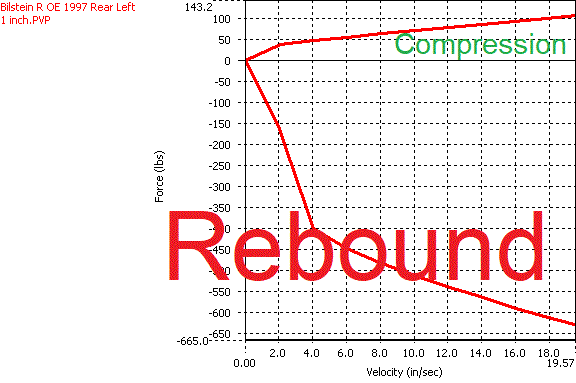
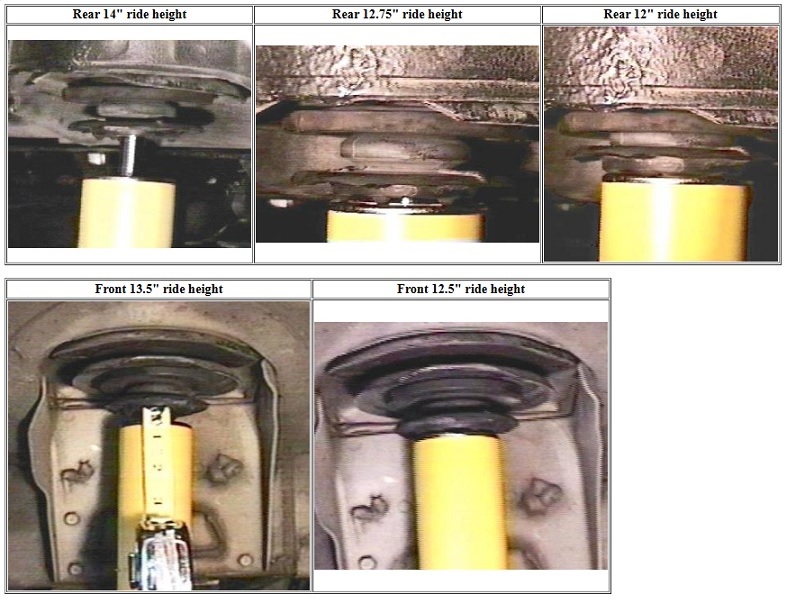
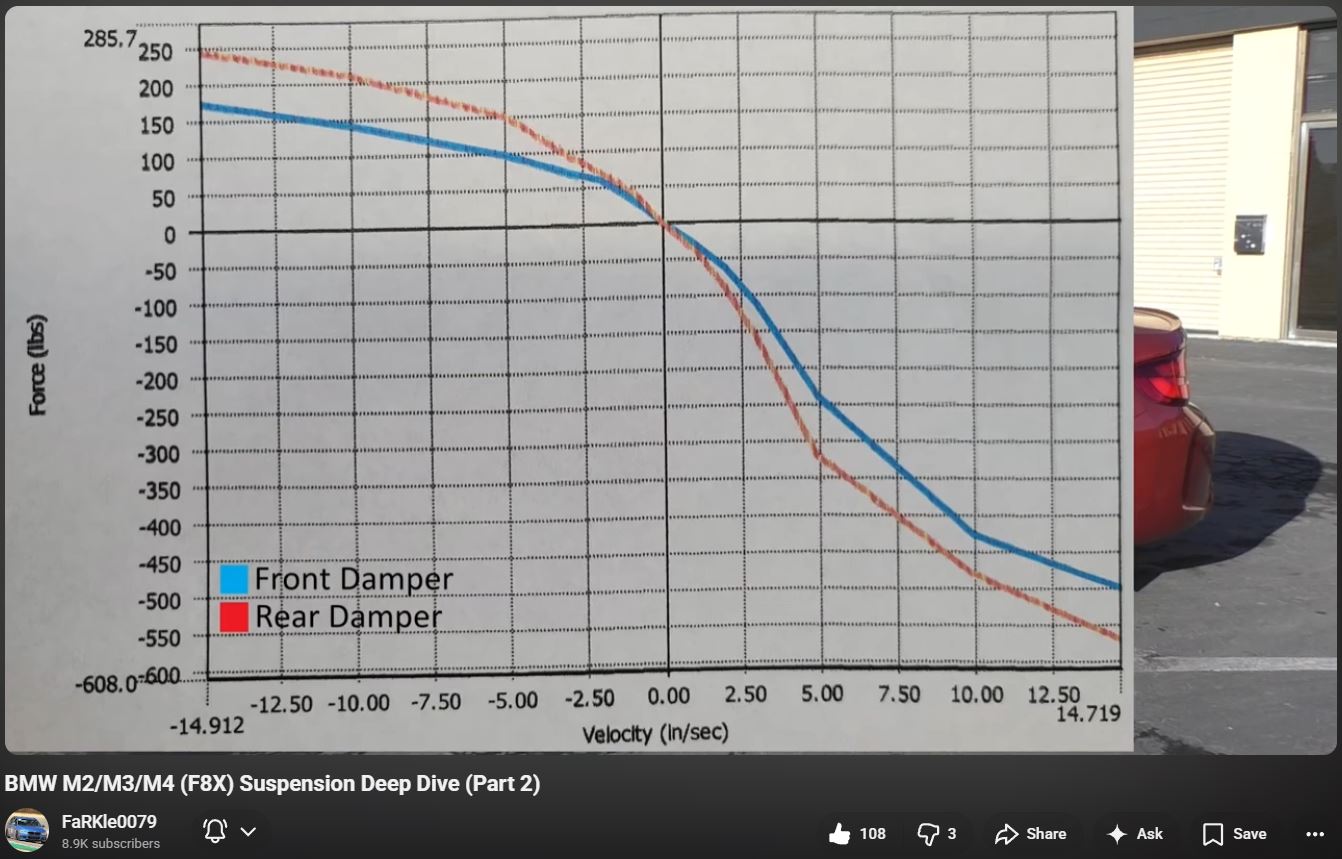
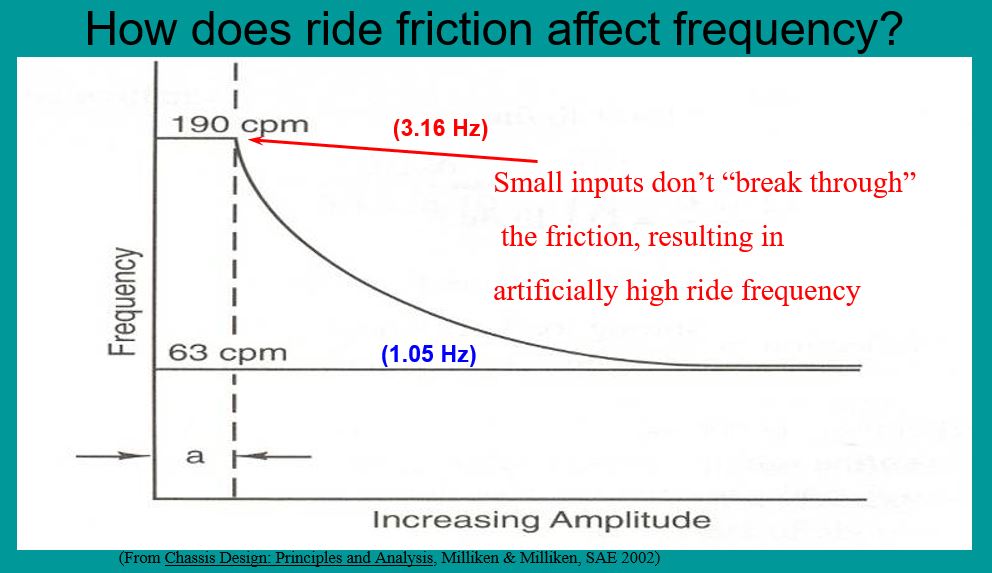
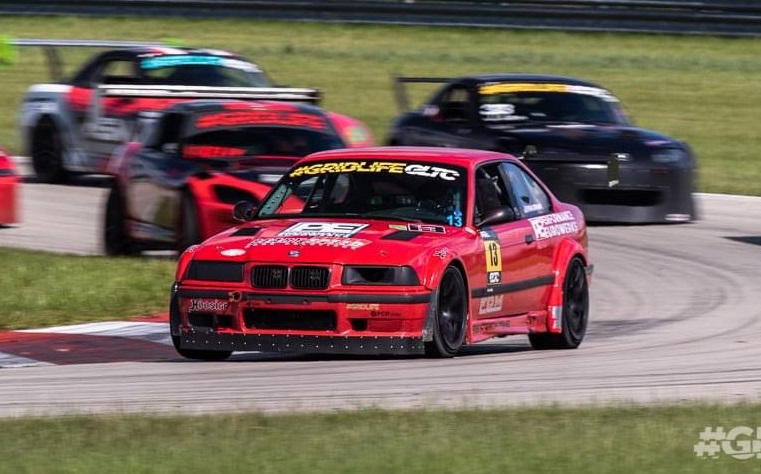
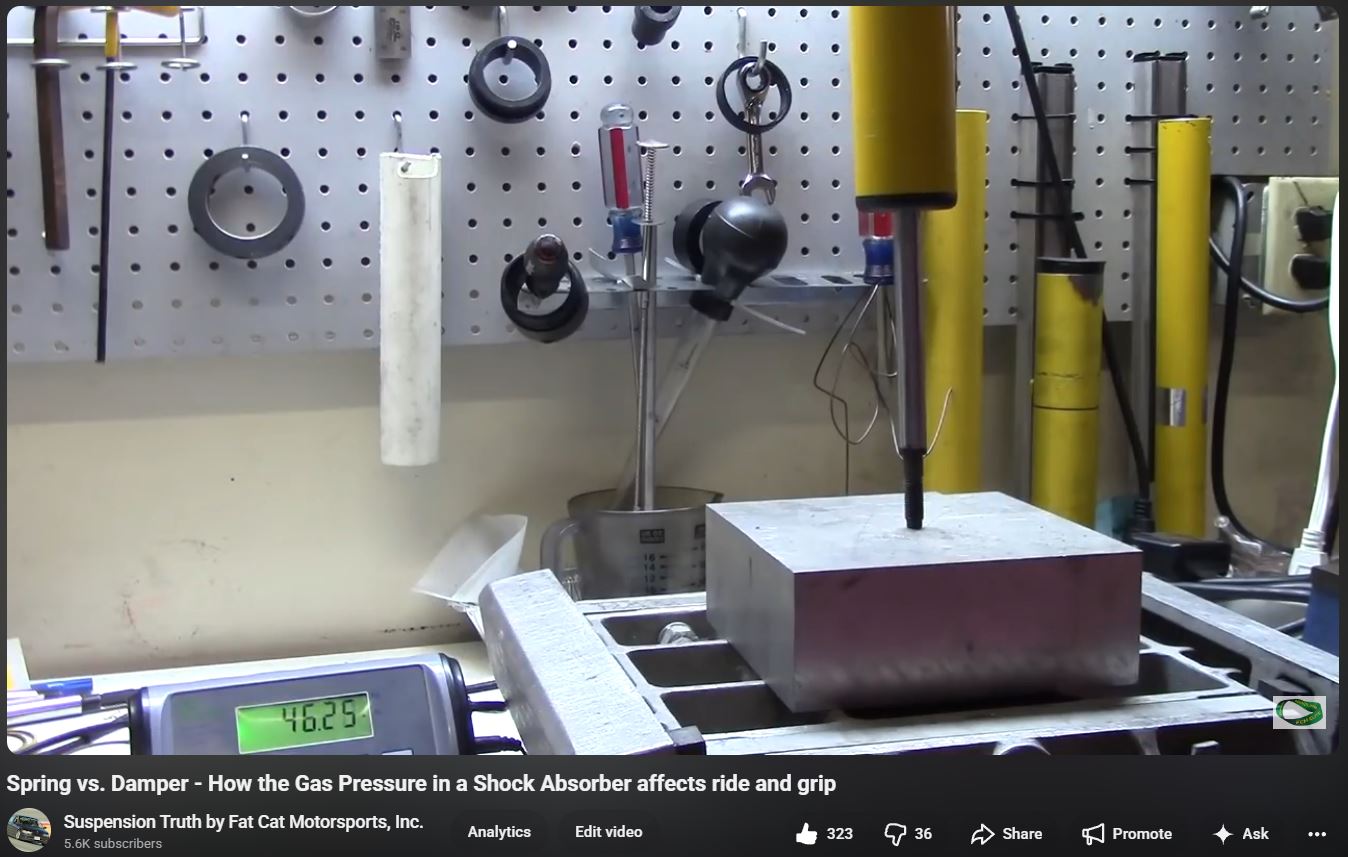

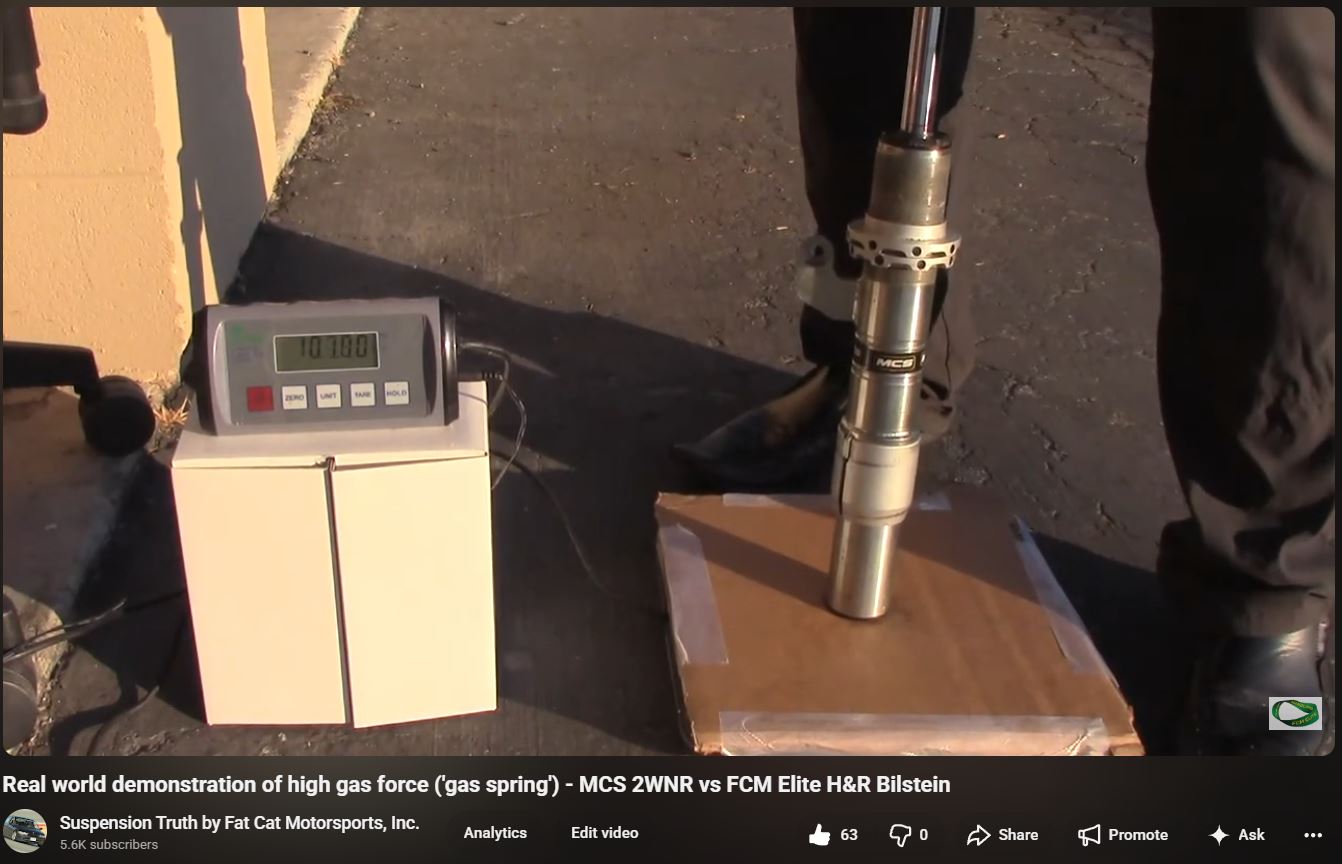
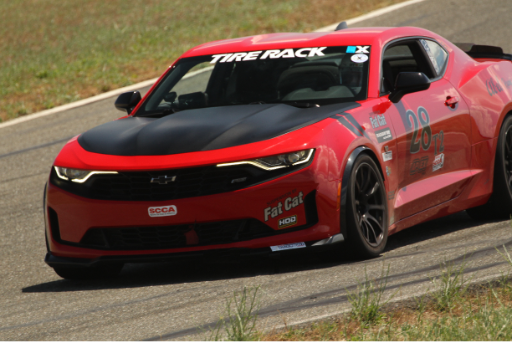
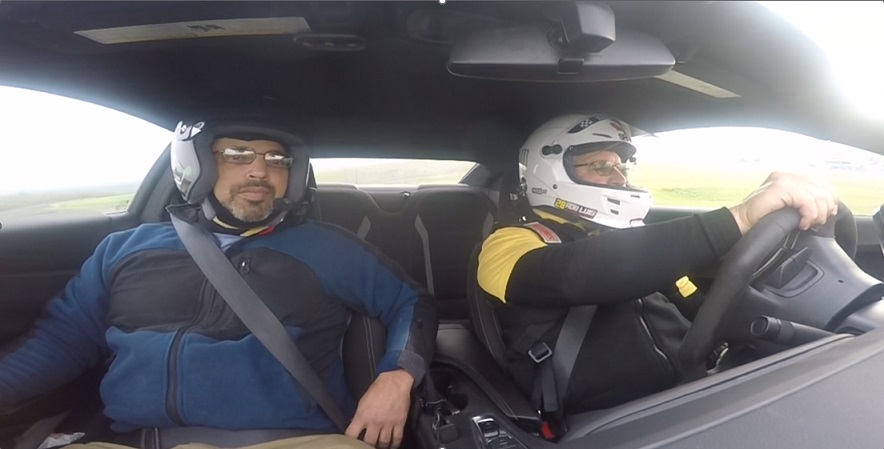
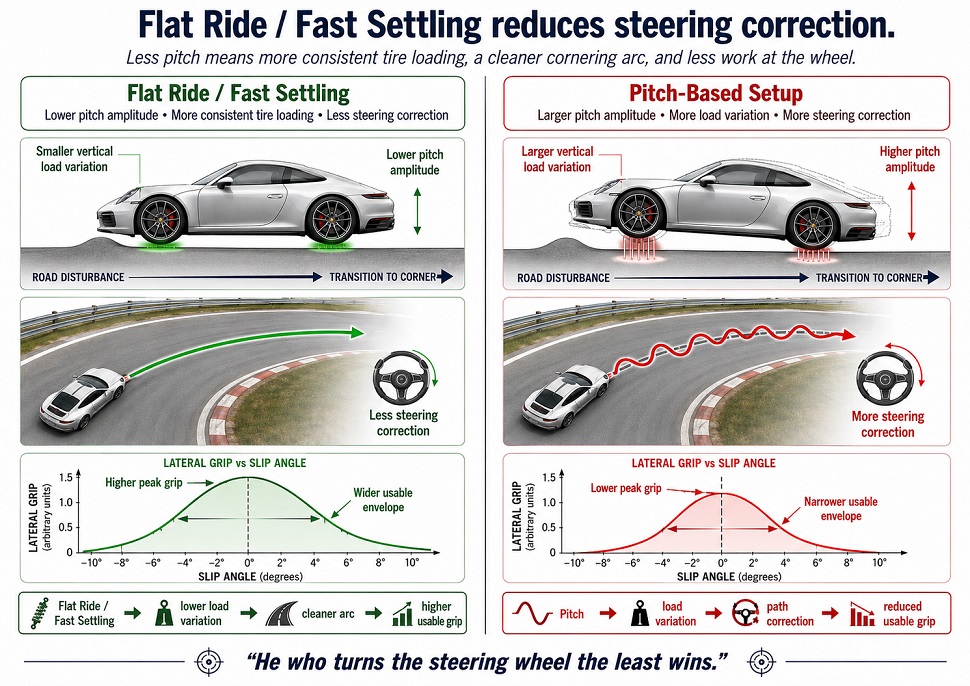
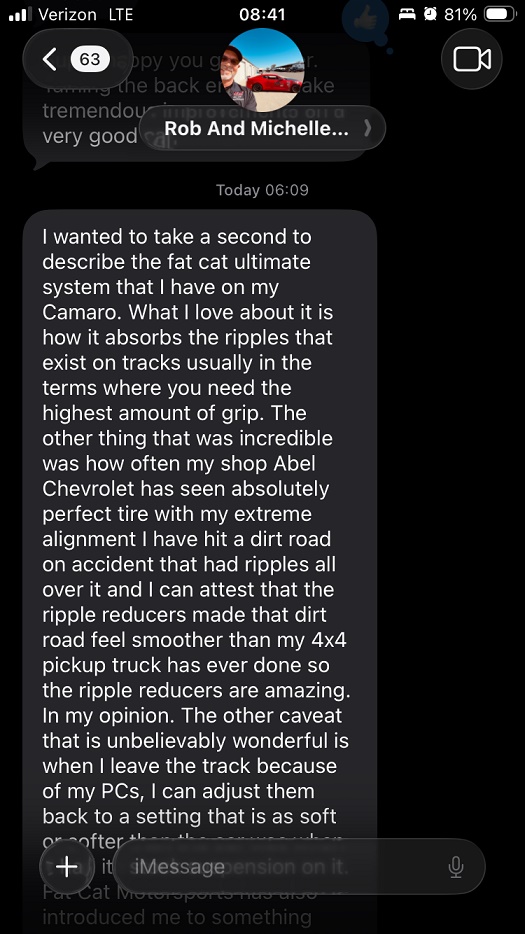
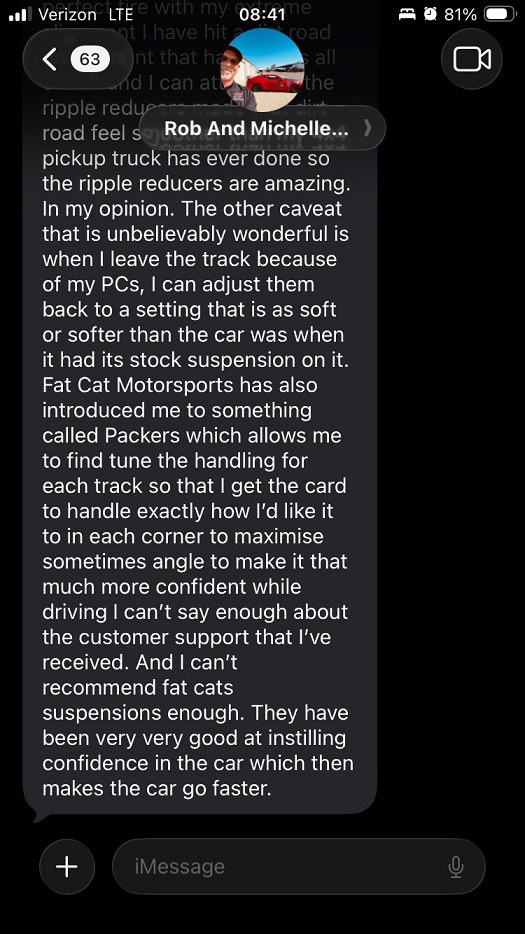
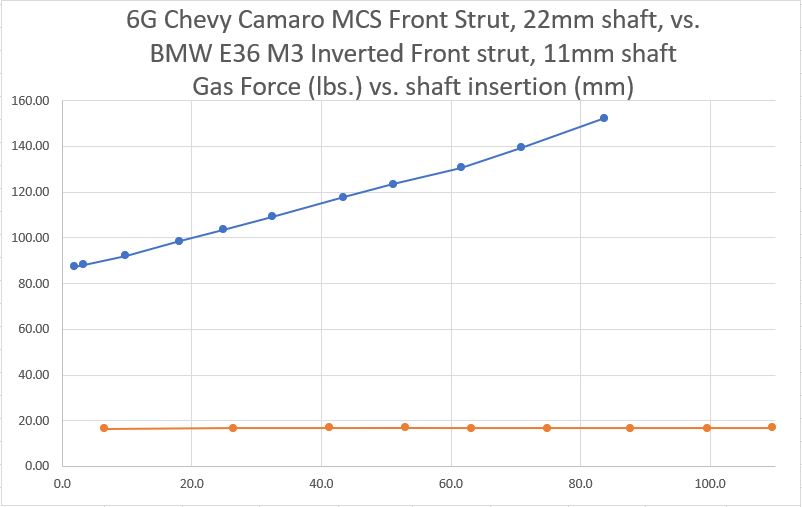
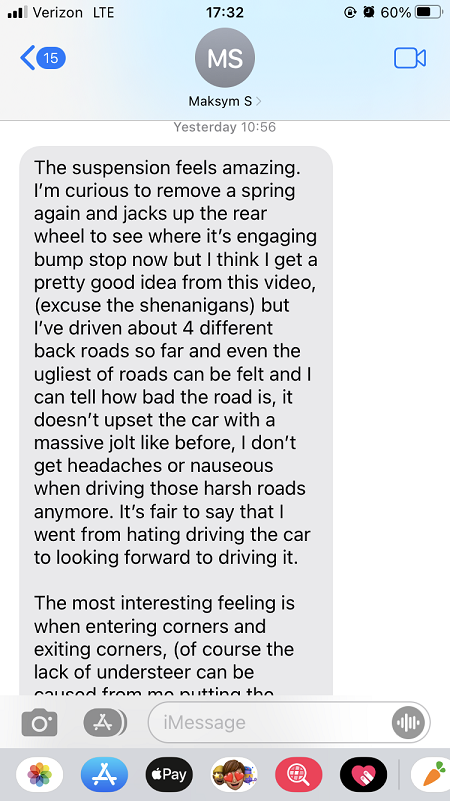
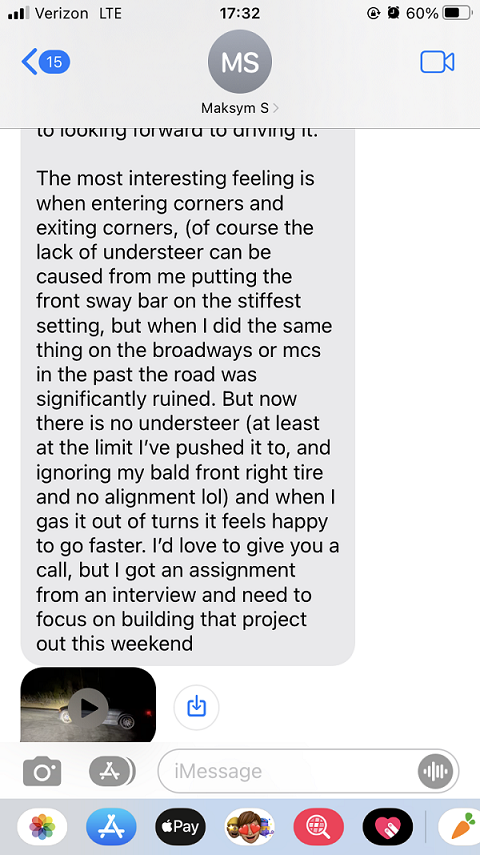
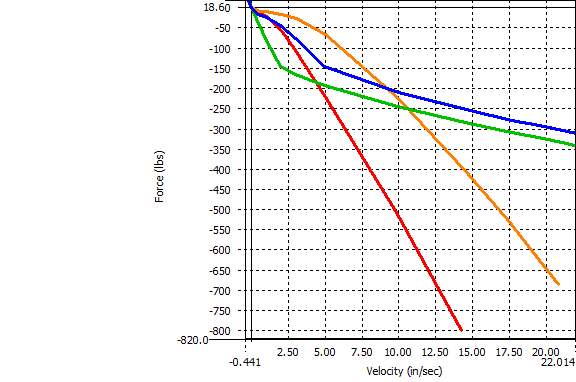
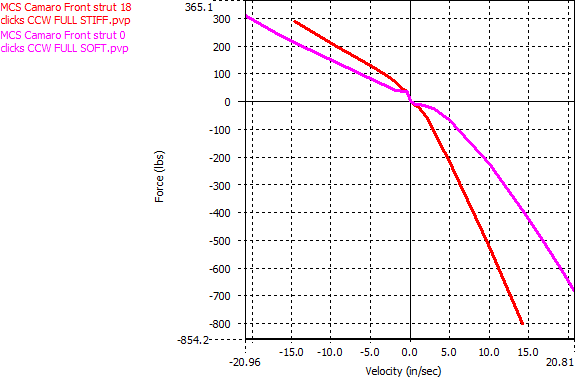
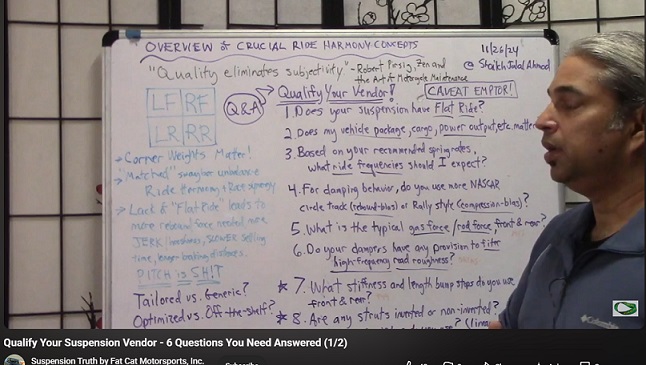
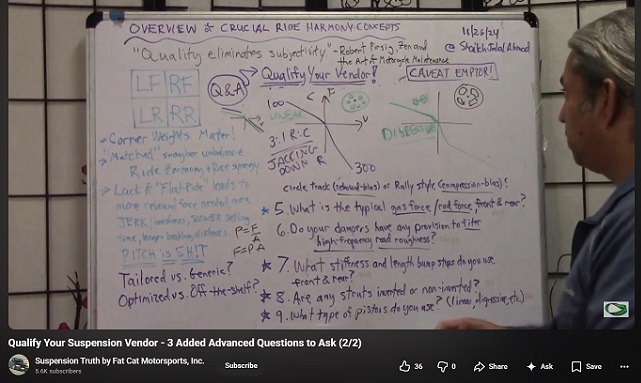

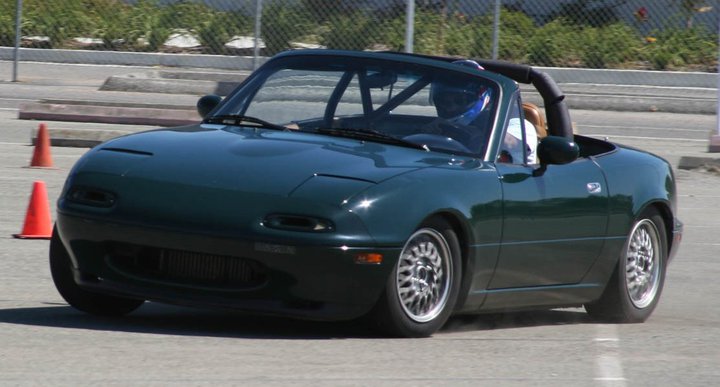
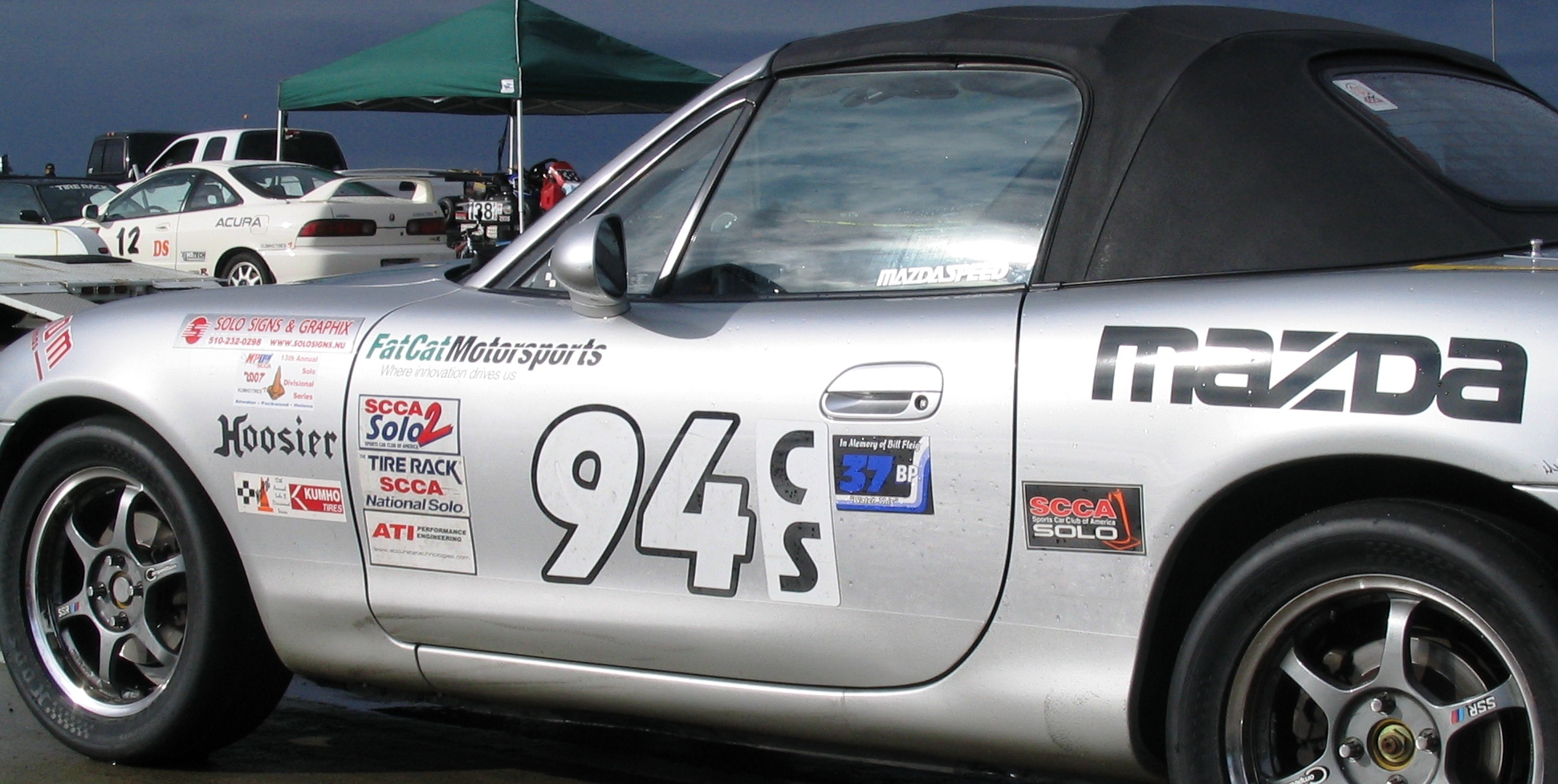
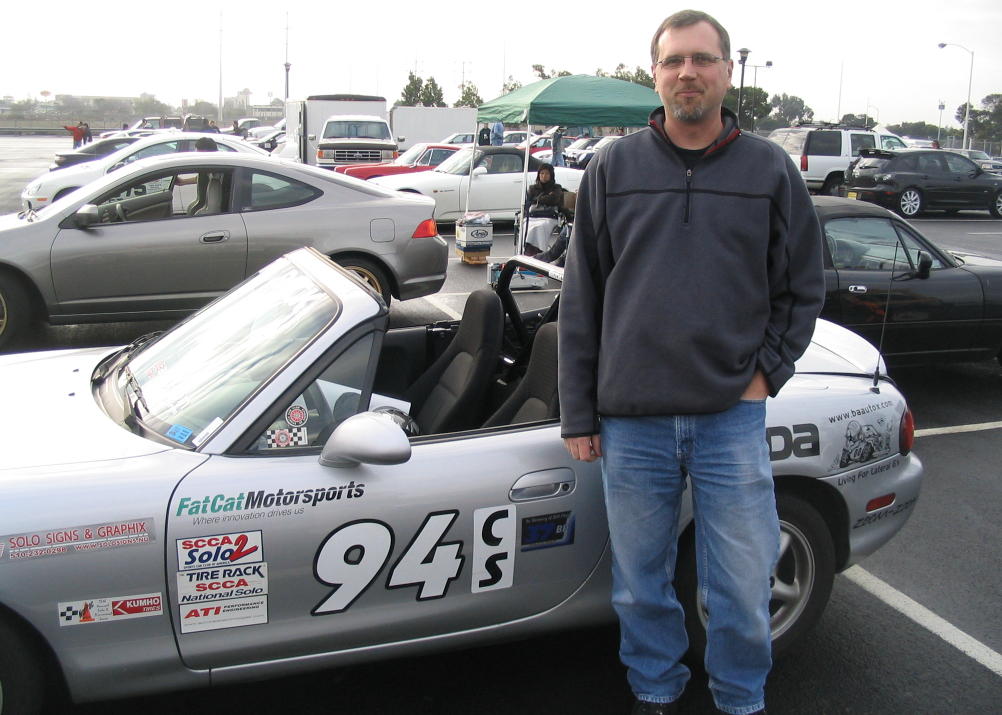
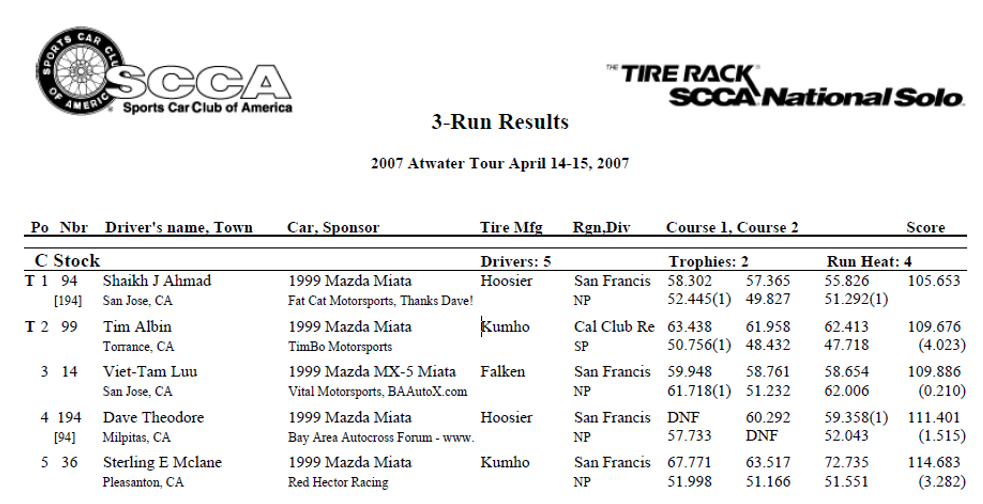
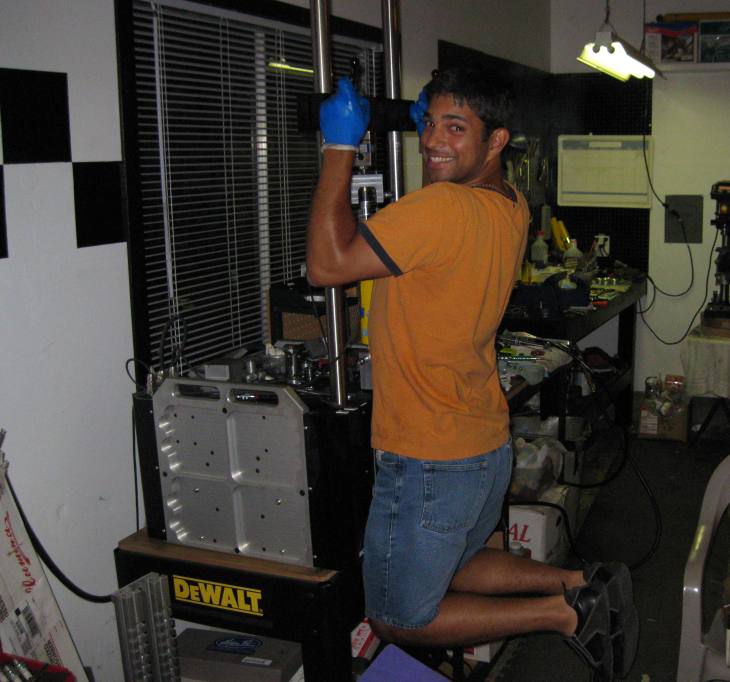
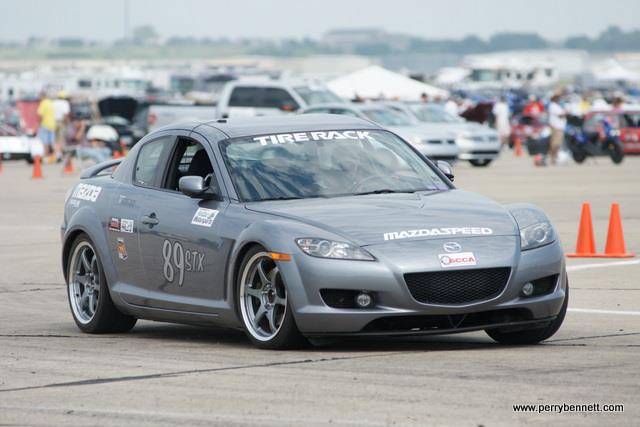
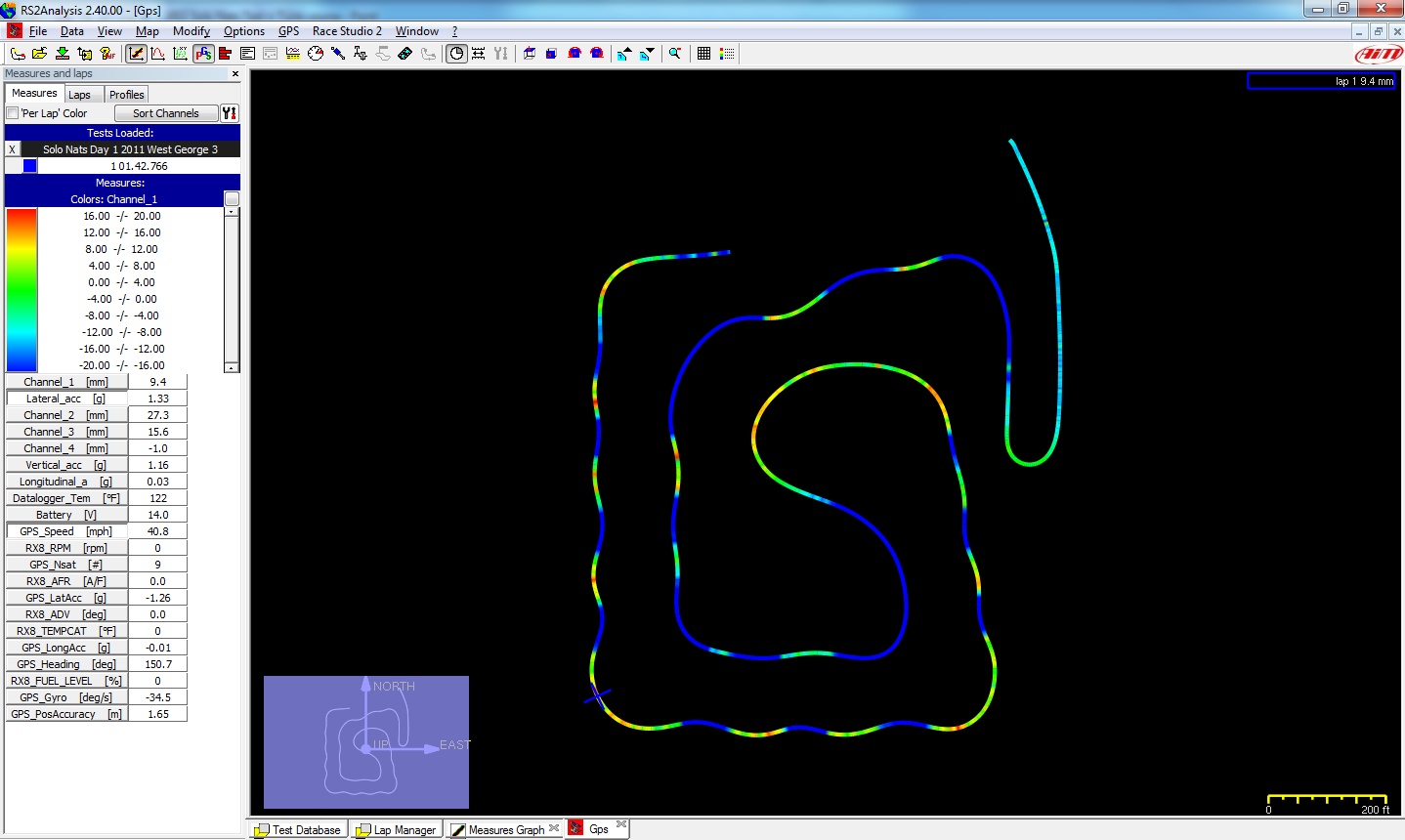
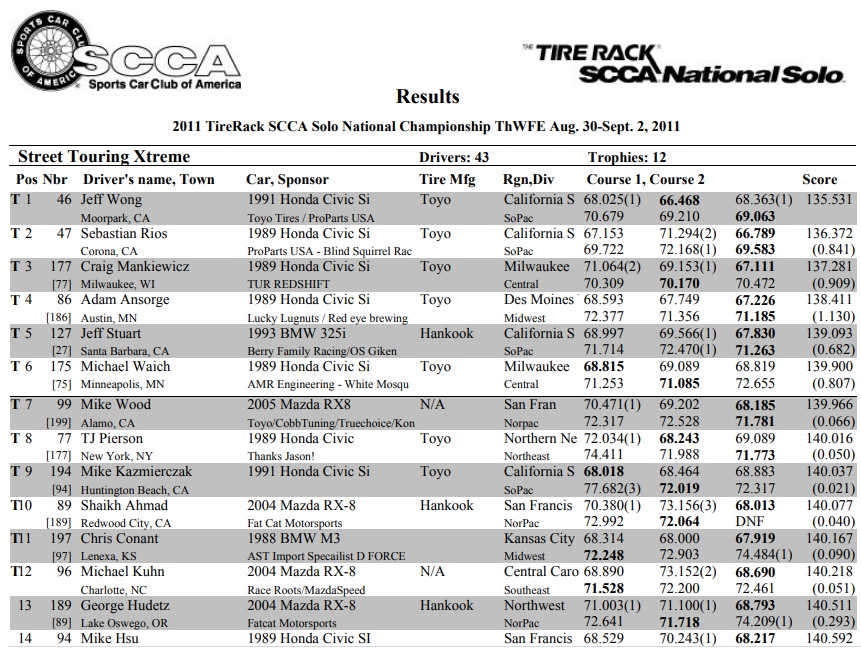
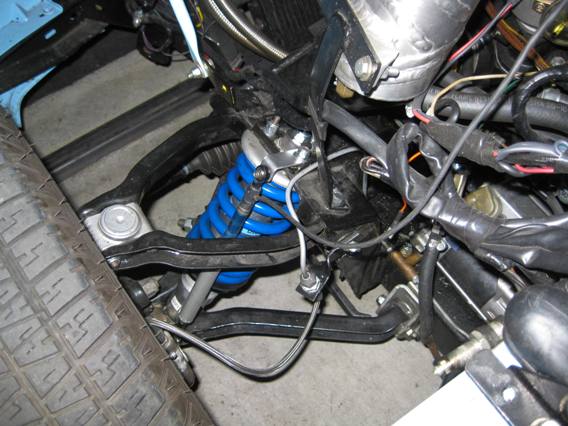
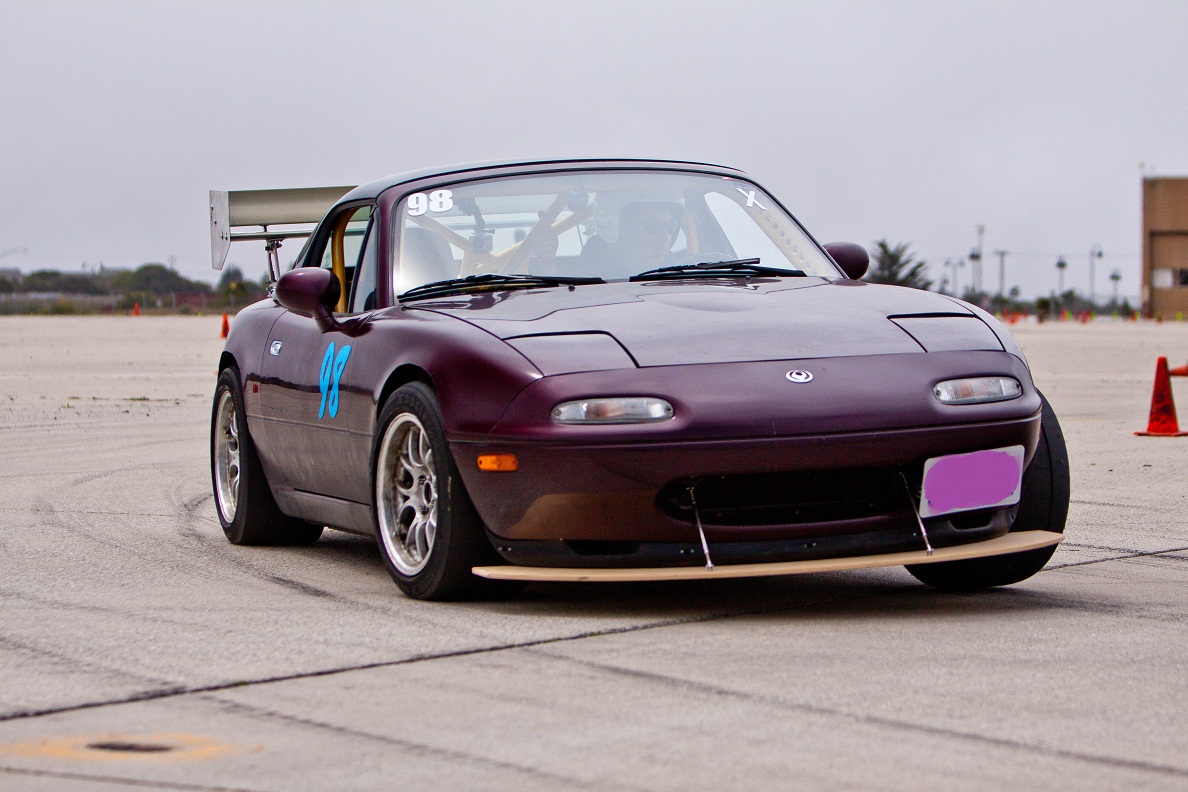
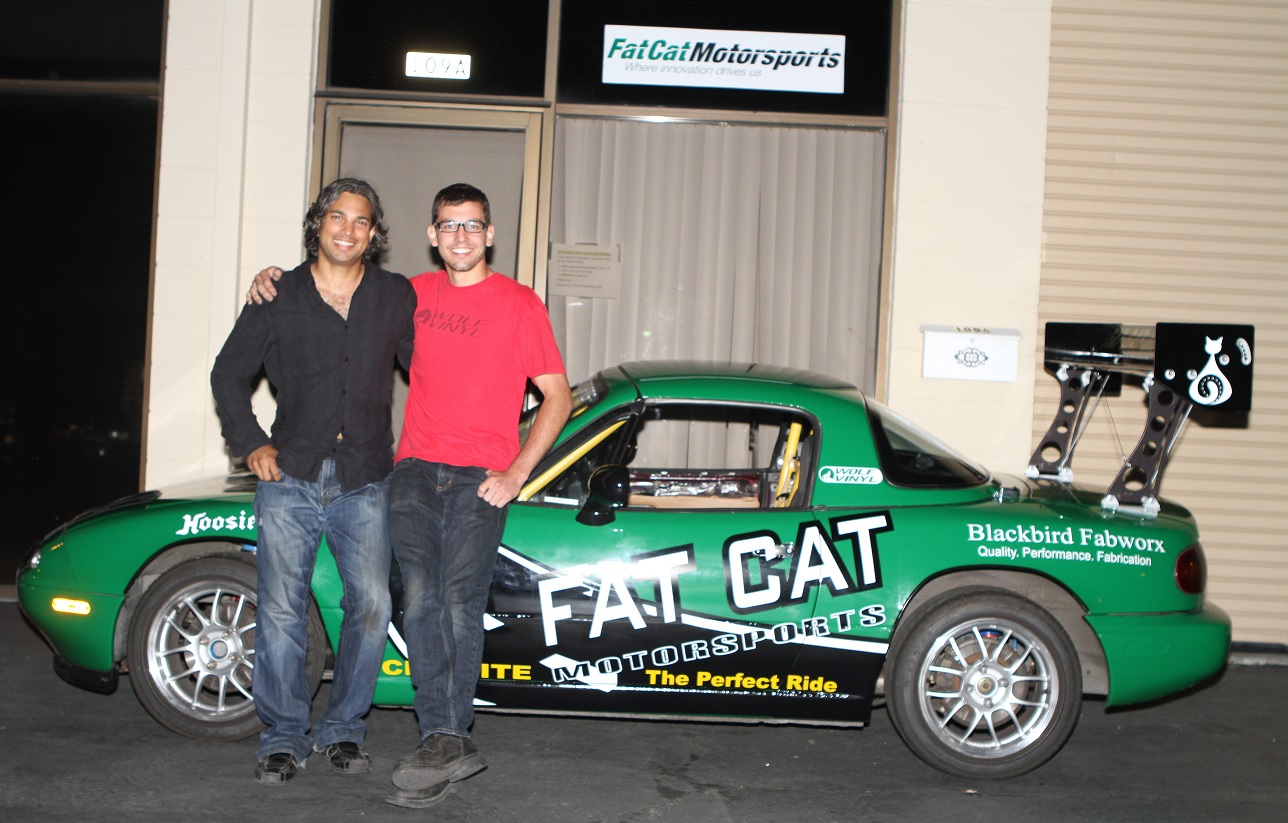
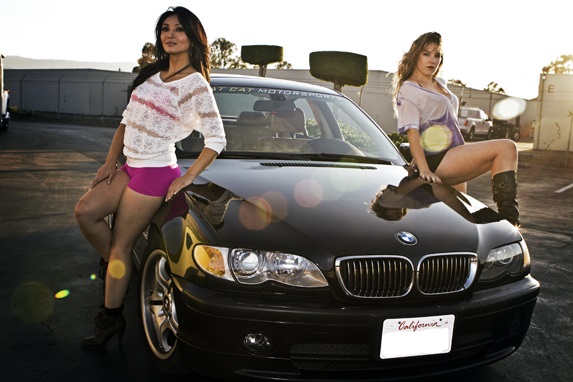
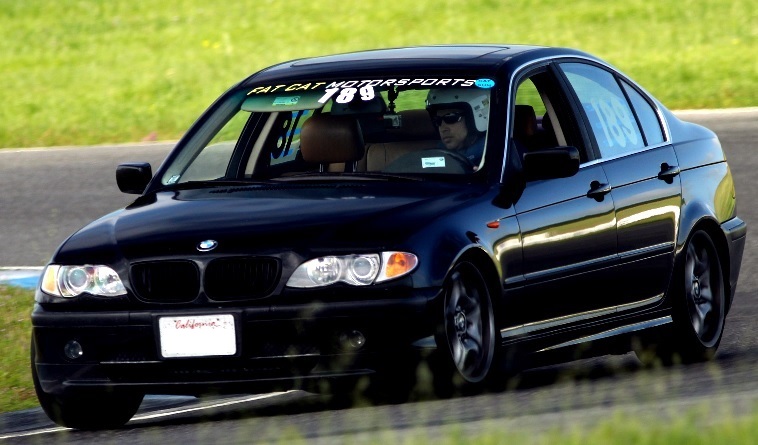
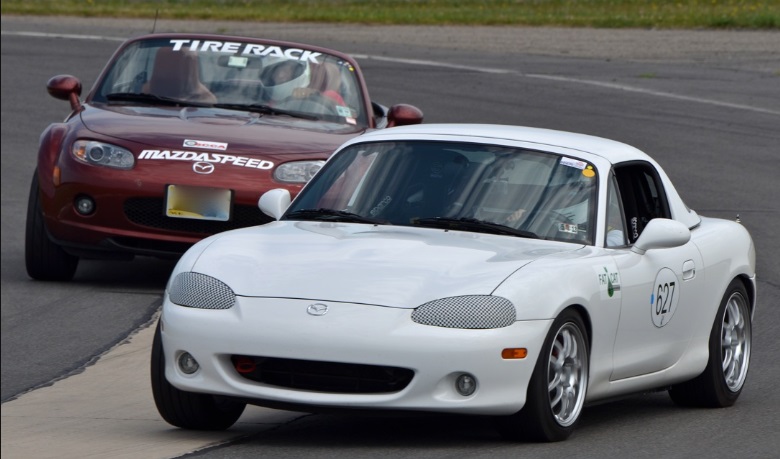
There's no such thing as a perfectly smooth road or racetrack. Even mid-corner, your suspension is cycling through small-amplitude, higher-frequency inputs while the tire is being asked to also generate lateral grip.
Ripple Reducer is specifically a frequency-based hydraulic enhancement. These bypass holes are drilled into the piston to reduce force build-up during small, rapid damper cycles so it seems like 'someone sanded the road roughness.' Your tires, suspension, and chassis experience less high-frequency road input that would normally add a background 'jitter' or nervousness. As suspension motion grows larger, the fluid has to begin moving more through the main piston and its valving. Rob noticing Ripple Reducer in the turns on track where he needs grip most is exactly the kind of behavior I noticed on the street and knew would benefit high-performance driving as well.